
Last updated November 15, 2026
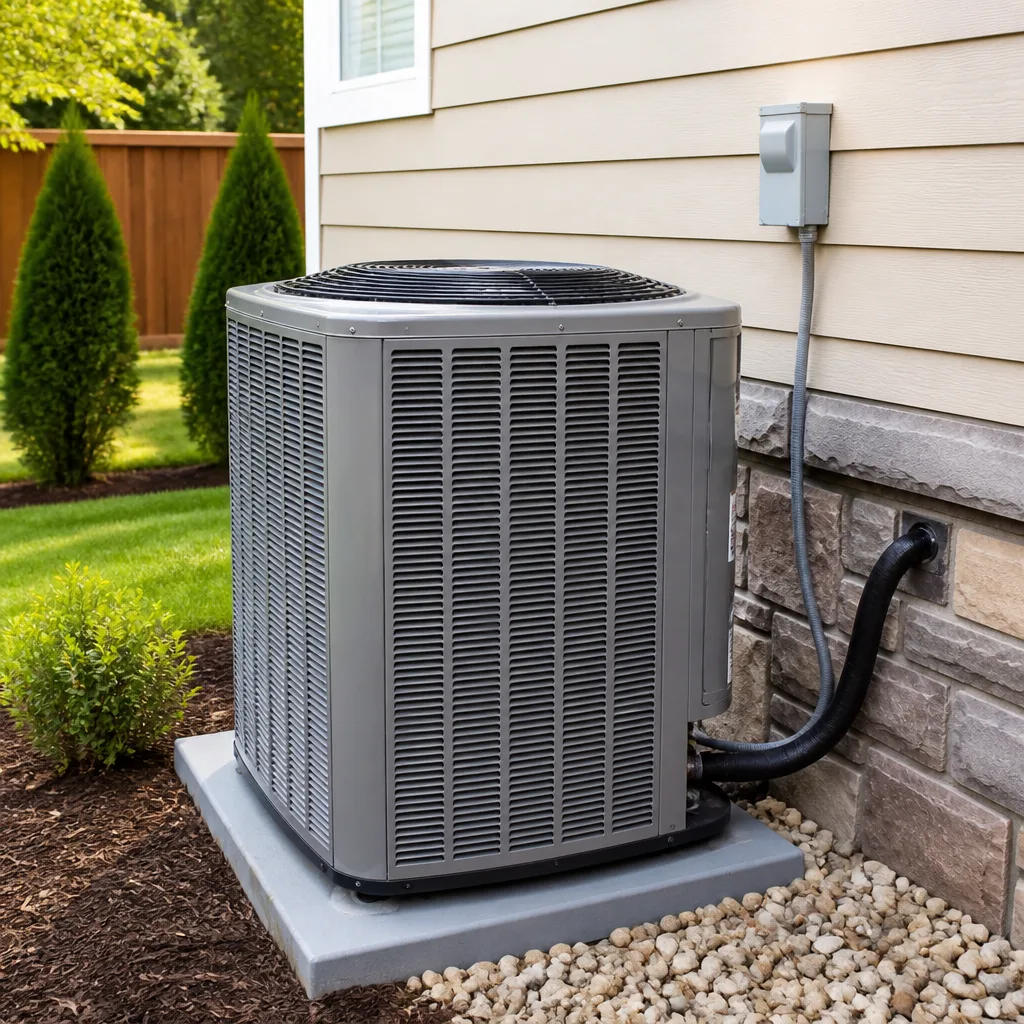 AC repair
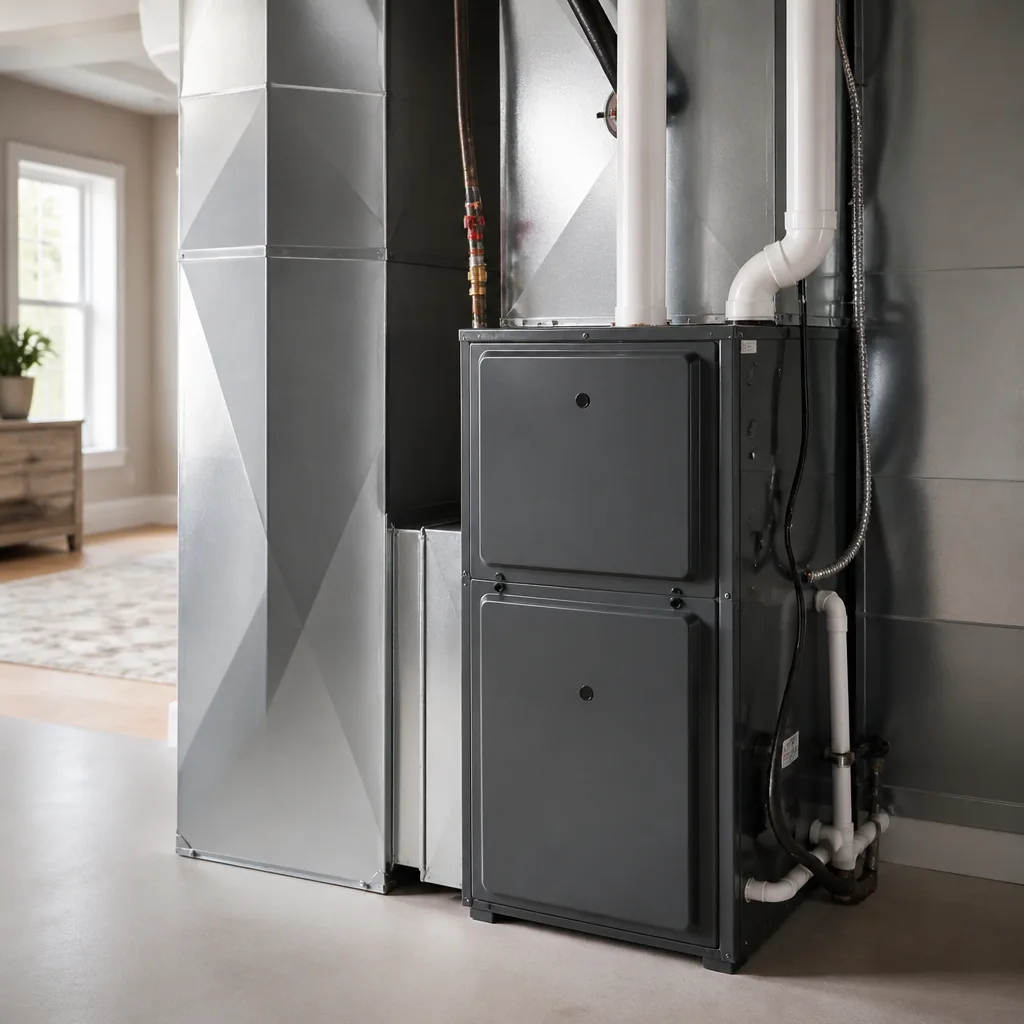 Furnace & heating
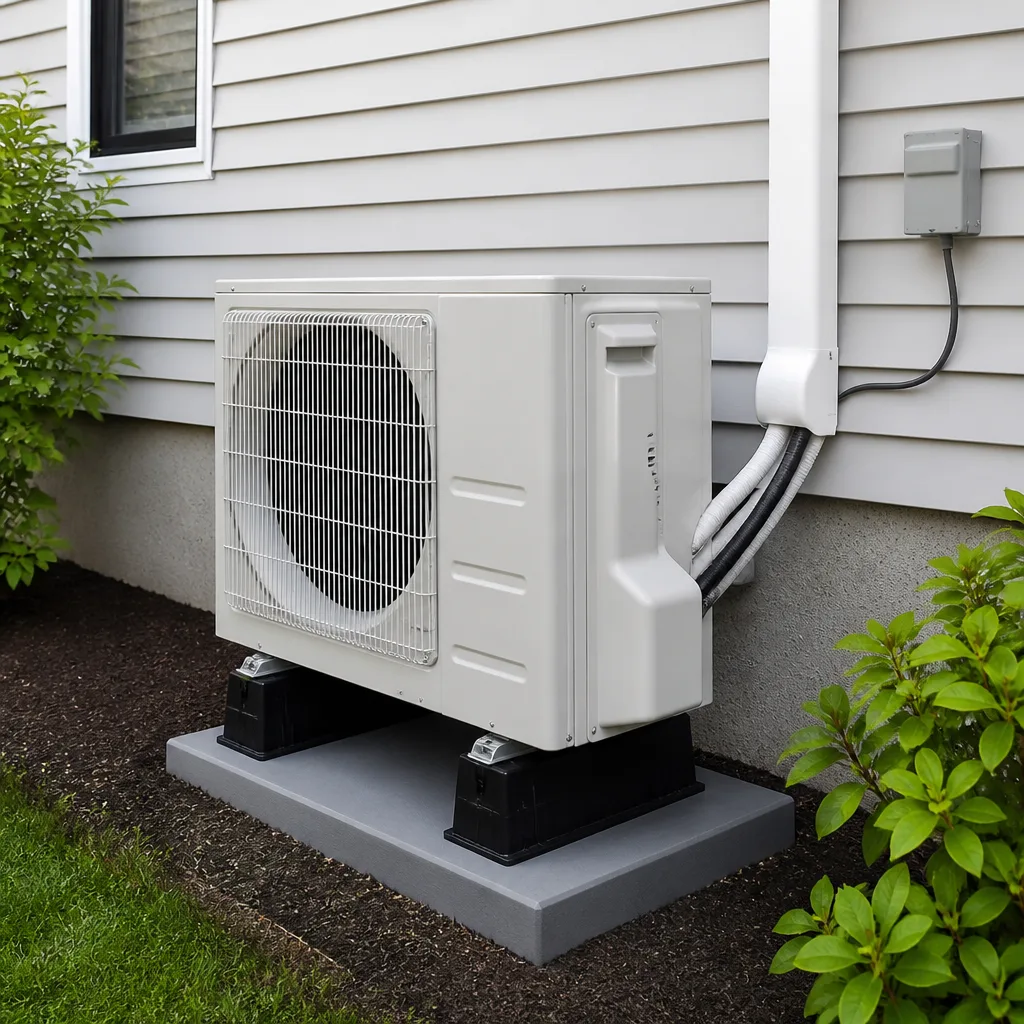 Heat pumps
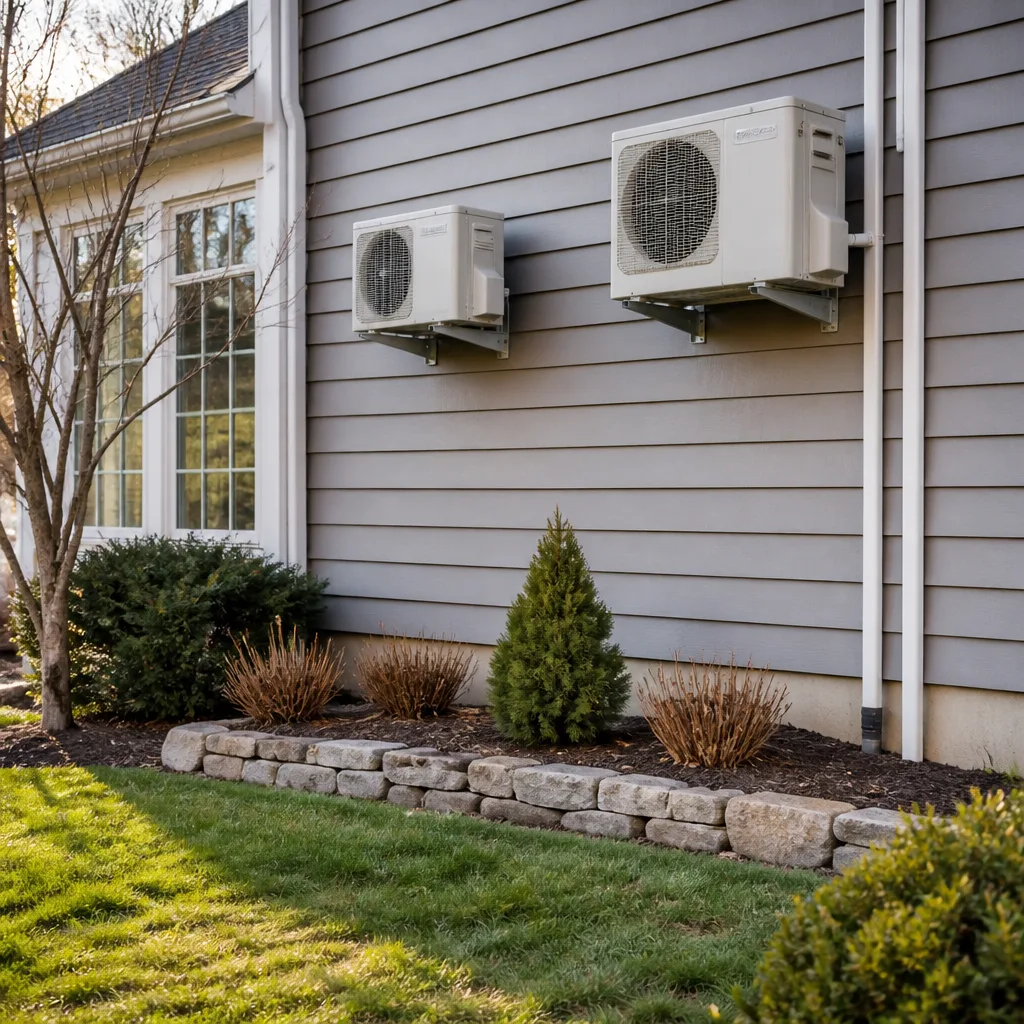 Ductless mini splits
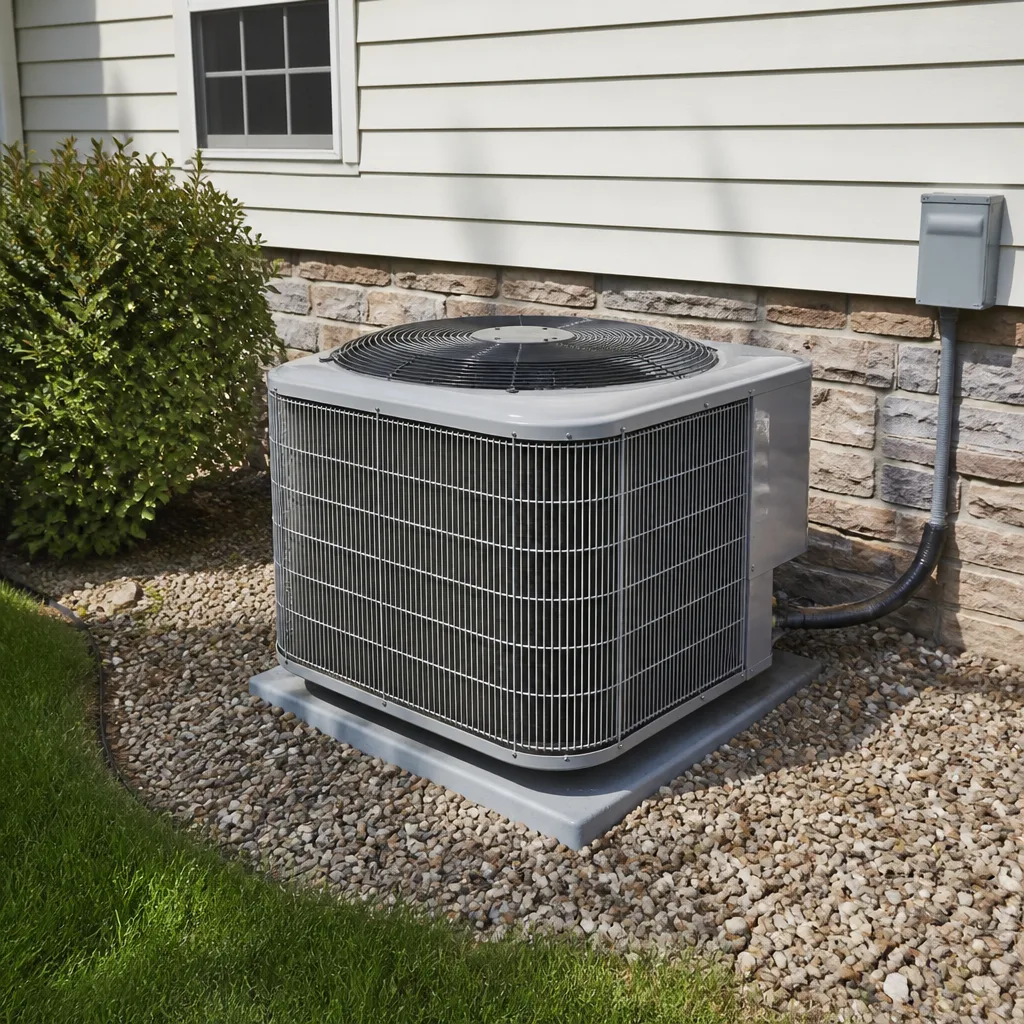 Carrier
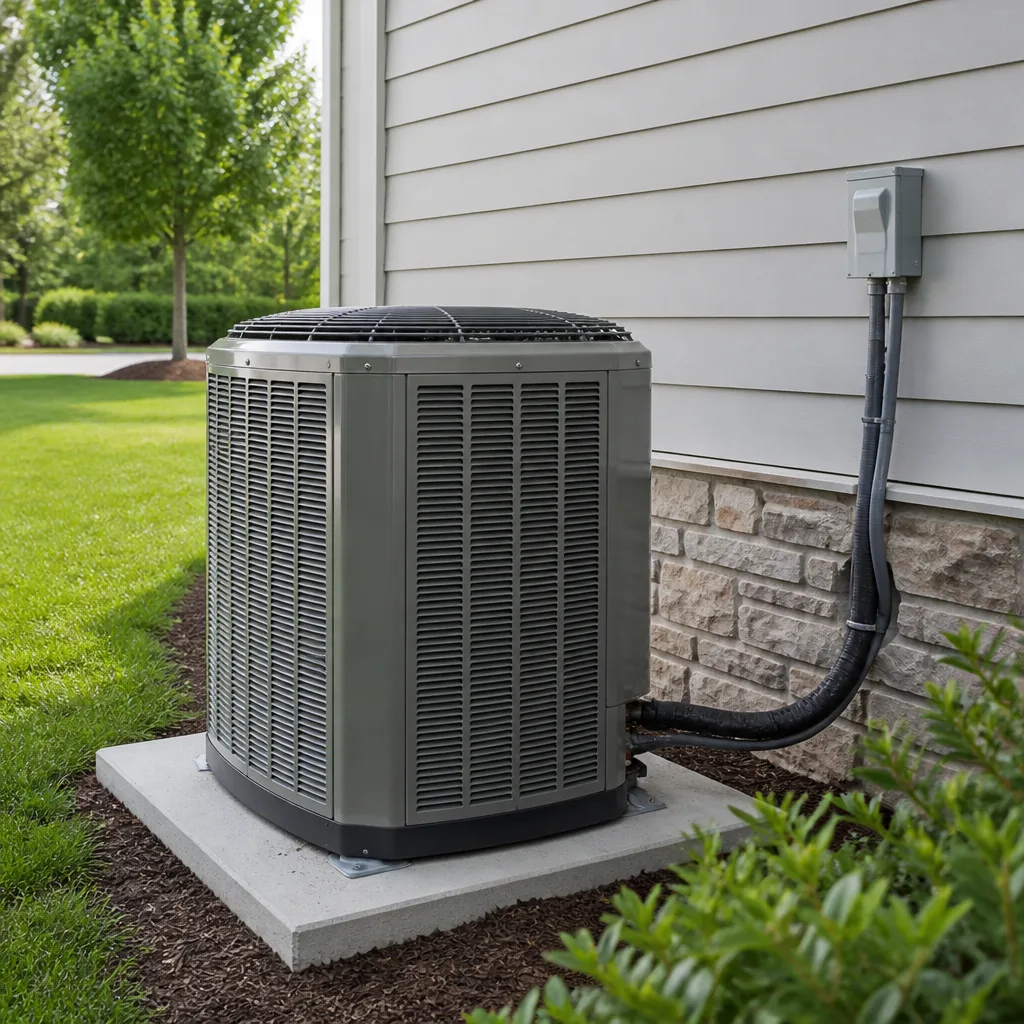 Trane
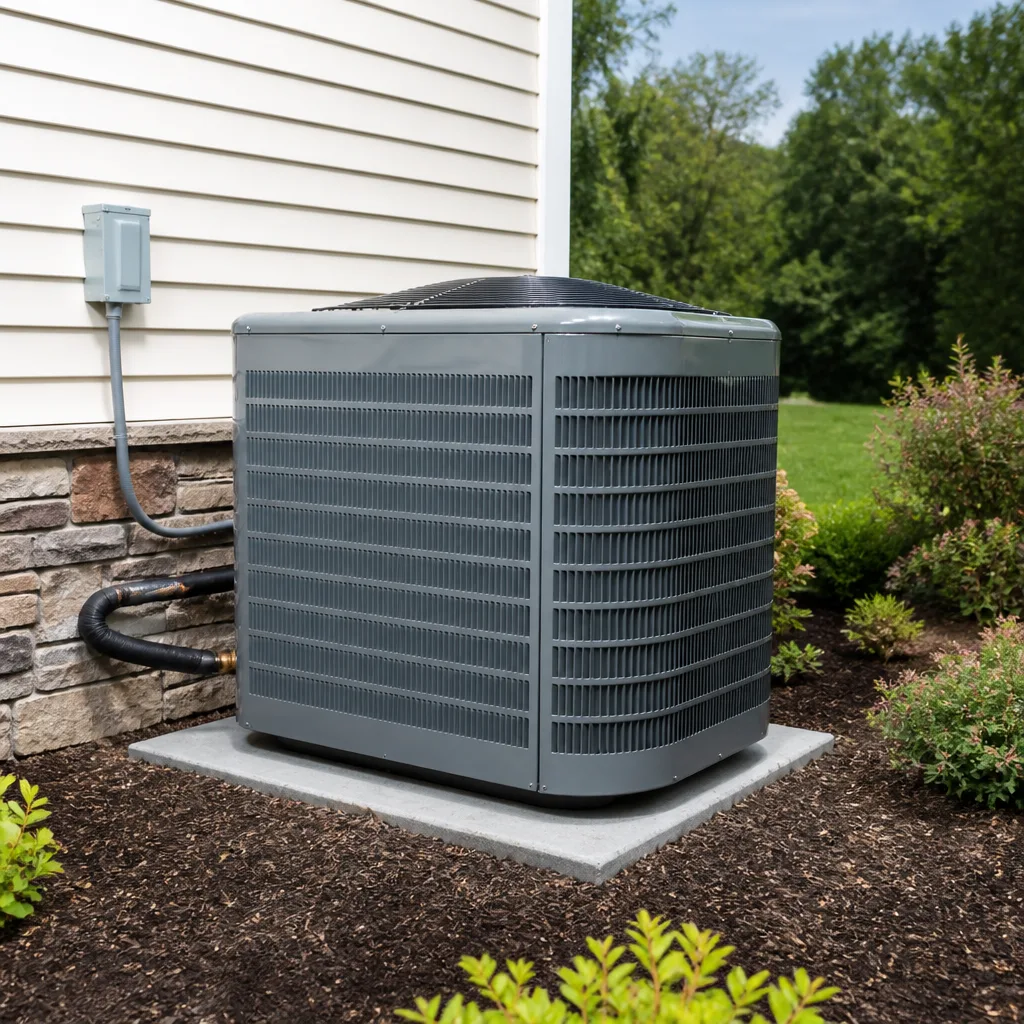 Goodman
Seasonal tune-up and full diagnostic on your Carrier, Trane, or Goodman system - readings shown to you before any repair is proposed
Diagnosis first, numbers second - you approve the repair price before a single part goes in.
Get your free estimateHVAC Permits, Codes & Inspections in Hayward, CA: What You Need to Know
Here’s the part of the conversation most homeowners never have: in California, swapping a furnace or air conditioner for the same size and type of equipment still needs a building permit in most jurisdictions. A contractor who’s in a hurry to close the job will often skip that step and tell you it’s “just a replacement, no permit required.” That single omission can sit quietly in your house for years until a buyer’s inspector or an insurance adjuster asks for the paperwork. This guide covers what actually triggers a permit in Hayward, how Title 24 energy rules change the paperwork, what a final inspection looks at, and the exact step most homeowners skip when hiring an HVAC contractor in Hayward.
Quick Answer
In Hayward, any HVAC work that alters the equipment, the ductwork, the refrigerant circuit, or the electrical and gas connections generally requires a City of Hayward building permit – including like-for-like replacements. Simple repairs that don’t change equipment or add new components usually do not. New installations must also meet California Title 24 energy compliance and produce documentation proving it. When in doubt, ask your contractor for the permit number before work begins, and confirm it with the city’s building department.
Styles & brands we work with
- AC repair
- Furnace & heating
- Heat pumps
- Ductless mini splits
- Carrier
- Trane
- Goodman
Table of Contents
- Which HVAC Jobs in Hayward Require a Building Permit?
- What HVAC Work Is Exempt From a Permit?
- How Title 24 Energy Compliance Affects New HVAC Installations
- What a Final Inspection Actually Checks
- What Happens When You Sell a Hayward Home With Unpermitted HVAC Work
- How to Confirm a Contractor Pulled a Permit Before Work Starts
- Why Hayward’s Climate and Housing Stock Make the Rules Matter
- How to Choose an HVAC Contractor That Handles Permits Correctly
Which HVAC Jobs in Hayward Require a Building Permit?
The short version: if the work changes your equipment or the systems connected to it, it needs a permit. The City of Hayward operates its own building department, so unlike unincorporated parts of Alameda County, a Hayward homeowner deals with the city directly. That matters because permit requirements and inspection processes can differ from neighboring cities, so advice from a friend in Union City or San Leandro may not match your situation in Hayward.
These jobs generally require a permit:
- Full HVAC system replacement. Taking out an old condenser and coil or a furnace and installing new equipment. “Same size, same brand, same spot” does not exempt it.
- New installation. Adding central air to a house that never had it, or installing a new furnace in a space that was previously heated another way.
- Ductwork changes. New duct runs, resealing or replacing a duct system, or moving supply and return registers.
- Refrigerant line replacement or rerouting. The refrigerant circuit is treated as a controlled system under California rules.
- Electrical and gas connections. Running a new dedicated circuit for a condenser or making a new gas connection for a furnace generally requires the permit to cover those trades too.
- Relocating equipment. Moving a condenser from the side yard to the back, or shifting a furnace to a different closet, changes venting, clearances, and refrigerant line length.
In our experience, the most common misunderstanding is the like-for-like swap. Homeowners assume that replacing a 20-year-old Trane with a new Trane is maintenance. Legally it’s an alteration to a regulated system, and the city treats it as one.
What HVAC Work Is Exempt From a Permit?
Not every visit from a technician needs paperwork. The dividing line is whether the work alters the equipment or the systems attached to it. Straightforward repairs and maintenance usually fall on the exempt side.
Work that typically does not require a permit:
- Diagnostic visits. Figuring out why an AC or furnace isn’t working.
- Component-level repairs. Replacing a capacitor, contactor, blower motor, ignitor, flame sensor, or control board on existing equipment.
- Refrigerant leak repair and recharge on existing lines, when no line replacement or rerouting is involved.
- Filter changes, coil cleaning, and general tune-ups.
- Thermostat replacement when it’s a like-for-like swap using existing low-voltage wiring. Running new wiring can change that.
- Adjustments and balancing of existing dampers.
One caution here: “exempt from a permit” and “exempt from code” are not the same thing. A repair still has to be done to code. And if a repair turns into something bigger mid-job (a cracked heat exchanger that leads to a furnace replacement, or a rusted-out plenum that needs new duct), the permit question comes right back. A contractor who tells you “we’ll sort out the permit after we open it up” is setting you up for a retroactive problem.
If you’re unsure which category your job falls into, that’s the moment to call your HVAC contractor in Hayward and ask directly, or check with the city building department. It’s a five-minute question that protects you for years.
How Title 24 Energy Compliance Affects New HVAC Installations
California’s Title 24 is the state’s energy code, and it applies to HVAC work in Hayward regardless of whether a permit was pulled. Its purpose is to make sure new equipment and ductwork perform to a minimum energy standard, not just that they turn on. For a homeowner, the practical effect is documentation.
When a permitted HVAC installation is done correctly, these documents get generated:
- A compliance document (CF1R). This is the energy compliance paperwork showing the proposed system meets Title 24 requirements for the climate zone and the home.
- Duct leakage testing where required. Duct systems may need to be tested to confirm they don’t leak beyond the allowed threshold, depending on the scope of the work.
- A refrigerant charge verification. For new split systems, the installer confirms the system holds the specified amount of refrigerant, since undercharge or overcharge both waste energy.
- A signed installation certificate. The installing contractor completes a certificate documenting the equipment model, efficiency ratings, and testing results – this certificate is required to be posted, and it’s what an inspector reviews.
This is why the equipment model matters. A unit that meets Title 24 in a Hayward install needs the efficiency rating to match what was specified in the compliance document. If your contractor swaps in a lower-rated unit than the paperwork says, the inspection fails and you own the problem. Bryant and American Standard both build units in the efficiency ranges typical of California installs, but the specific model has to match the paperwork, not just the brand.
When we quote an AC installation, the Title 24 documentation is part of the package. It’s not an extra step we bill for later; it’s the paperwork that makes the job legal.
What a Final Inspection Actually Checks
The final inspection isn’t a rubber stamp. It’s a code-compliance check, and an inspector who’s seen a lot of installations knows exactly where to look. What gets flagged is often something the contractor should have caught before calling for the inspection.
Inspectors commonly look at:
- Permit and compliance documents on site. Matching the installed equipment to what the permit and CF1R specified. A mismatched model is an automatic flag.
- Clearance and access. Enough working space around the furnace and condenser; equipment not boxed in or sitting where it shouldn’t.
- Combustion venting. That furnace flue and vent connections are properly sealed and routed, not leaking into the structure.
- Electrical connections. Disconnects, wiring, and grounding done to code.
- Condensate management. That the drain line routes correctly and doesn’t drip where it shouldn’t.
- Duct connections and sealing. Visible gaps and disconnected joints, which the duct test also catches.
- Refrigerant charge verification report. For new systems, that the charge was checked and documented.
One issue that trips up inspections in Hayward’s older tract homes: the equipment closet. Homes in neighborhoods like the Jackson Triangle and Bunker Hill often have tight furnace closets built around the original unit, and a new furnace that’s a few inches wider creates a clearance or access problem. A contractor who measures first avoids the problem; one who doesn’t calls for an inspection and gets a correction notice. In our experience, the comeback appointments are the expensive ones.
What Happens When You Sell a Hayward Home With Unpermitted HVAC Work
This is where an omitted permit turns into real money. In California, sellers are required to disclose known material facts about the property, and a permit that was never pulled for the HVAC is exactly that kind of fact. The disclosure you sign says whether there’s any work done without permits of which you’re aware.
The sequence usually goes like this:
- Buyer’s inspection. The home inspector runs the HVAC system and, in many cases, requests permit records from the city. Unpermitted work surfaces here.
- Disclosure or renegotiation request. The buyer’s agent pushes back on the unpermitted items. Either you pay to make them legal or you concede on price. There’s rarely a third option.
- Retroactive permitting. You or your contractor applies for a permit after the fact, which means you pay permit fees, a plan review, and the labor to correct anything that isn’t code-compliant. A replacement that looked fine on paper can fail an inspection years later because the clearance or venting wasn’t right.
- Insurance complications. If the equipment fails and you file a claim, an adjuster can ask whether the installation was permitted. Unpermitted work gives an insurer a legitimate basis to contest the claim.
For older Hayward homes – and there are plenty of houses from the 1940s through the 1970s still heating and cooling families across the city – this bites harder. A permit that wasn’t pulled in 2003 looks the same on a title record as a permit that wasn’t pulled last year. Retroactive permitting doesn’t care about the calendar.
How to Confirm a Contractor Pulled a Permit Before Work Starts
This is the step nearly every homeowner skips. The words “we’ll handle the permit” mean nothing unless you verify it. Confirmation takes three calls and about ten minutes, and it should happen before any equipment gets disconnected.
- Get the permit number in writing. Ask the contractor for the permit number the city issued for your address. A legitimate contractor will have it before work starts. If they say “not yet,” that’s not yet confirmation. Push back.
- Call the City of Hayward building department. Verify the permit is open, matches your address, matches the scope described (replace furnace, replace condenser, duct extension), and lists the contractor correctly. If you didn’t sign a permit application, that’s a flag.
- Take a photo of the permit. The paper permit itself is often posted at the job site. Keep a photo in your records alongside the written estimate and any Title 24 documents. When you sell, that photo is your proof.
- Ask when the inspection is scheduled. The contractor should schedule the final inspection with the city before the job is closed out. If no inspection is on the calendar, the permit isn’t being properly used.
When we run an AC repair that turns into a replacement, we tell homeowners exactly this: the job isn’t done when the equipment runs; it’s done when the inspection passes and the paperwork is filed.
Why Hayward’s Climate and Housing Stock Make the Rules Matter
Hayward sits between the bay and the East Bay hills, which gives it a milder, more even climate than the inland East Bay – foggy, breezy summers and cool, damp winters rather than scorching afternoons. That shapes how HVAC systems actually get used here. Cooling loads are moderate and heating loads run through more of the year, and equipment that’s oversized for those loads short-cycles and wears out early. The city’s building stock makes the rules more than academic.
Hayward homes tend to fall into a few categories:
- Older single-story tract homes in neighborhoods like the Jackson Triangle, Bunker Hill, and Cherryland, where the original ductwork and equipment are often decades old and closets are tight.
- Hillside properties toward the Hayward Hills and Fairview, where layout and exposure vary enough that a proper load calculation matters more than average.
- Mid-century and 1970s homes along West Hayward and the Mission Boulevard corridor, where duct systems often predate modern sealing standards and Title 24 duct testing catches real problems.
The Title 24 requirement that ducts be tested when the work triggers it exists because these homes lose a lot of conditioned air into attics. A permitted install with duct testing sometimes reveals that the new equipment isn’t the only problem; the ducts are. Better to find that during inspection than after the check clears.
How to Choose an HVAC Contractor That Handles Permits Correctly
The contractor question and the permit question are the same question. A company that routinely pulls permits, keeps Title 24 documentation with the job, schedules inspections, and can speak to the equipment it services is the company that protects you at resale and at claim time. A company that shrugs at the word “permit” is the one to avoid.
What to ask before signing anything:
- “Will you pull a permit for this job?” If the answer is “it depends,” ask what it depends on. A contractor who knows Hayward’s rules will answer directly.
- “What Title 24 documents will I receive?” You should get the compliance paperwork and the installation certificate for a new installation.
- “Can you service my brand?” A multi-brand specialist is less likely to hand you to another company mid-job. We’re factory-familiar with nine of the most widely installed residential brands – Carrier, Trane, Lennox, Goodman, Rheem, York, Daikin, Bryant, and American Standard – so a Hayward homeowner with a Bryant or American Standard system doesn’t get bounced to a brand-specialized dealer.
- “Do you handle both cooling and heating?” Furnace work and AC work are separate trades at some companies. One number covering both avoids a handoff when the seasons turn. If you need repair now, that starts with AC repair; if you’re replacing, we handle both sides.
In our experience, the homeowner’s best protection isn’t a signed contract; it’s knowing the permit number. That’s the one piece of evidence that survives every changing season and every sale.
Common Mistakes to Avoid
- Assuming a like-for-like replacement doesn’t need a permit. It does, in most California jurisdictions including Hayward. If your contractor says otherwise, get it in writing and check with the city.
- Taking “we’ll handle the permit” at face value. “Will handle” and “pulled” are different. Ask for the number in writing before work starts.
- Ignoring the model numbers on the Title 24 paperwork. If the installed equipment doesn’t match what the compliance document specified, the inspection fails and you own the fix.
- Skipping duct testing because “the old ducts were fine.” Older duct systems in Hayward’s mid-century homes often leak well beyond allowed limits. Testing finds the problem before it wastes energy for a decade.
- Paying for retroactive permitting when you could have avoided it. Retroactive permits cost fees, plan review, and correction labor, all of which are avoidable if the permit was pulled upfront.
- Hiring a contractor who can’t speak clearly about inspections. A contractor who has never scheduled a final inspection is not the right person for your replacement.
- Losing the paperwork. Keep the permit number, the certificate, and the inspection results in your home records. You’ll need them at resale or after a claim.
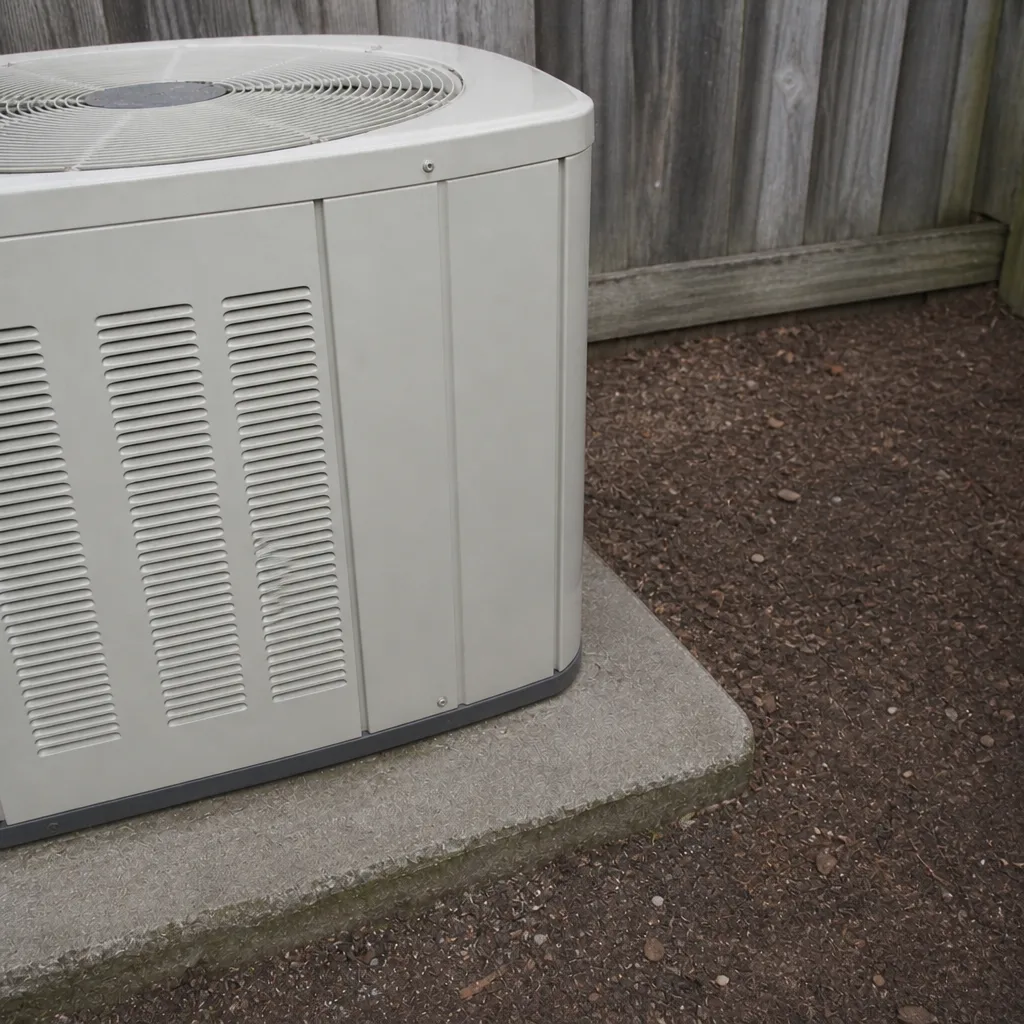
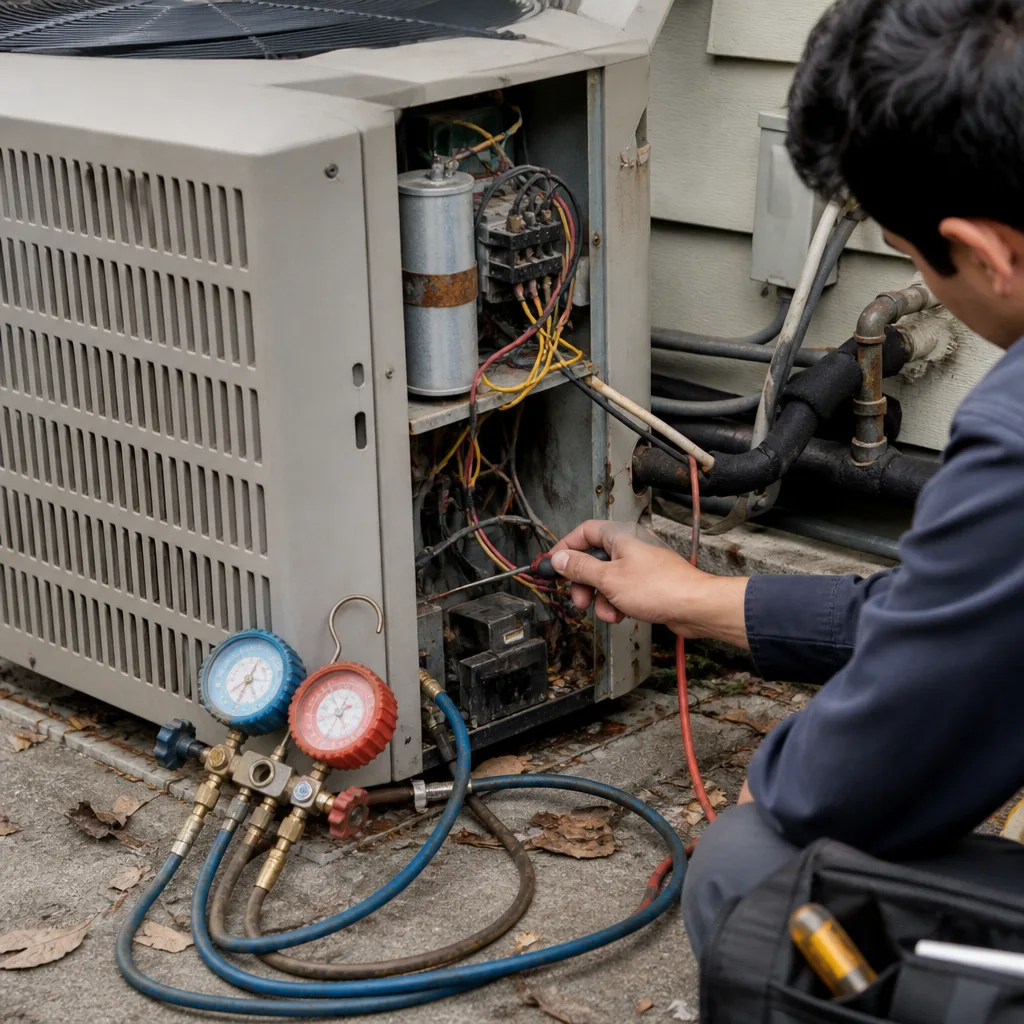
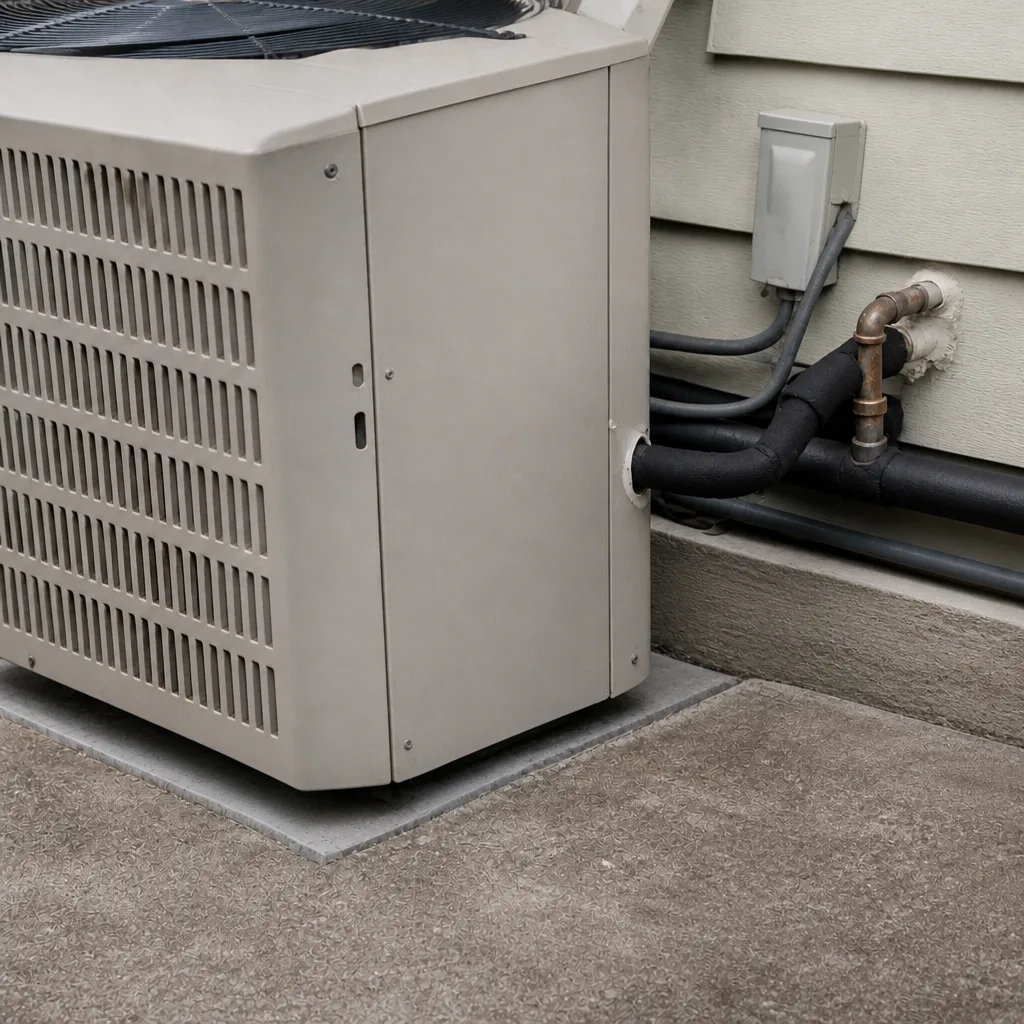
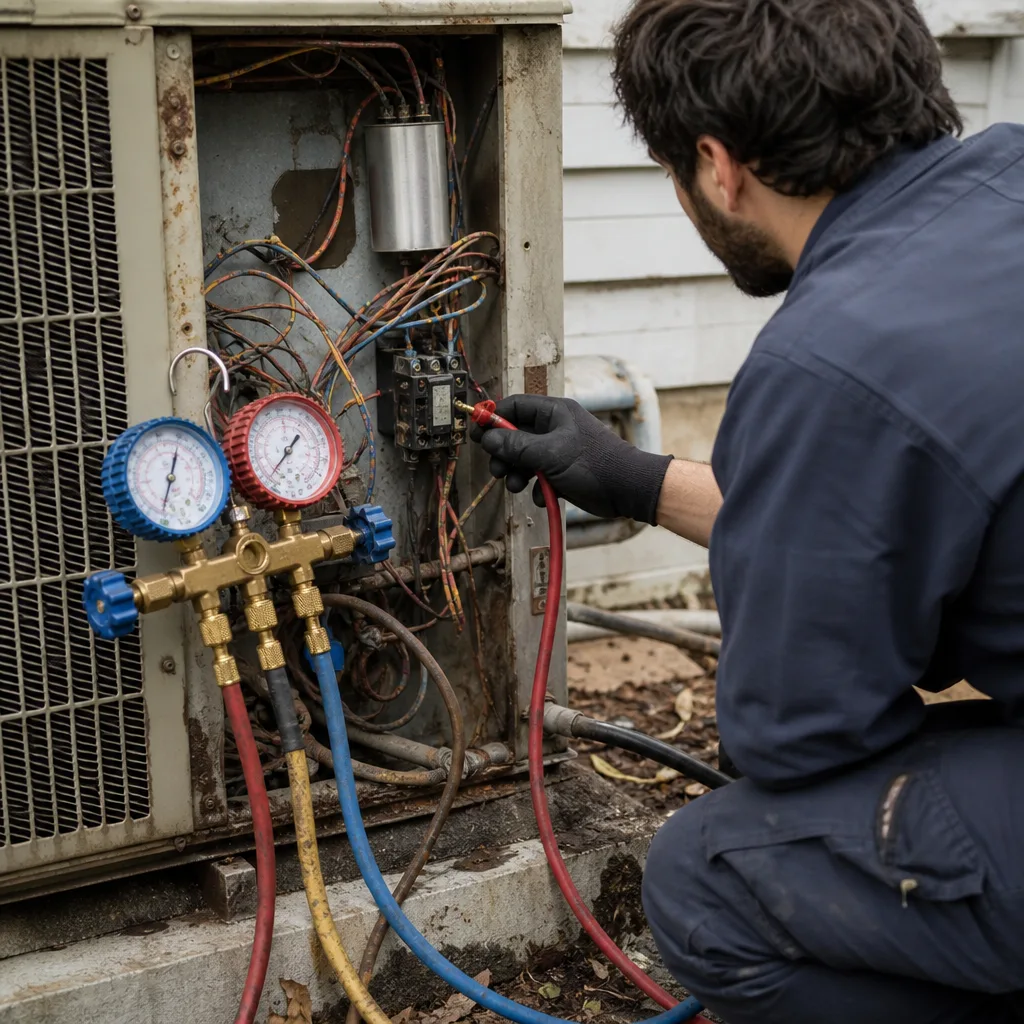
See the difference
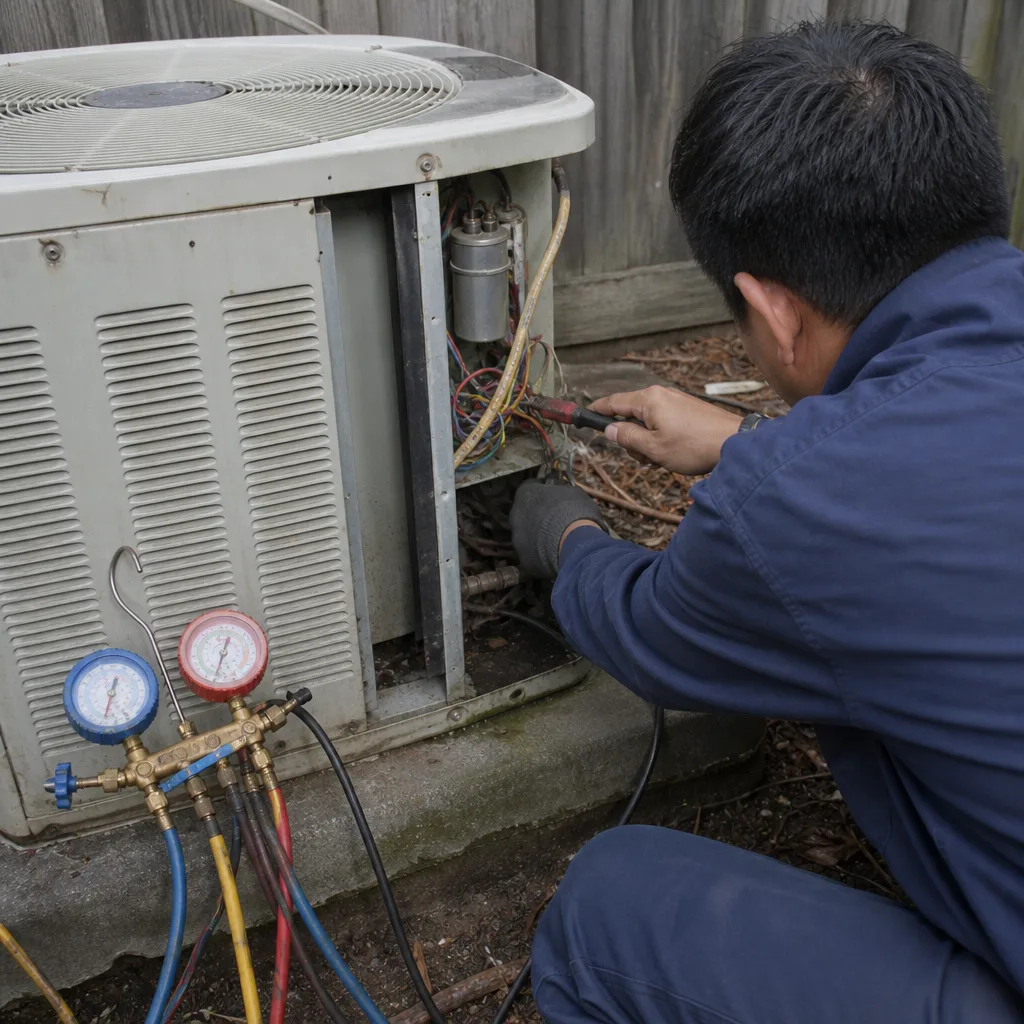 Before
 After
 Before
 After
 Before
 After
When to Call a Professional
Call a professional for anything that involves the refrigerant circuit, the gas connection, electrical work on the equipment, venting on a furnace, or any replacement or new installation. Those are the jobs where the permit and the safety question are the same question – high-voltage equipment, gas, and refrigerant handling aren’t homeowner territory. Don’t attempt to reconnect, rewire, or refire a furnace or AC yourself; a mistake with gas or electrical can be life-threatening, and a mistake with refrigerant is illegal without proper handling. Even for a repair you think is simple, a trained technician diagnoses the problem correctly the first visit rather than replacing parts until something works.
We work on Carrier, Trane, Lennox, Goodman, Rheem, York, Daikin, Bryant, and American Standard, so if you’re unsure whether your equipment needs a permit-friendly replacement or just a repair, we’ll tell you straight. AC Repair Hayward offers free estimates in Hayward. Call (888) 870-1847. We answer 24/7. Fast dispatch from 7am to 7pm, Sunday through Friday.
Frequently Asked Questions
Yes, in most cases. Replacing an air conditioner, condenser, or coil changes a regulated system, so the City of Hayward generally requires a building permit even when the new unit is the same size and type. Call (888) 870-1847 for a free estimate – we’ll walk you through the permit process before the work starts.
In Hayward, yes. A furnace replacement involves gas connections, venting, and electrical work, all of which are covered by a building permit. Neighboring cities have their own rules, so advise you to check with the city of your address. Call (888) 870-1847 to check your specific job – estimates are free.
You should receive the Title 24 compliance document (CF1R), the installation certificate signed by the contractor, any duct testing results, and the city’s final inspection record. Keep all of these with your home paperwork; you’ll want them at resale. Call (888) 870-1847 if you’re not sure what you should have received.
You are required to disclose the unpermitted work during the sale. Buyers’ inspectors often pull permit records, so the issue surfaces regardless. At that point you generally face retroactive permitting costs plus correction labor, or a price concession to the buyer. Call (888) 870-1847 to get the work legalized the right way.
Ask for the permit number in writing and verify it with the City of Hayward building department. Before any equipment gets disconnected, the permit should be open and should match your address and the job scope. Call (888) 870-1847 with any questions about your contractor’s process.
Title 24 is an energy code covering installations and system alterations, not simple component repairs. A capacitor, blower motor, or thermostat swap generally doesn’t trigger Title 24 documentation, but replacing a furnace, AC unit, or duct system does. Call (888) 870-1847 if you’re unsure which category your job falls into – estimates are free.
The Bottom Line
The permit question isn’t paperwork for its own sake. It’s the difference between a job that protects you at resale and one that follows your house to the negotiating table. In Hayward, HVAC replacements – even like-for-like swaps – generally require a City of Hayward building permit, and new installations also generate Title 24 documentation that has to match the installed equipment. Confirm the permit number before work starts, keep the paperwork, and work with a contractor who schedules the final inspection without being asked. We handle all of that as part of the job. If you’ve got a repair or replacement in front of you, call (888) 870-1847. We answer 24/7. Fast dispatch from 7am to 7pm, Sunday through Friday.
Written by the team at AC Repair Hayward.