
Last updated November 15, 2026
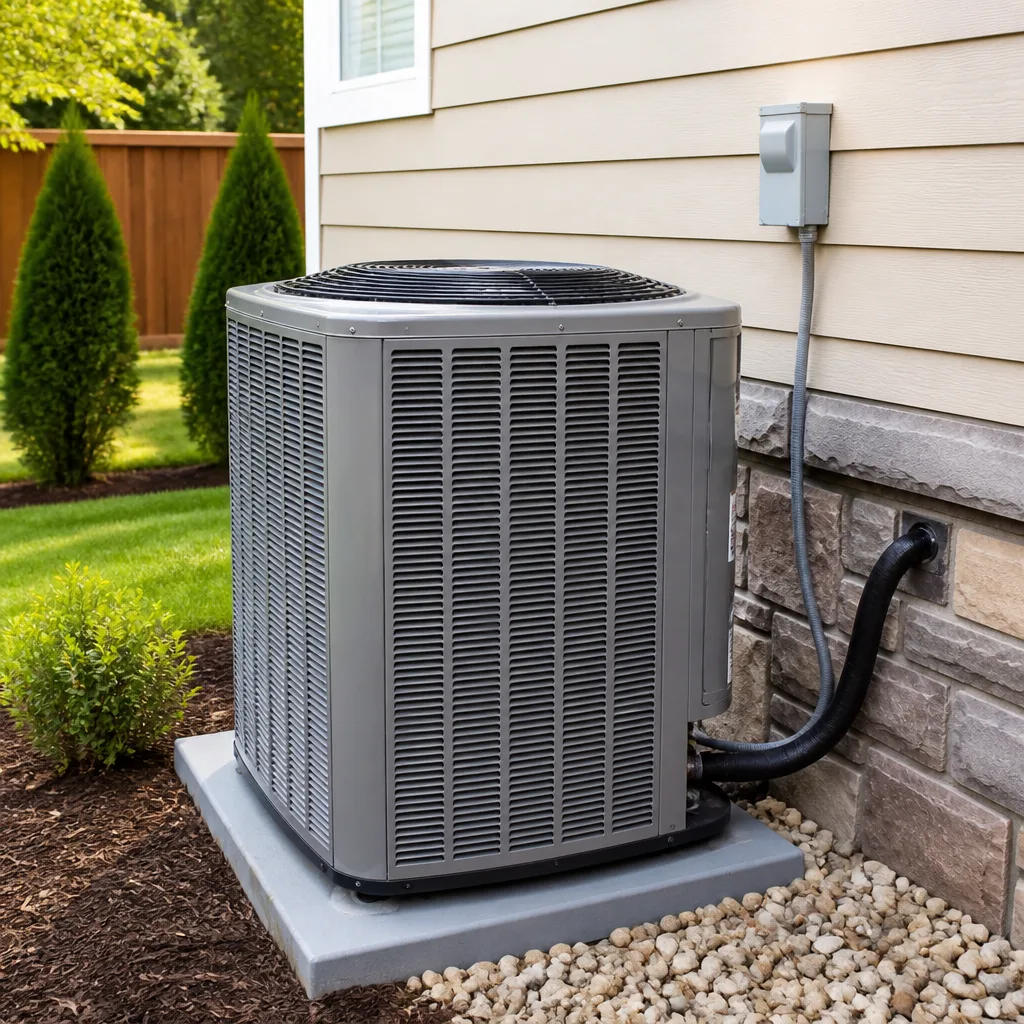 AC repair
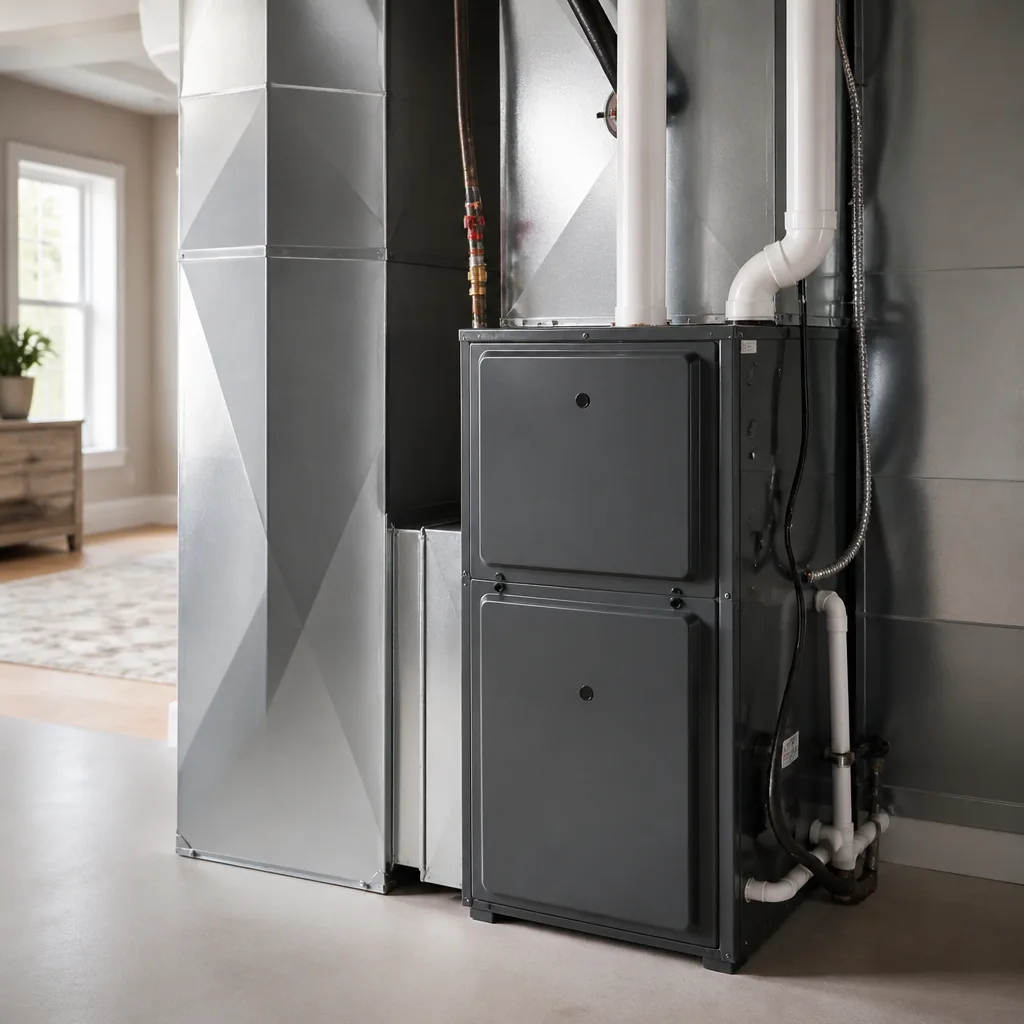 Furnace & heating
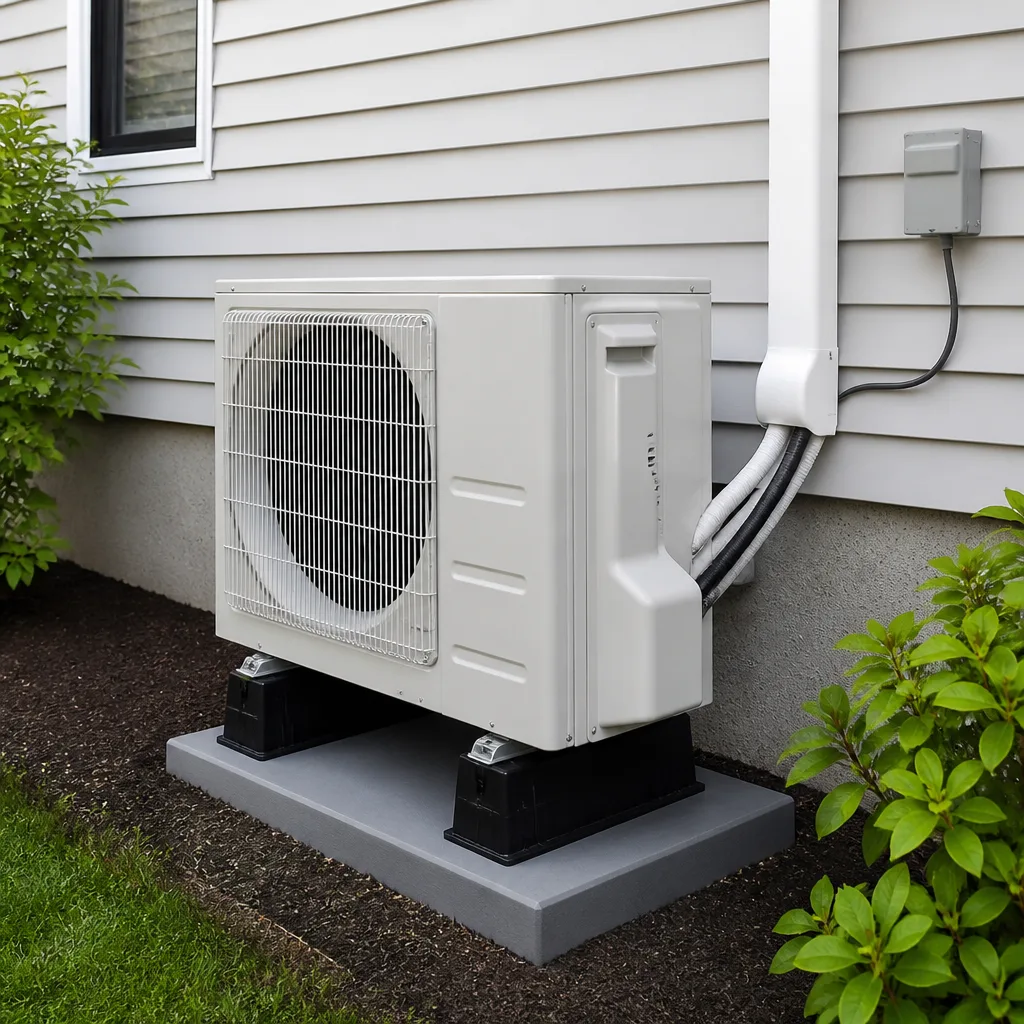 Heat pumps
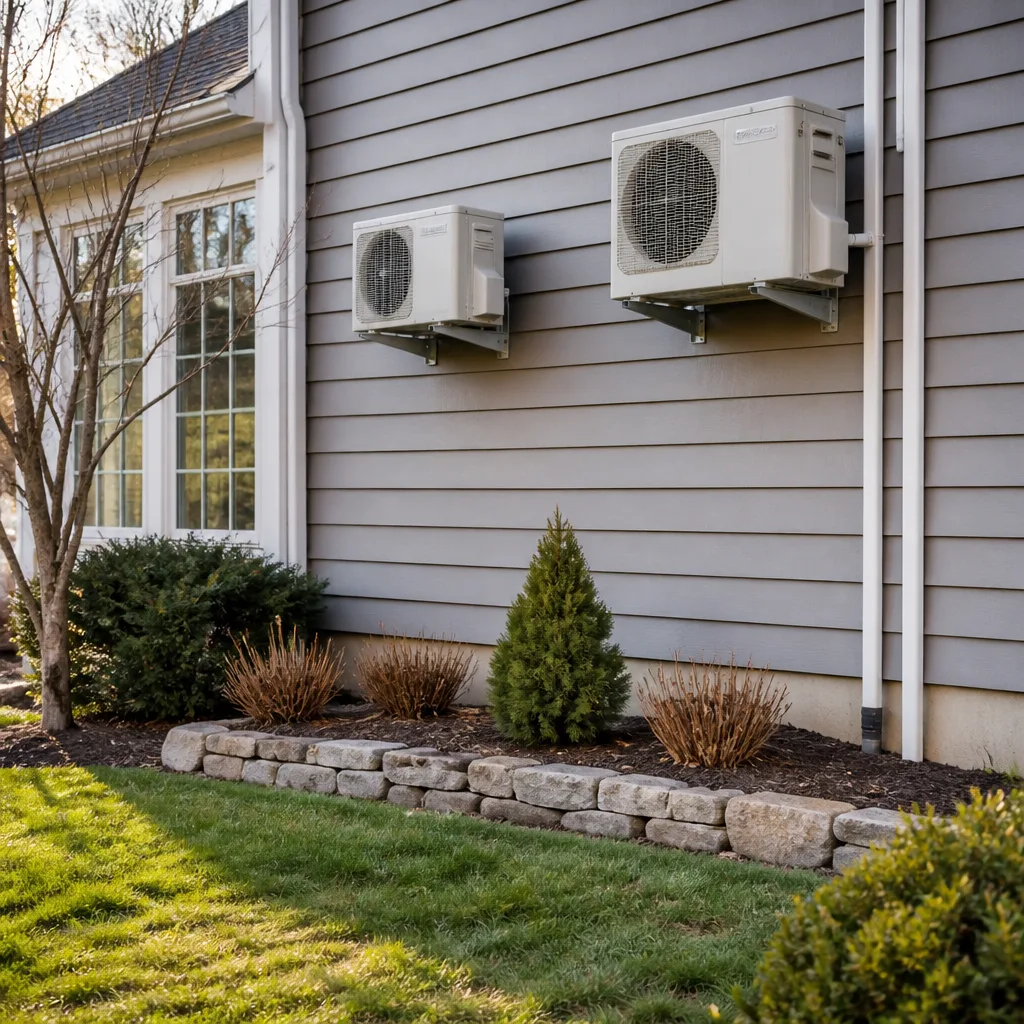 Ductless mini splits
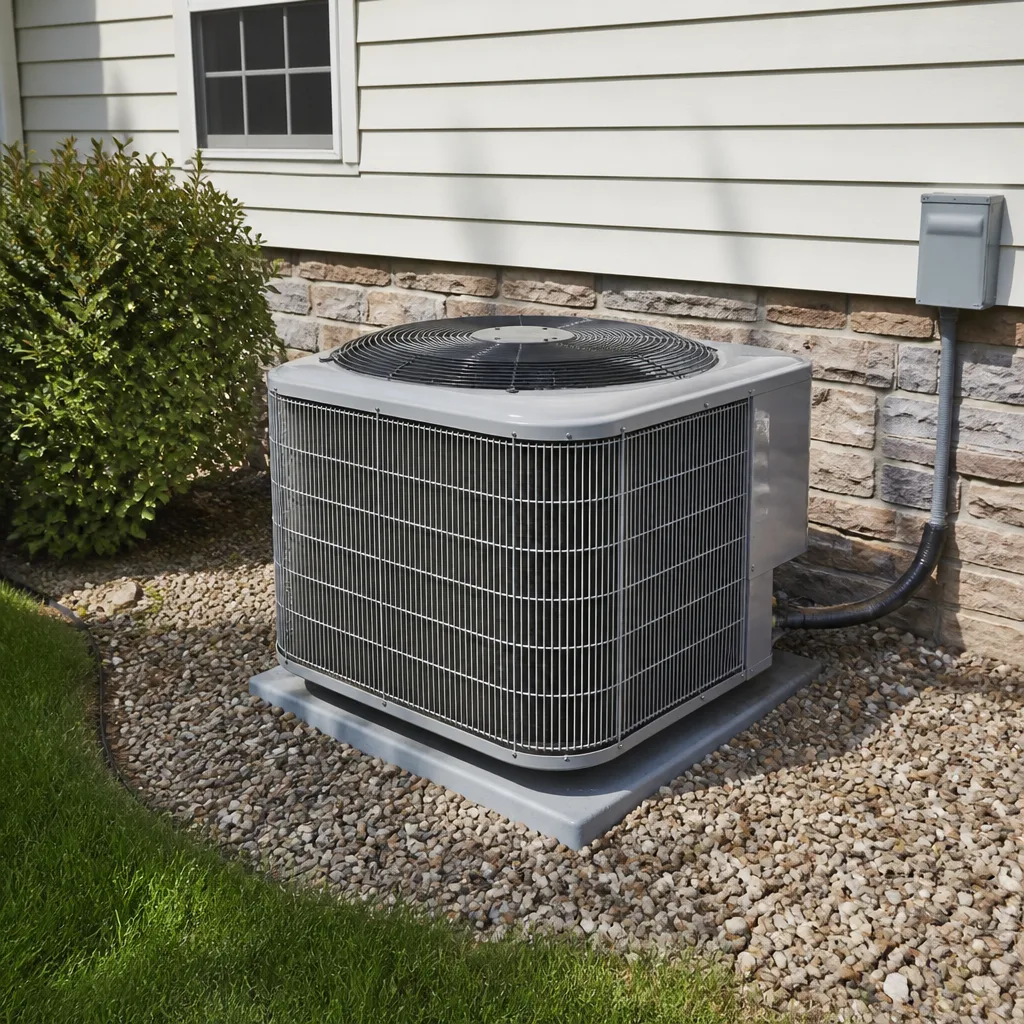 Carrier
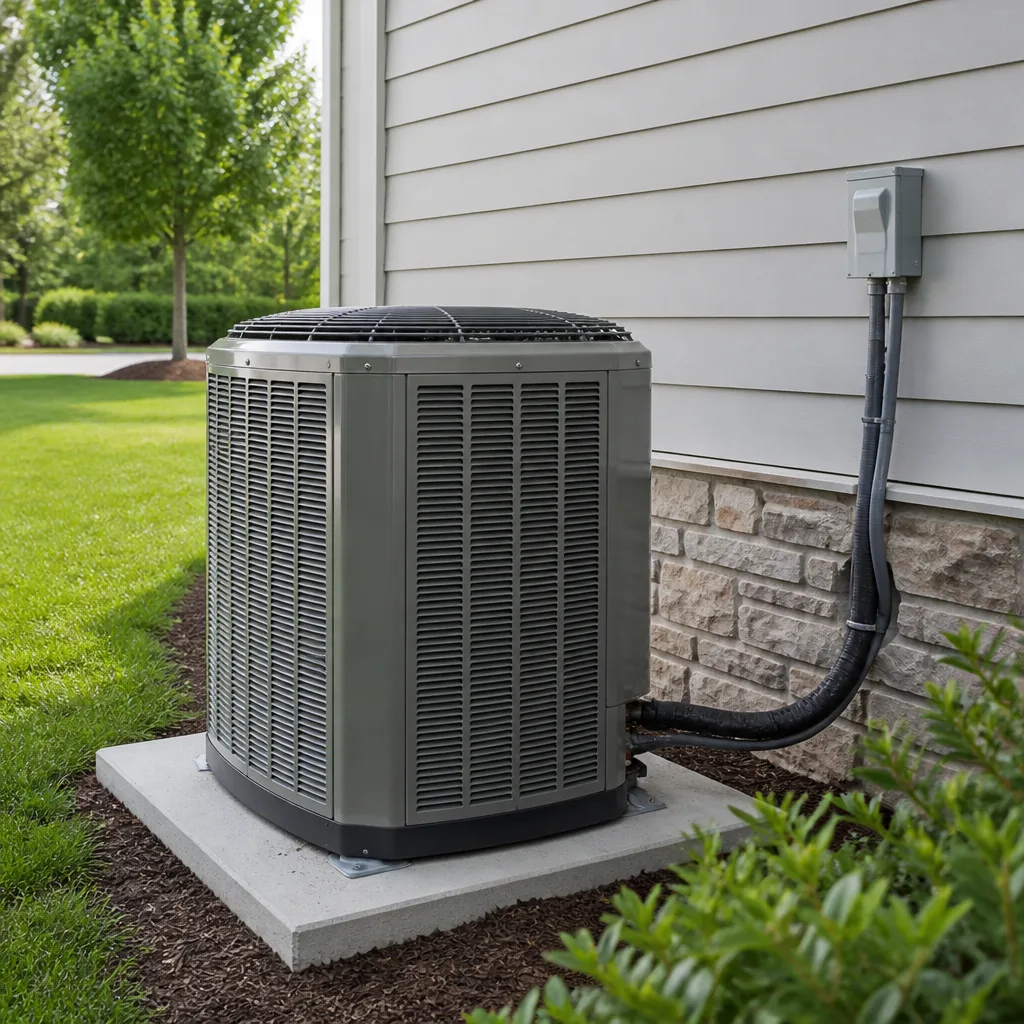 Trane
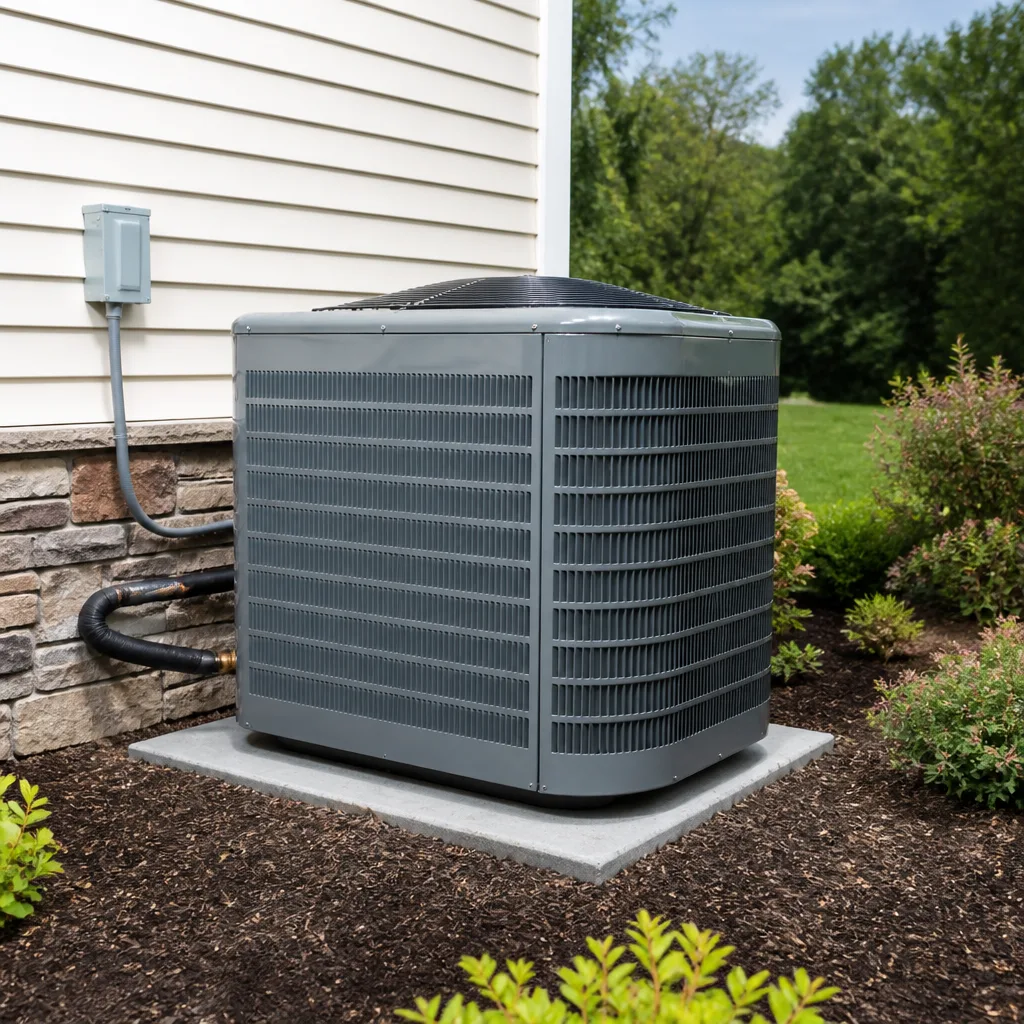 Goodman
Seasonal tune-up and full diagnostic on your Carrier, Trane, or Goodman system - readings shown to you before any repair is proposed
Diagnosis first, numbers second - you approve the repair price before a single part goes in.
Get your free estimateHVAC Emergency Preparedness Guide for Hayward Homes
Most homeowners picture an HVAC emergency as a furnace dying in a blizzard. In Hayward, that’s not the shape of it. The system that fails here usually fails on the third straight day of a hundred-degree stretch, when every service company in the East Bay has a full dispatch queue by mid-morning. The homeowners who come through that stretch comfortably aren’t the lucky ones. They’re the prepared ones. They know their model number. They have a fan and a plan. They’ve already talked to a technician. This guide walks through what HVAC emergency preparedness actually looks like in Hayward: the first 30 minutes of a failure, staying cool during a multi-day wait, what counts as a real emergency, and how to build a relationship with a repair company before you need one urgently.
Quick Answer
HVAC emergency preparedness in Hayward means knowing your equipment before a failure – model and serial numbers, service history, the breaker location – and having a plan for the first 30 minutes of an outage. During a 1 to 3 day wait for service in a heat event, cooling a home without AC comes down to window management timed to Bay Area breeze patterns, ceiling fans set to draw air up, and moving vulnerable household members to the coolest room on the ground floor. A true emergency involves a gas smell, a burning odor from the equipment, or water actively running from the drain pan; those warrant calling 911 or the gas utility first, then a technician.
Styles & brands we work with
- AC repair
- Furnace & heating
- Heat pumps
- Ductless mini splits
- Carrier
- Trane
- Goodman
Table of Contents
- Building a Pre-Season Relationship With an HVAC Company
- The First 30 Minutes of an HVAC Failure in a Hayward Heat Event
- The Pre-Failure Documentation Checklist
- How to Cool a Hayward Home Without AC During a 1 to 3 Day Wait
- What Counts as a True HVAC Emergency vs. a Priority Repair
- When to Call 911, the Gas Utility, or a Technician
- Winter Preparedness for Hayward’s Mild Season
- Why Knowing Your Brand Matters in an Emergency
Building a Pre-Season Relationship With an HVAC Company
The single highest-value prep step in Hayward is a pre-season call, made in spring, before the first heat wave tests every cooling system in the city. What that looks like in practice is not a contract or a paid plan. It’s a short introduction: a call to a multi-brand HVAC company, a description of your system, and a request for a basic inspection. That visit does two things. It catches the failing capacitor, the clogged condensate line, or the dirty coil before they take your system down in July. And it puts your address and equipment on a technician’s radar, which changes the shape of the conversation when hundreds of homeowners are calling at once.
We work with homeowners across Hayward who schedule a spring check and then don’t think about their system again until something goes wrong. That’s the point. Good preparedness is invisible by design.
What a pre-season relationship looks like
- A spring or early summer inspection of the AC, before the cooling season peaks.
- A fall check of the furnace, before the first cold snap in November.
- The service company’s number saved in your phone, labeled clearly.
- A folder (physical or digital) with your equipment documentation.
- One conversation with a technician who has looked at your specific system once already.
That’s a low-effort relationship. It doesn’t require a service contract, and it doesn’t lock you in. It just means that on the day your system quits, you’re calling a company that has already seen your equipment, and you are not starting from zero.
If your system is older and you’re weighing repair against replacement, a pre-season visit is also the right moment to get a straight answer. We’re comfortable telling homeowners when a repair makes sense and when it doesn’t. That conversation is far easier in April than in August, when the repair is the only path and you haven’t had time to plan. Our AC Repair Hayward team handles that first look without a sales pitch attached.
The First 30 Minutes of an HVAC Failure in a Hayward Heat Event
The first 30 minutes of an HVAC failure shape everything after. Not because you can fix the system in 30 minutes, but because the decisions you make – where people go, what you turn off, who you call – determine whether the next few days are manageable or miserable. Here’s the sequence we recommend, in order.
- Check the thermostat, filter, and breaker first. Confirm the thermostat is set to COOL (not FAN), the filter isn’t packed solid, and the breaker at the panel hasn’t tripped. None of these explains most failures, but a tripped breaker or dead batteries in a thermostat can look exactly like a dead system.
- Move vulnerable household members first. Infants, elderly adults, and anyone with a heart or respiratory condition should be moved to the coolest room on the lowest floor immediately, not after you’ve diagnosed the system. Heat illness builds faster than people expect.
- Close blinds on south- and west-facing windows. In Hayward, the afternoon sun comes in low from the west and heats rooms fast. Blocking it before the house heats up is worth more than blocking it after.
- Open the house to the evening breeze once the outside air is cooler than the inside air. More on the specifics below.
- Call for service. Call (888) 870-1847. We answer 24/7. Fast dispatch from 7am to 7pm, Sunday through Friday. Have your model number and a description of the symptoms ready – that shortens the call and gets a technician to the right part faster.
Notice that diagnosing the system is at the bottom of that list. In a heat event, the priority order is people first, house second, equipment third. The homeowners who end up in a genuinely uncomfortable spot are almost always the ones who spent 45 minutes tinkering with the thermostat before they moved anyone out of the hot room.
If you have a multimeter and are comfortable with basic electrical checks, testing a thermostat is a reasonable first step. Beyond that, we’d stop. Capacitors, contactors, and compressors can deliver a serious shock, and the diagnosis is not worth the risk.
The Pre-Failure Documentation Checklist
You want the following information documented before anything fails. None of it takes more than 20 minutes to gather, and all of it changes the quality of the call you make when you’re standing in a hot house at 3pm.
- Outdoor unit model number. Printed on a plate on the side of the condenser cabinet.
- Outdoor unit serial number. Same plate, usually below or beside the model.
- Indoor unit (air handler or furnace) model and serial. Often inside the cabinet door, or on a sticker on the front panel.
- Installation date. If you moved into the house, the home inspection report often has it. If you bought new, the close-of-escrow documents may.
- Last service date and what was done. A photo of the technician’s invoice or the service tag on the unit works fine.
- Filter size. Written on the cardboard frame. Almost everyone guesses wrong on the phone.
- Breaker location and the circuit that feeds the condenser. Whether it’s outside on the panel or in the garage box, know which switch it is.
- Condensate drain location. Where the drain line exits – into a floor drain, outside, or a pump – matters when water starts running.
Take a photo of each equipment data plate and drop them into a single phone album labeled “HVAC.” That’s the whole system. It takes less time than a trip to the grocery store, and it makes the difference between a technician arriving with the right part and one arriving to find out what you have.
Knowing your brand matters here too. Our technicians have up to 10 years of experience and are factory-familiar with nine of the most widely installed residential brands, including Bryant, American Standard, York, and Daikin. If your unit is one of those, the call is faster because we can anticipate the likely failure points. If you’re not sure what brand you have, that’s a good use of the photo album.
How to Cool a Hayward Home Without AC During a 1 to 3 Day Wait
During the peak of a heat event, a wait of one to three days for a technician is realistic. That is not a failure of any one company; it’s how a regional service queue behaves when the whole East Bay calls on the same morning. Cooling a Hayward home without AC for a couple of days is a matter of working with the local breeze pattern – the marine air that moves in from the Bay most summer afternoons – and managing solar gain where it enters.
The house-cooling sequence
- Close every window and blind by mid-morning. The marine air isn’t in yet, and until it is, sealing the house keeps the warmer outside air out.
- Run ceiling fans counterclockwise. That pushes air down and creates a wind-chill effect on the skin at lower speed than you’d guess. Set them to medium, not high – high just stirs warm air around.
- Watch for the marine layer to arrive. In Hayward, that’s typically mid-to-late afternoon on the west side of the city and often earlier near the Bay-facing flats. When the outside air drops below the inside air temperature, open the windows on the windward side and the highest window on the opposite side of the house.
- Draw cool air in with a box fan set in a west- or bay-facing window, blowing in. This is the fastest way to swap the air in a house once the marine breeze shows up.
- Use a whole-house fan if you have one. It pulls air down through the house and out through the attic, which does more than any single room fan.
- Cool the body, not the room. A cool shower, cold damp cloths on the wrists and back of the neck, and lying still during the hottest two hours of the day do more than fighting the air temperature directly.
- Sleep low. Hot air rises. The ground floor and, where available, a lower-level room are the coolest spaces in a two-story Hayward home.
Homes on the flat side of Hayward, closer to the Bay, cool off much faster in the evening than homes up in the hills toward the east, where the marine air arrives later and softer. If you live in the hills, budget for a hotter evening and start your cross-ventilation earlier.
If a technician comes out and the diagnosis is a failed compressor or a refrigerant leak that cannot be repaired economically, the choice between another repair and a full system replacement comes up quickly. Our AC installation work starts with an honest conversation about which option costs less over the next several years, not which option sells this week.
What Counts as a True HVAC Emergency vs. a Priority Repair
Not every AC failure is an emergency. Some are urgent. The distinction matters because a true emergency is a safety matter, and a priority repair is a comfort matter. The first should prompt a 911 call or a gas utility call before anyone touches the equipment. The second is a call to a technician and a plan for the wait.
True emergencies – handle immediately
- Gas smell near the furnace or water heater. Leave the house, don’t flip any switches, and call 911 and your gas utility from outside. Do not attempt to find the leak yourself.
- Burning smell from the vents or the equipment itself. Turn the system off at the thermostat and at the breaker, then call 911 if there is any visible smoke or flame. Otherwise, call a technician and don’t run the system until it’s inspected.
- Carbon monoxide alarm sounding. Get everyone outside and call 911. Do not re-enter the home until the fire department clears it.
- Water actively running from the indoor unit or drain pan. Turn the system off, shut off the water supply if the drain is connected to a float switch, and call a technician. Water damage compounds fast in a Hayward home with a slab or a garage-mounted air handler.
- Sparks, a burning smell at the breaker panel, or a hot-to-the-touch panel. Turn the breaker off if you can do so safely, then call 911 or an electrician before anyone touches the HVAC equipment.
Priority repairs – call today, manage the wait
- AC blowing warm air on a hot day, no other symptoms.
- System running but not cooling the house to the setpoint.
- Furnace not igniting in winter, no gas smell and no CO alarm.
- Outdoor unit not turning on, or short-cycling on and off.
- Weak airflow from the vents.
If any item in the second list lands on a day the house hits triple digits – and in Hayward that usually means the inland side of the city and the hills – treat it as an urgent priority and call early. Call (888) 870-1847. We answer 24/7. Fast dispatch from 7am to 7pm.
When to Call 911, the Gas Utility, or a Technician
The right first call depends entirely on the symptom. Getting this wrong wastes time in a real emergency or wastes a call in a non-emergency. Here’s the short version.
Call 911 if you see or smell:
- Smoke or flames from the equipment.
- A carbon monoxide alarm sounding.
- Sparks from the breaker panel or the equipment.
- A gas smell with an obvious source you can see but cannot shut off.
Call your gas utility if you smell gas but have no visible fire:
Leave the house first, then call from outside. The utility has the equipment and the authority to shut off service at the meter.
Call a technician if:
- The system is not cooling or heating but is otherwise behaving normally.
- You hear unusual noises – grinding, squealing, banging.
- The unit is short-cycling.
- Water is dripping from the indoor unit and you’ve shut it off.
- You’re not sure what’s happening and need a real diagnosis.
One note for Hayward homeowners: when in doubt, call the technician line and describe the symptom. A trained dispatcher can tell you within a minute whether what you’re describing is a safety issue or a service call. Call (888) 870-1847. We answer 24/7. A call outside dispatch hours is booked into the next opening, Sunday through Friday, 7am to 7pm.
Winter Preparedness for Hayward’s Mild Season
Hayward’s winters are mild, and that’s actually a reason preparation slips. Nobody expects a furnace to fail because nobody expects the furnace to work hard. But heating systems fail here all the same – usually the first cold weekend in December, when the system runs for the first time in nine months and discovers what broke while it sat idle. The furnace capacitor that aged quietly through summer tends to pick that weekend to fail.
The prep is straightforward and shares the documentation topic above. A pre-season furnace inspection in the fall catches the two most common cold-weather failures before they happen: a dirty flame sensor that refuses to let the burner light, and a failing igniter that lights sometimes and doesn’t other times. Both are inexpensive to fix on a scheduled visit and unpleasant to discover on a Friday night when the house is cold.
Winter prep checklist
- Change the furnace filter before the first cold snap.
- Test the thermostat in HEAT mode before you need it, ideally in October.
- Confirm the CO alarm is working and not expired.
- Have the furnace inspected once before the season.
- Clear anything stored within a couple of feet of the furnace cabinet.
- Write down the furnace model number alongside the AC numbers.
Our AC repair and furnace work are handled by the same technicians, which matters when the season flips and the homeowner doesn’t have to call a different company. Cooling and heating covered, under one number.
Why Knowing Your Brand Matters in an Emergency
Every brand has its own failure patterns. A Bryant condensing unit and a York condensing unit don’t share a control board or a capacitor spec, and a technician who works on one brand day in and day out will diagnose a fault on the other more slowly. In an emergency, that difference is measured in minutes and in the number of trips to the parts house.
Our technicians are factory-familiar with nine of the most widely installed residential HVAC brands: Carrier, Trane, Lennox, Goodman, Rheem, York, Daikin, Bryant, and American Standard. That covers the premium tier and the high-value tier, which is what shows up in Hayward homes most often. Being brand-familiar doesn’t mean we recommend a specific brand by default. It means we diagnose faster because we’ve seen the same failure on the same equipment before, and we can tell you honestly whether a repair or a replacement is the right call for the system you actually have.
What we won’t do is steer you toward a brand because it pays better. The recommendation is based on your existing equipment and your budget. If your 15-year-old Goodman needs a compressor and the rest of the system is in good shape, we’ll say so. If your Daikin is on its last legs, we’ll say that too, and give you the honest number for the alternative.
Common Mistakes to Avoid
- Waiting until the first heat wave to test the AC. In Hayward, that means discovering the failure on the same morning every other homeowner does, which is the same morning every service queue is full. Test the system in the spring, while the calendar is open.
- Not knowing the model and serial numbers. Half of the time on a first-visit diagnosis is spent finding the equipment data plate. Having a photo of it in your phone cuts that down immediately and lets the technician arrive with the right part.
- Trying to recharge refrigerant yourself or “topping off” the system. Refrigerant handling requires a license and equipment, and more importantly, a low refrigerant charge is a symptom of a leak, not the problem itself. Charging without finding the leak is money spent twice.
- Running the system with a burning smell or a tripped breaker that keeps tripping. A breaker that trips, resets, and trips again is telling you something is drawing more current than it should. That is a safety issue, not a nuisance, and continuing to reset it risks a fire.
- Blocking returns and registers with furniture. In Hayward homes where the return is on a hallway wall or in the floor, a pushed-back sofa or a rug over the return will choke the system and mimic a mechanical failure. Check airflow before you call.
- Ignoring a slow drain line. A drain that’s starting to clog but hasn’t overflowed yet is a water-damage event waiting for the next hot weekend. Clear it or have it cleared before the cooling season.
- Hiring a single-brand shop for a system they don’t work on. If your system is a York and the company only services Carrier, you’ll spend a week finding out. Ask about brand coverage on the first call, not the third.
See the difference
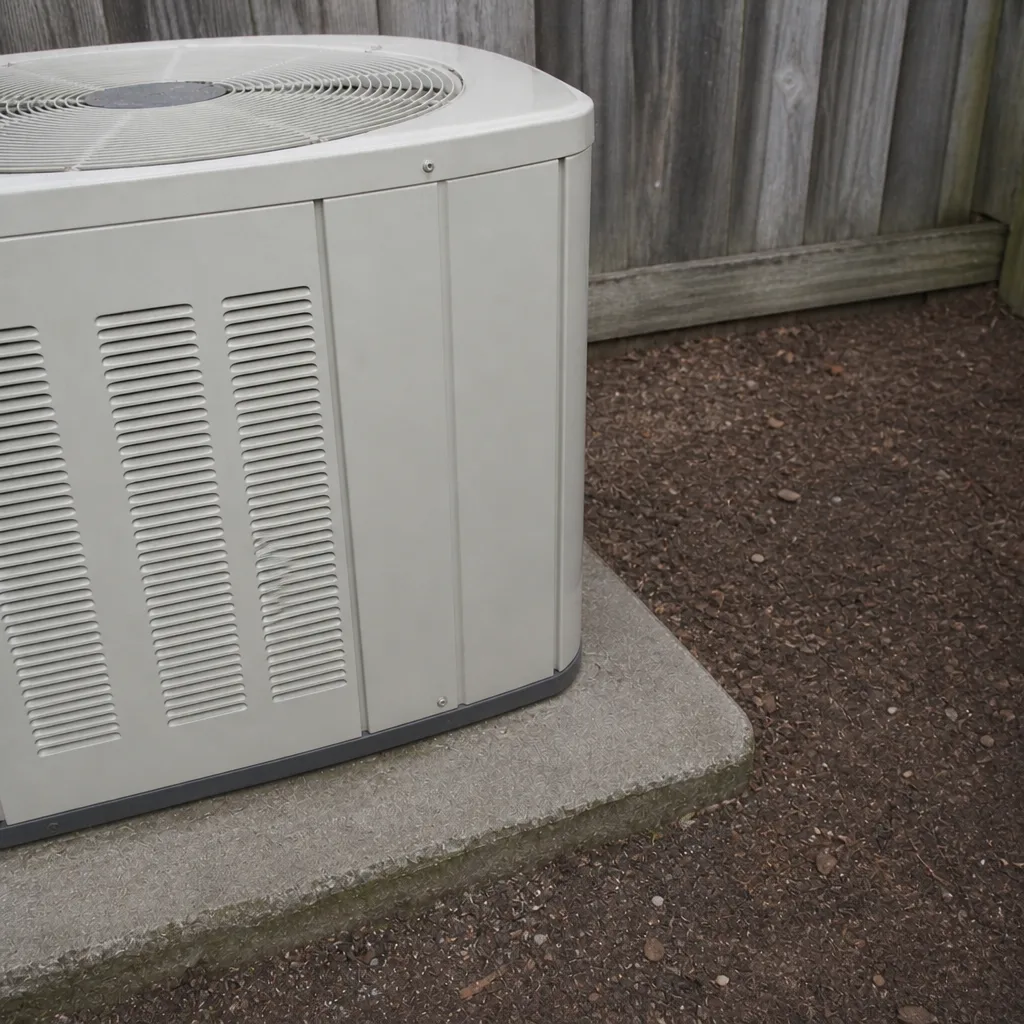
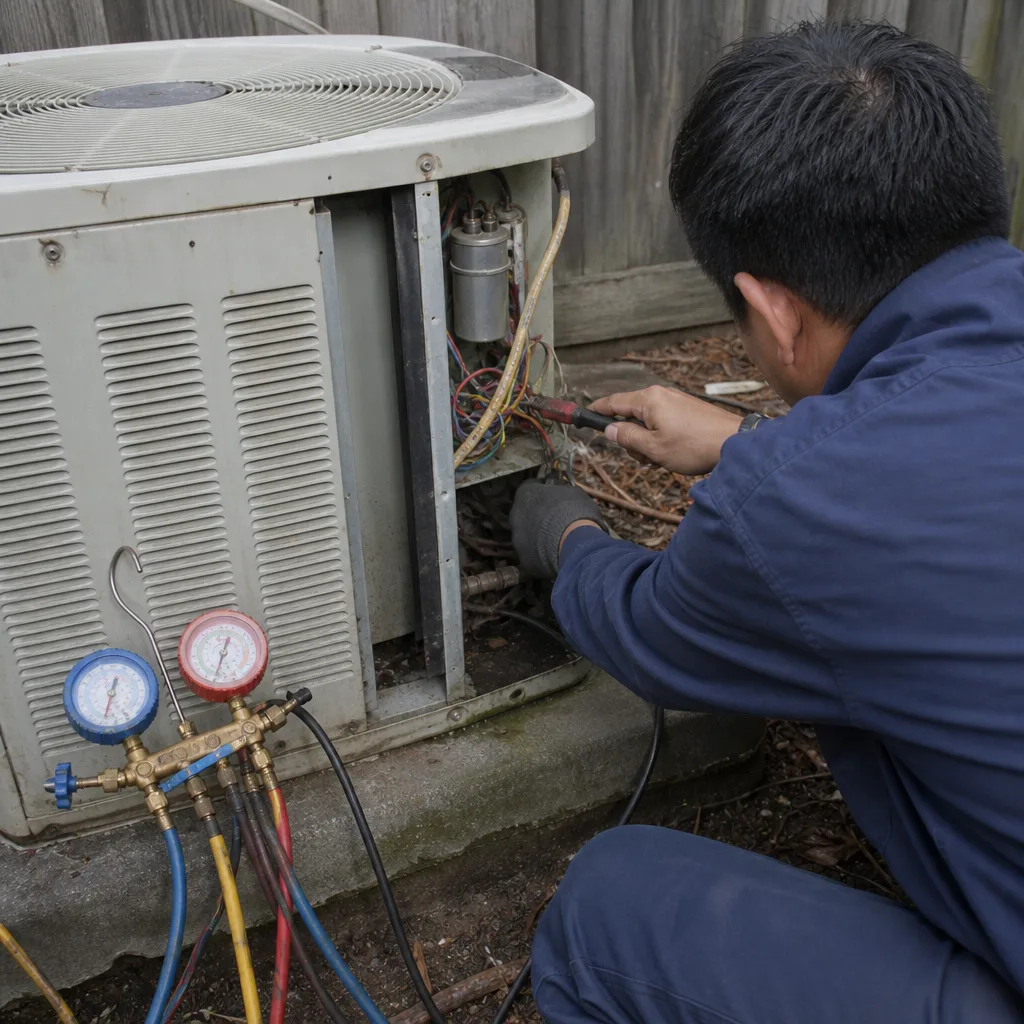 Before
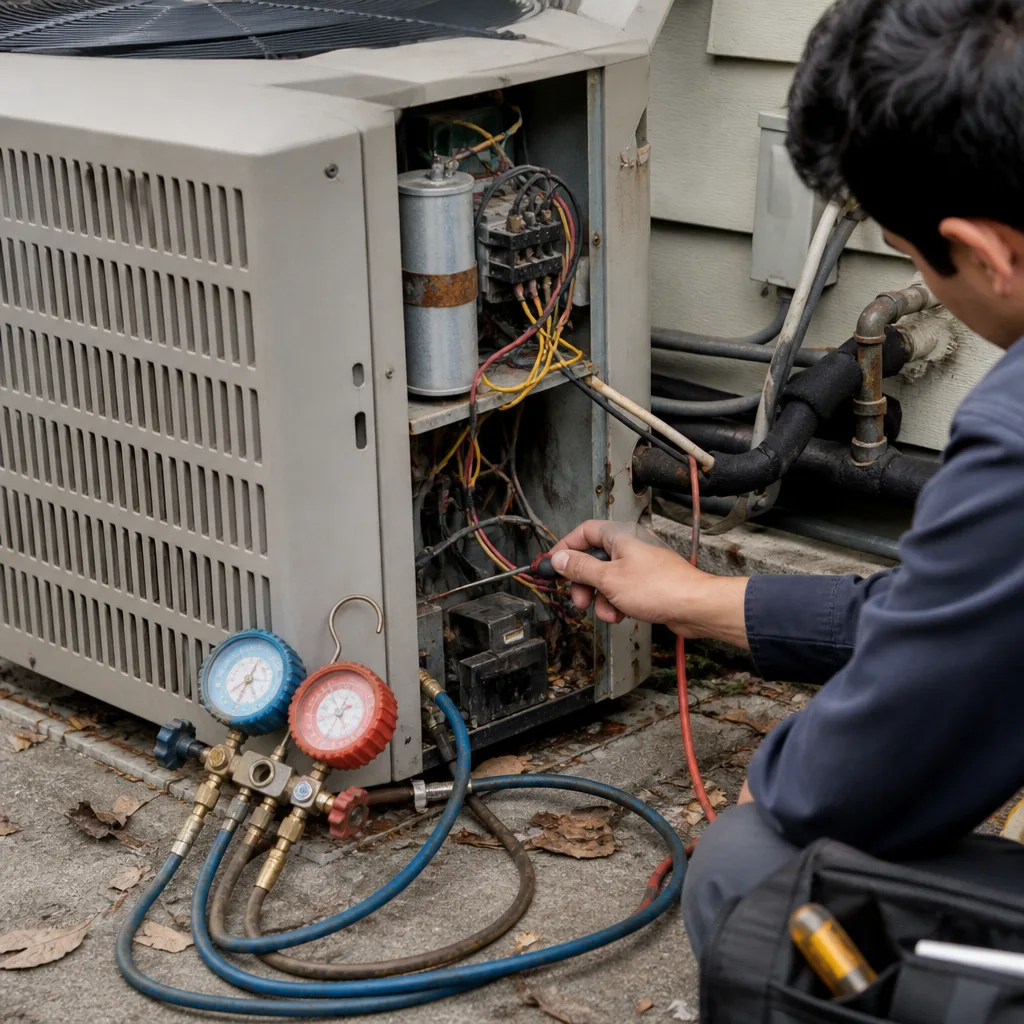
 After
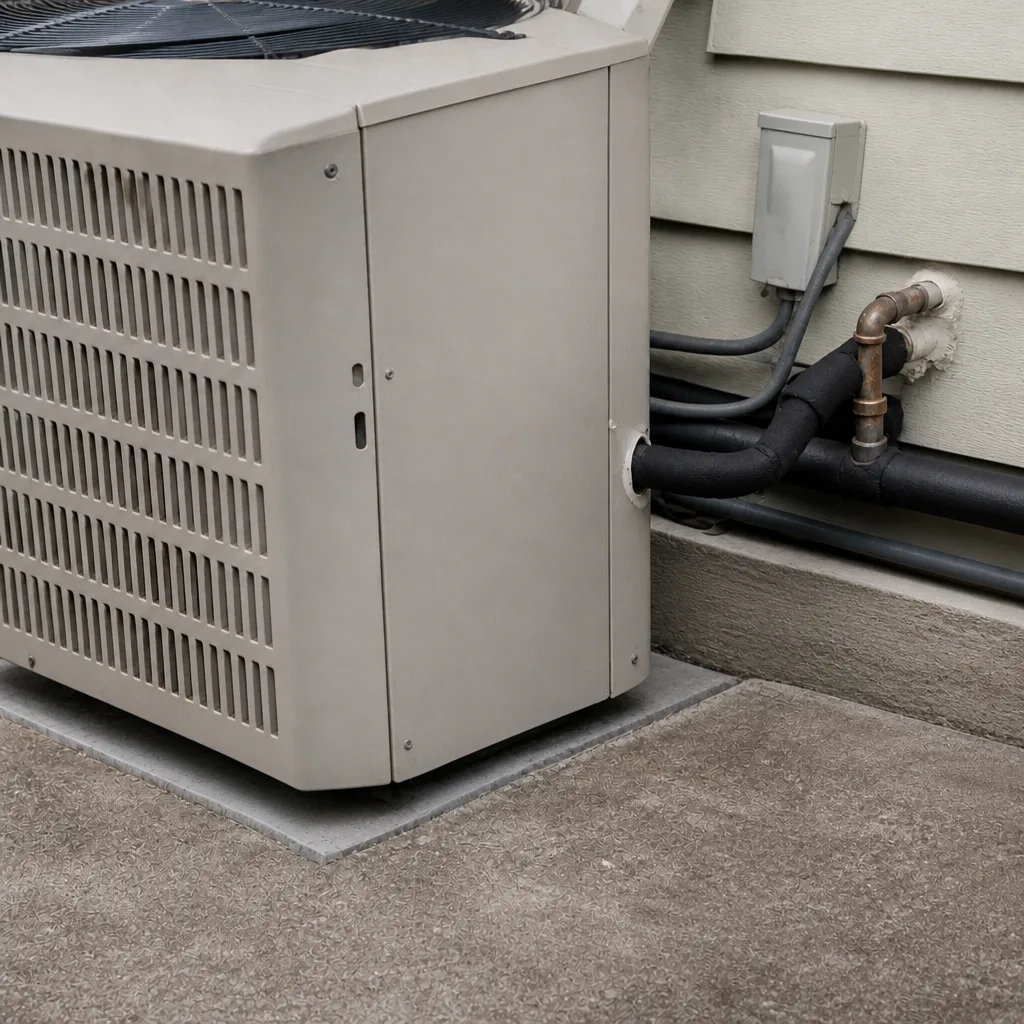
 Before
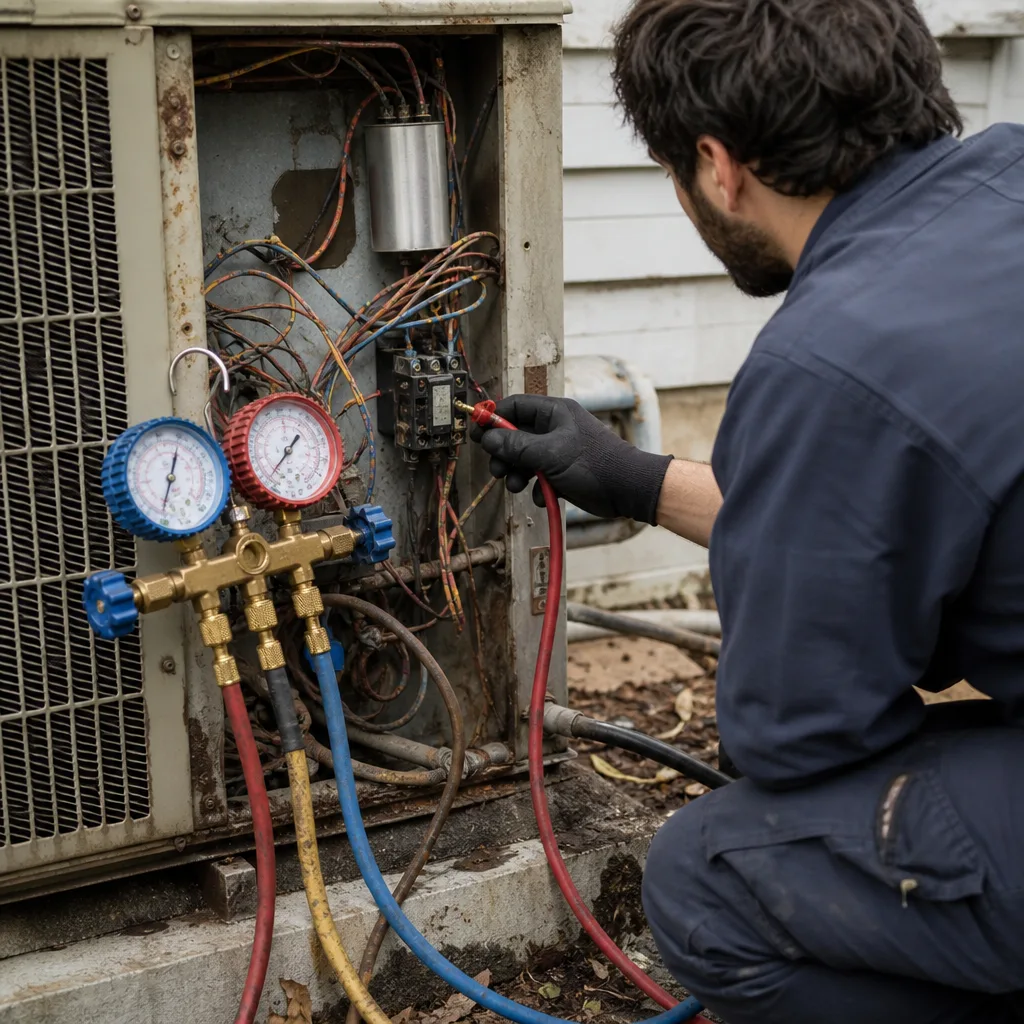
 After
 Before
 After
When to Call a Professional
Call a professional for anything that involves the sealed refrigerant circuit, the electrical components inside the equipment, the gas train on a furnace, or any symptom on the safety list above. Call right away – not in the morning, not after the weekend – if you smell gas, hear the CO alarm, or see water actively running out of the indoor unit. For the standard failures – no cooling, no heat, short cycling, unusual noise – calling early in the dispatch window gets you scheduled faster than calling late. Our team handles AC repair, AC installation, and furnace repair across Hayward, and estimates are free.
AC Repair Hayward offers free estimates in Hayward – call (888) 870-1847. We answer 24/7. Fast dispatch from 7am to 7pm, Sunday through Friday, and we don’t charge a premium for a call that comes in early in the day. The price is set per job by the written estimate, so you know exactly what you’re getting before we start.
Frequently Asked Questions
Expect one to three days for non-emergency cooling repair during a major heat event, because every service company in the East Bay is working the same queue. A true emergency – gas smell, burning odor, active water leak, or a CO alarm – is handled differently and should prompt a 911 or gas utility call first. Call (888) 870-1847 to get on the schedule. We answer 24/7, and free estimates are available.
Have your outdoor unit’s model and serial number, the filter size, a description of the symptom, and whether the breaker has tripped. If you’re not sure, call anyway – a dispatcher can walk you through finding the plate in a minute. Call (888) 870-1847. A call outside dispatch hours is booked into the next opening, Sunday through Friday, 7am to 7pm.
Short cycling and unusual noise are priority-repair symptoms, not emergencies, but they can turn into one if the compressor is failing. Turn the system off at the thermostat and call a technician rather than running it until it quits. Call (888) 870-1847 and we’ll get a diagnosis on the schedule. Estimates are free.
No – a full-service HVAC company handles both cooling and heating, so you don’t hand off to a separate contractor when temperatures drop. We handle AC repair, AC installation, and furnace repair with the same technicians who are factory-familiar with nine major residential brands. One company, one number. Call (888) 870-1847 for a free estimate.
Yes, and the method depends on the local marine breeze. Close the house and blinds by mid-morning, open windows on the bay-facing side and the highest window opposite once the outside air drops below inside air temperature, and use box fans or a whole-house fan to draw cool air in. Move vulnerable household members to the lowest floor, and use cold compresses during the hottest hours. If it’s a multi-day wait, call (888) 870-1847 to lock in your slot.
Yes. Each brand has its own control boards, capacitor specs, and known failure points, so a brand-familiar technician diagnoses faster than a generalist. Our technicians are factory-familiar with nine widely installed brands including Bryant, Daikin, York, and American Standard. We’re not going to steer you toward a brand – we’re going to recommend the fix that fits your system. Call (888) 870-1847 for a free estimate.
The Bottom Line
HVAC emergency preparedness in Hayward comes down to doing the small work ahead of time so that the day your system quits, you’re not starting from scratch. Know your model and serial numbers. Have a spring and fall inspection on the books. Understand the difference between a safety emergency and a priority repair, and know which call to make first. When the first 100-degree stretch hits, the house that stays comfortable is usually the one whose owner made a phone call in April. Our team can be that phone call. Call (888) 870-1847. We answer 24/7. Fast dispatch from 7am to 7pm, Sunday through Friday, and the estimate is free.
Written by the team at AC Repair Hayward.