
Last updated November 15, 2026
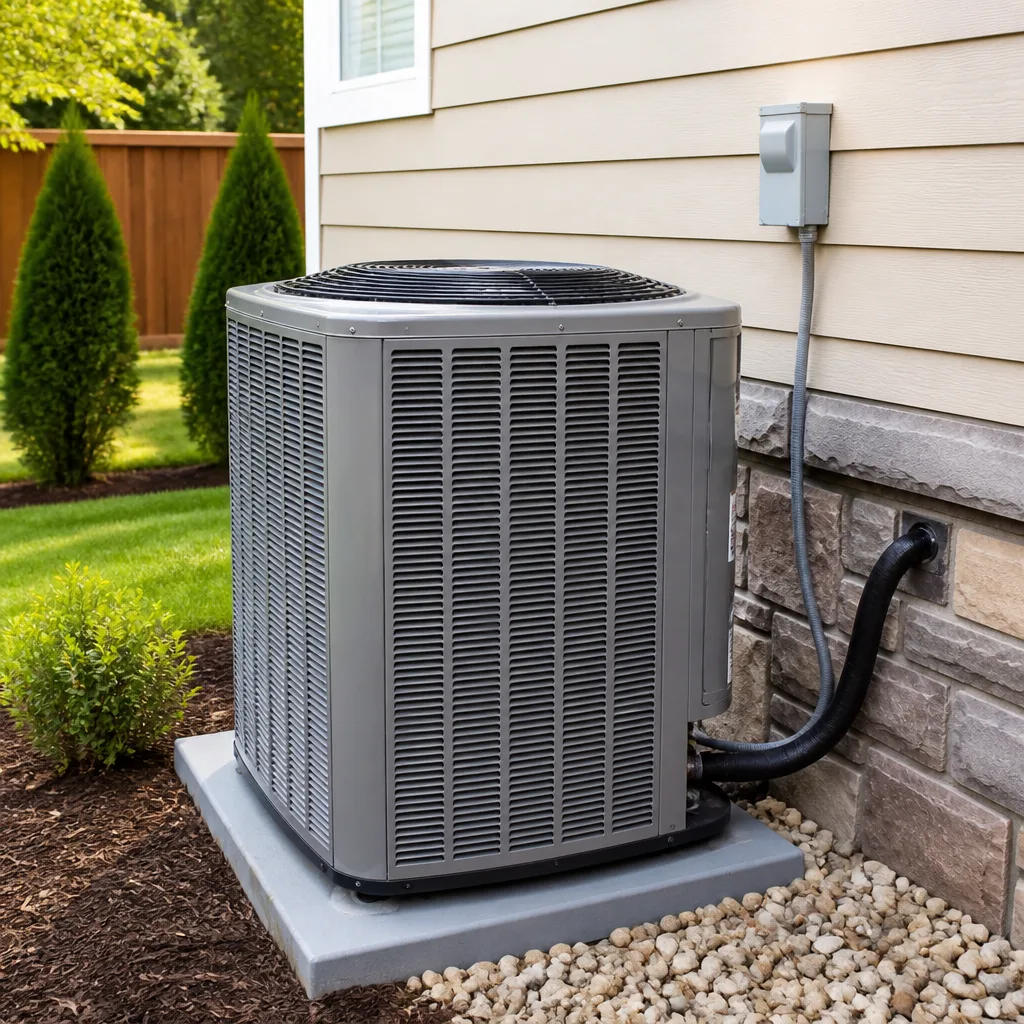 AC repair
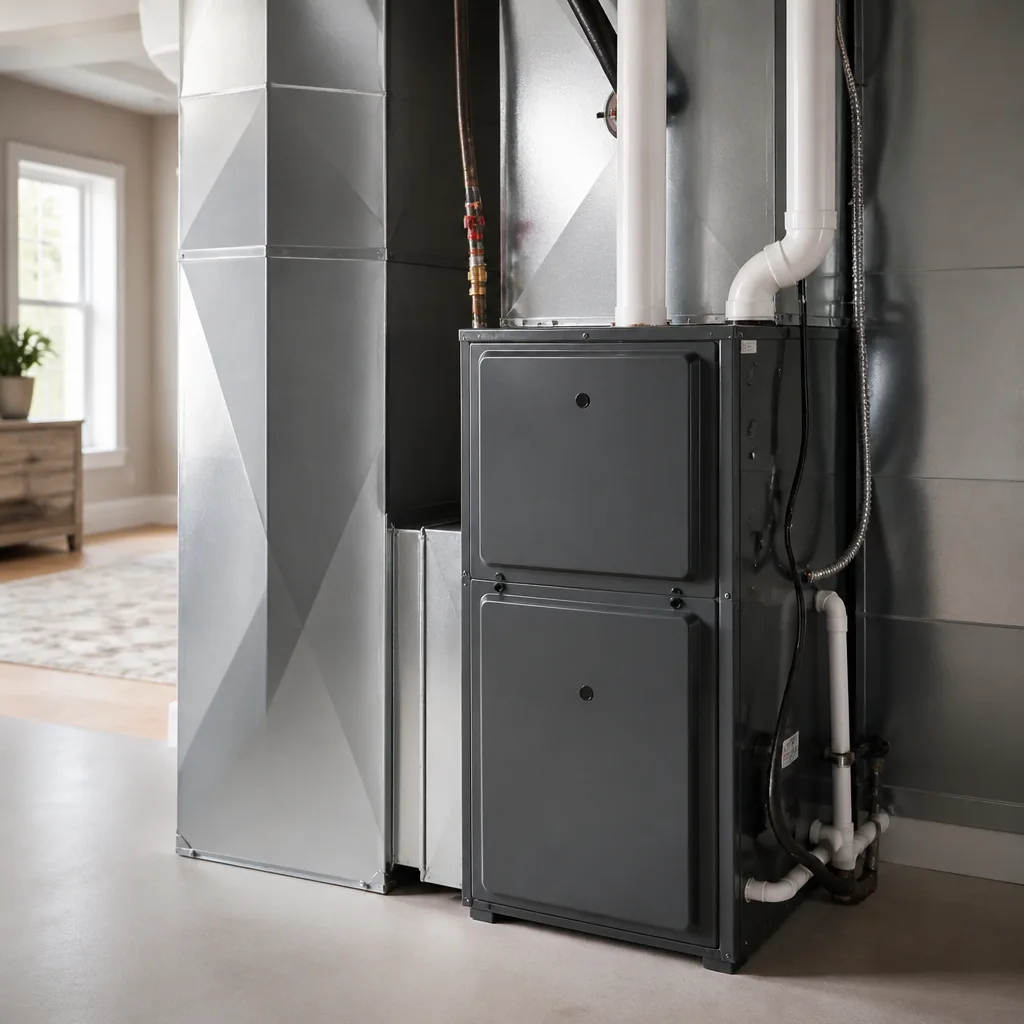 Furnace & heating
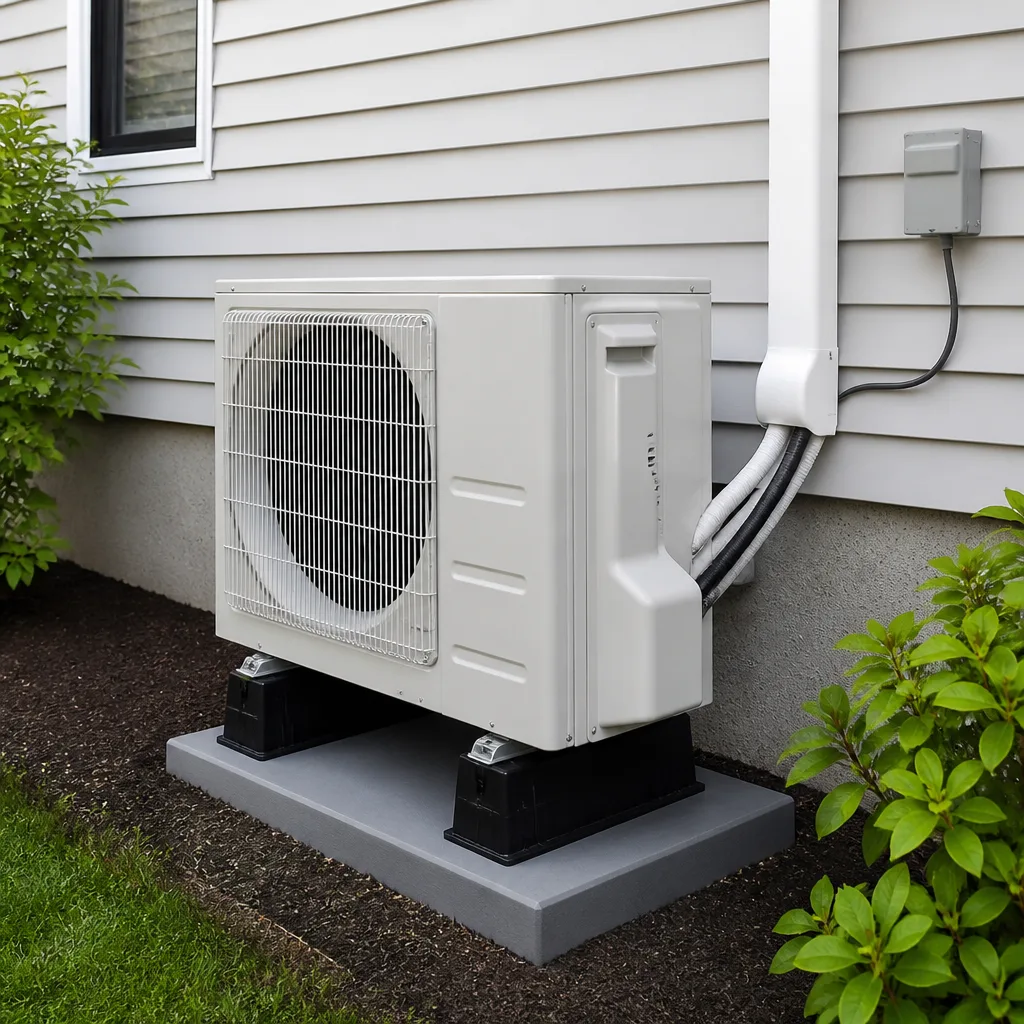 Heat pumps
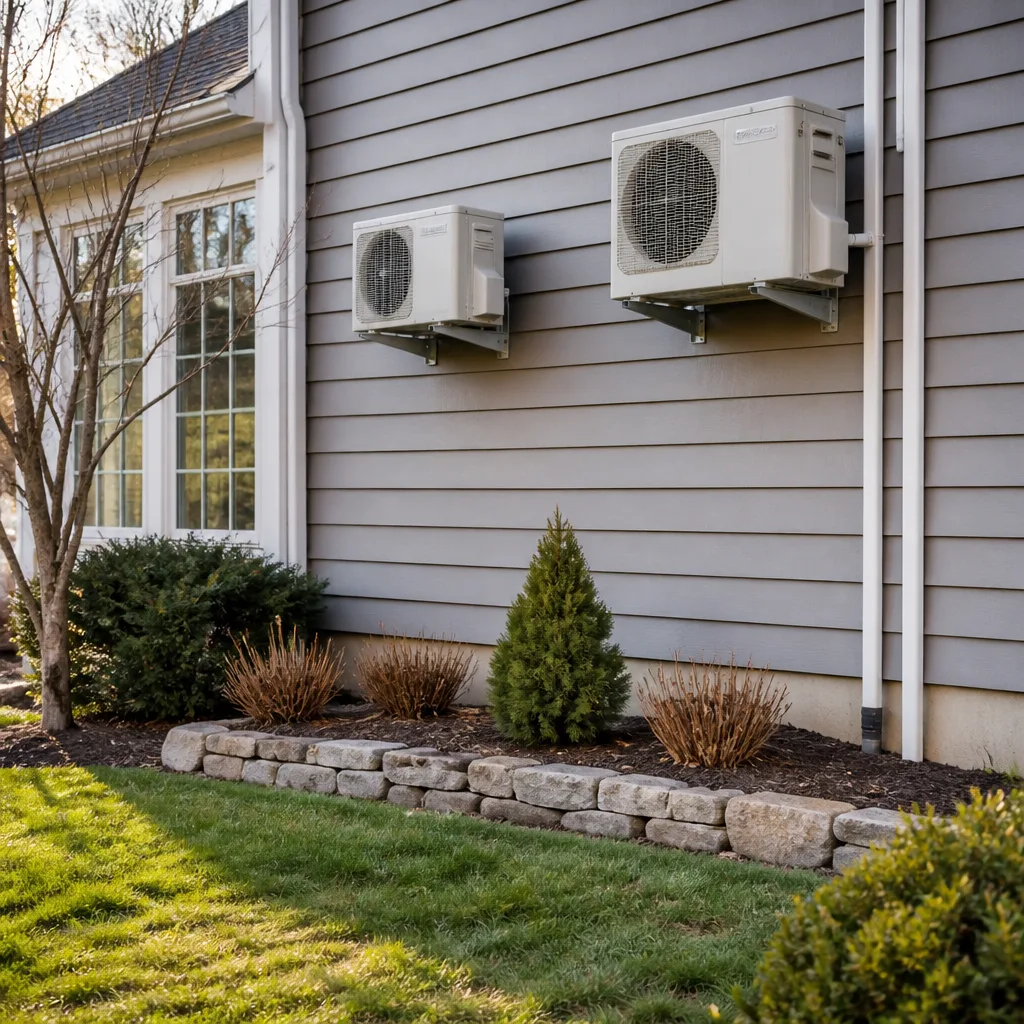 Ductless mini splits
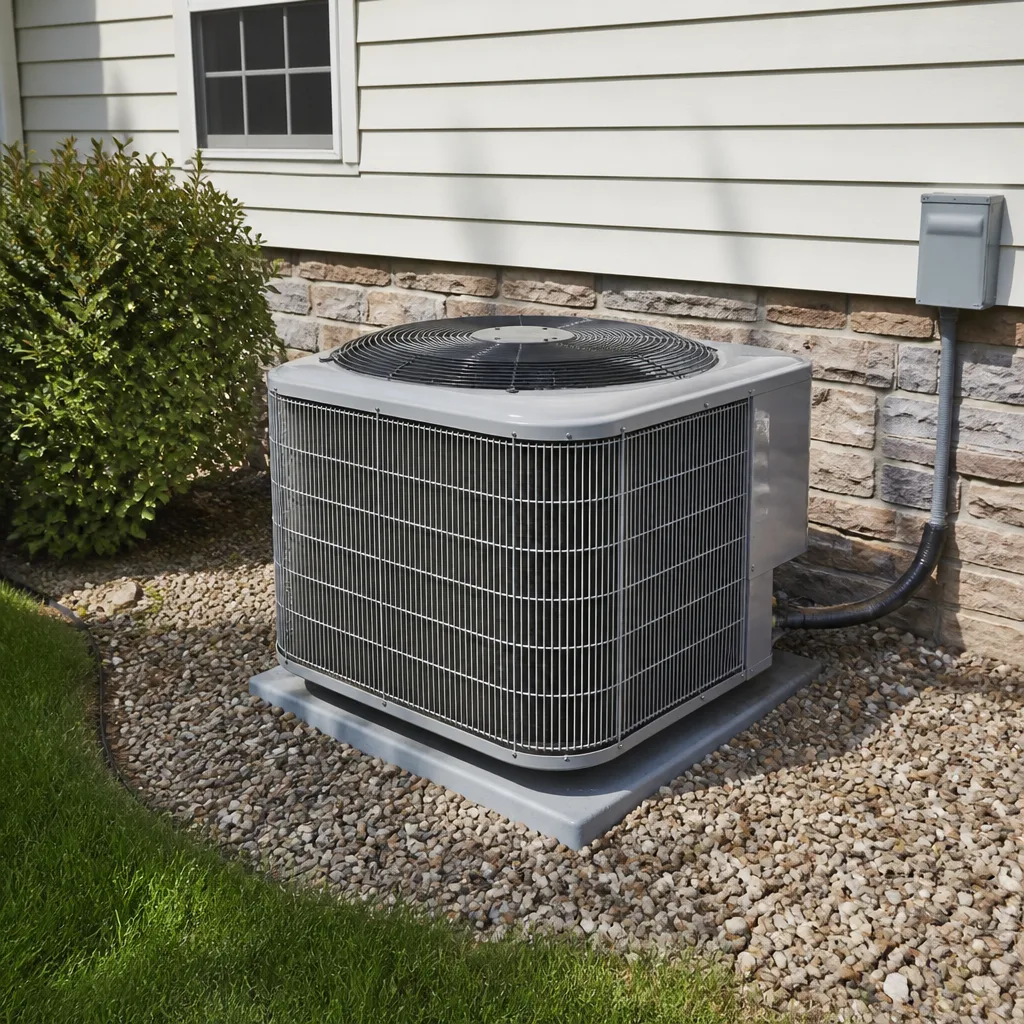 Carrier
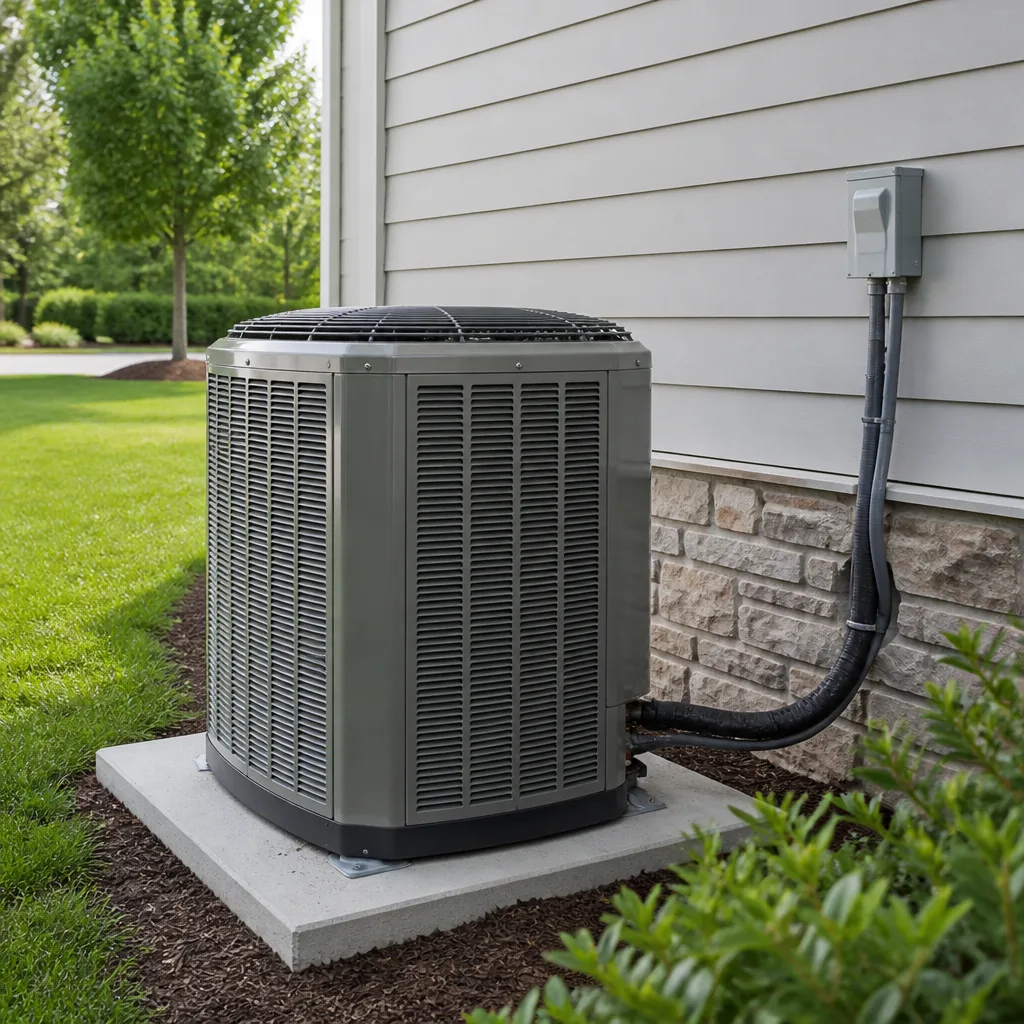 Trane
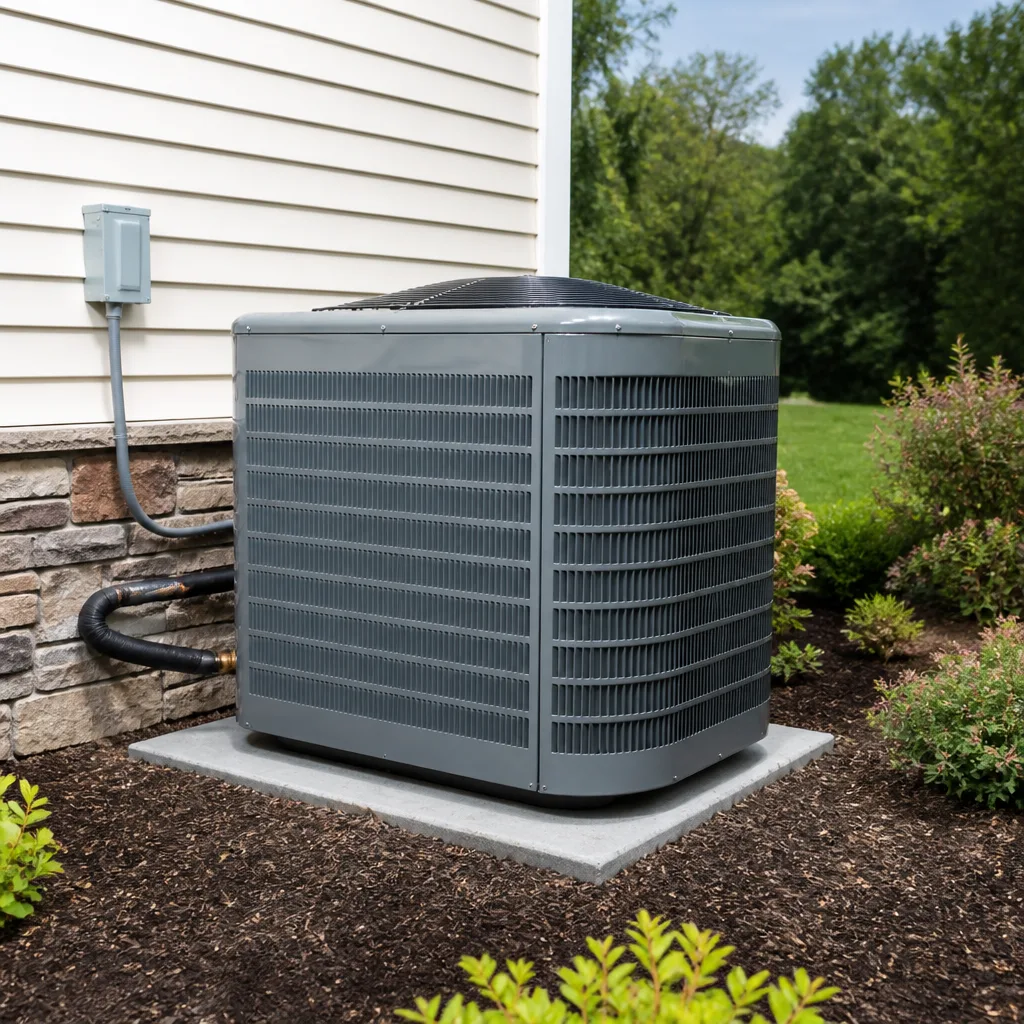 Goodman
Seasonal tune-up and full diagnostic on your Carrier, Trane, or Goodman system - readings shown to you before any repair is proposed
Diagnosis first, numbers second - you approve the repair price before a single part goes in.
Get your free estimateHVAC Cost Breakdown: The Hayward Homeowner’s Reference for 2026
Most HVAC cost guides online are written for a national audience, and that’s the problem. A “typical” full system replacement quoted at $5,000 to $7,000 sounds reasonable until you’re sitting in a Hayward living room with a contractor telling you the number is closer to $9,000 to $14,000. That gap isn’t a scam. It’s the Bay Area. Labor rates here run higher, equipment sits on more expensive real estate before it reaches your yard, and permit fees follow local schedules that don’t match what a national average assumes. This reference gives you real 2026 ranges for common Hayward HVAC jobs so you can tell a fair quote from an inflated one.
Quick Answer
A full HVAC system replacement in Hayward in 2026 typically runs $9,000 to $14,000, with standard-efficiency single-system swaps near the low end and heat pump or high-efficiency installs at the top. Routine tune-ups land around $150 to $250, refrigerant recharge runs $250 to $600 depending on refrigerant type, and evaporator or condenser coil replacement falls between $900 and $2,200 installed. Bay Area labor, local permit fees, and ductwork condition are the three biggest swing factors.
Styles & brands we work with
- AC repair
- Furnace & heating
- Heat pumps
- Ductless mini splits
- Carrier
- Trane
- Goodman
Table of Contents
- Why HVAC Costs More in Hayward Than National Guides Suggest
- Itemized 2026 Cost Ranges for Common Hayward HVAC Jobs
- What Drives Cost Variation Within Hayward
- How to Read an HVAC Quote Line by Line
- Repair or Replace? A Break-Even Framework
- PG&E Rebates and California Incentives in 2026
- Brand Matters: What Premium vs. Value-Tier Equipment Costs
- Ductwork: The Line Item Most Homeowners Overlook
Why HVAC Costs More in Hayward Than National Guides Suggest
Hayward sits in a labor market where a licensed HVAC technician commands a wage that would look out of place in most of the country. That wage is the single largest cost driver in any quote you’ll receive. When a national guide reports $6,000 for a system replacement, it’s assuming labor that runs somewhere between $75 and $110 an hour. In the East Bay, that figure is meaningfully higher, and the difference multiplies across the eight to sixteen hours a full replacement takes.
Equipment costs follow the same logic. Distributors serving the Bay Area pay more to warehouse and deliver product here, and those costs pass through to the contractor and then to you. It’s not padding. It’s the cost of doing business in a dense, expensive region.
Permits are the third factor. Most cities in California require a mechanical permit for a system replacement, and Hayward is no exception. Permit fees vary by valuation and scope, and they’re a legitimate line item on any quote. A contractor who tells you “we’ll skip the permit to save you money” is creating a problem for you down the road when you sell the home or need an inspection.
None of this means you should accept any number a contractor writes down. The ranges in this guide exist so you can recognize when a quote is reasonable for Hayward and when somebody is pricing for a market that doesn’t exist. We work on systems across Hayward every week, and the quotes that come in at $18,000 for a standard single-family replacement are the ones that deserve a second opinion.
What the Bay Area Premium Actually Covers
- Labor: Higher prevailing wages for licensed technicians, plus the cost of proper insurance and certification.
- Equipment logistics: Warehousing and delivery costs in a high-cost region.
- Permits and inspection: Mechanical permits, plan review where required, and final inspection scheduling.
- Disposal: Refrigerant recovery, hauling the old unit, and proper disposal of coils and compressors.
Itemized 2026 Cost Ranges for Common Hayward HVAC Jobs
These are typical installed ranges for Hayward in 2026. Every job is different, and the written estimate you receive sets the final price. Use these as a benchmark, not a guarantee.
- Seasonal tune-up: $150 to $250. Includes cleaning, inspection, checking refrigerant levels, and a written report of findings.
- Diagnostic visit: Free estimates are standard; a diagnostic on a malfunctioning system is typically quoted upfront before work begins.
- Refrigerant recharge (R-410A): $250 to $450, assuming no leak repair is needed.
- Refrigerant recharge (R-22 legacy systems): $500 to $900 or higher, since R-22 is phased out and increasingly scarce.
- Capacitor or contactor replacement: $150 to $350 installed. One of the most common repair calls.
- Blower motor replacement: $450 to $900 installed.
- Condenser fan motor replacement: $350 to $700 installed.
- Evaporator coil replacement: $900 to $1,800 installed.
- Condenser coil replacement: $1,100 to $2,200 installed.
- Compressor replacement: $1,400 to $2,800 installed, depending on tonnage and system age.
- Furnace repair (ignitor, flame sensor, control board): $200 to $700 installed.
- Heat exchanger replacement or furnace replacement: $3,500 to $7,500 for a standard furnace swap.
- Full AC system replacement (condenser and evaporator, existing ductwork): $6,500 to $11,000.
- Full HVAC system replacement (AC plus furnace, or heat pump): $9,000 to $14,000.
- Duct replacement (whole home, partial): $2,500 to $6,500, varying widely with attic access and run count.
- Duct sealing (existing ducts): $800 to $2,000.
If you’re comparing these numbers to what a contractor is telling you, the ranges should overlap. A quote for a full cooling and heating replacement in Hayward at $8,000 is on the low side but plausible for a smaller home with existing ductwork. A quote at $20,000 for the same scope deserves a second look and a line-by-line explanation.
What Drives Cost Variation Within Hayward
Two Hayward homes on the same block can receive quotes that differ by thousands of dollars, and it’s almost never because one contractor is gouging. It’s because the physical realities of the two houses are different. Here’s what moves the number most.
Home Age and System Vintage
Hayward has a wide mix of housing stock, from mid-century homes in the Fairview and Harder-Tennyson neighborhoods to newer construction in the hills. Homes built before the mid-1970s often have smaller electrical panels, less attic clearance, and ductwork sized for equipment that no longer exists. Bringing a fifty-year-old system up to current standards sometimes means more than swapping the box outside. It can mean new line sets, a new disconnect, or a panel upgrade. Those aren’t upsells; they’re what it takes to make the new system work.
Ductwork Condition
If your ducts are leaky, undersized, or in the wrong place, a new system will underperform. We’ve seen homes where the duct design assumed a much smaller air handler than what’s being installed today. Replacing those ducts adds $2,500 to $6,500 to the project. Duct sealing alone does a lot of the work for less, but it depends on what’s actually there. This is why a real quote involves an inspection, not just a look at the model number on the outside unit.
Accessibility
An attic unit that requires crawling through a tight space takes longer to service and replace than one with clear access. Second-story systems, units installed in closets, and condenser pads tucked against a fence all add hours. Labor is the biggest cost in any HVAC job, so access directly affects the price.
Permit Complexity
A simple like-for-like replacement usually moves through permitting cleanly. A system change that flips fuel type, changes tonnage, or requires electrical work can add review steps. Most cities require a permit for this work, so ask your city’s building department what the process is for your specific project. It’s better to know before the quote lands than after.
Efficiency Tier and Refrigerant Transition
2026 sees continued movement toward newer refrigerants and higher-efficiency equipment. Higher-efficiency units cost more upfront but move the monthly bill, especially in a climate like Hayward’s where cooling season stretches into October. A Daikin or Bryant unit at the higher end of a product line will price above a base single-stage model from Goodman or Rheem. That’s not a knock on either tier; it’s a difference in what’s inside the box.
How to Read an HVAC Quote Line by Line
A good HVAC quote is specific enough that you can tell what’s included and what isn’t. A vague one-line estimate is a warning sign regardless of the price. Here’s what each section should cover, and where legitimate items end and padding begins.
- Equipment: The exact model number, tonnage, efficiency rating (SEER2 for cooling), and whether it’s a single-stage, two-stage, or variable-speed unit. If the quote says “3-ton AC” without a model, ask for the model.
- Labor: Removal of the old system, installation of the new, and time estimate. Ask how many technicians and how many days.
- Materials: Line sets, refrigerant, pad, disconnect, thermostat, and any electrical components. These should be itemized, not bundled into a single “misc materials” line.
- Permit: Listed separately with the fee amount. Confirm the contractor pulls the permit; a quote that omits it is incomplete.
- Disposal and refrigerant recovery: Legitimate line items. Recovery is legally required, and hauling the old unit costs money.
- Ductwork: Whether any duct modification is included, and whether it’s repair, sealing, or full replacement.
- Commissioning: A proper install includes a startup check on refrigerant charge, airflow, and static pressure. Ask if it’s included.
- Warranty: Manufacturer warranty on parts, and what labor warranty the contractor provides. Get both in writing.
- Payment schedule: Standard is a deposit and a balance on completion. If the schedule is unusual, ask why.
What Legitimate Padding Isn’t
We want to be clear: a line item you don’t recognize is not automatically padding. Duct sealing, a new thermostat, and line set replacement are often necessary. What is padding: a “startup kit” or “system protection package” with no description, a line item for “permits and fees” with no dollar amount, and a lump-sum quote for a system replacement with no breakdown at all. Ask for detail. A contractor who can’t explain a line item in plain language hasn’t done the job right, or hasn’t done their homework.
For help turning a quote into a decision, our team does free estimates in Hayward and will walk through what’s on a competing quote if it helps you compare. You can reach us at (888) 870-1847.
Repair or Replace? A Break-Even Framework
The most common question we get from Hayward homeowners is whether to keep repairing an aging system or replace it. There’s no universal answer, but there is a framework. Every system has an age threshold where the math starts tilting toward replacement, and the way you get there is by adding up what you’ll spend in repairs over the next few years versus what a new system costs.
The Three-Repair Rule
In practice, if a system is ten years old or more and you’ve paid for three significant repairs in the past three years, replacement almost always wins over continued repair. A compressor, a coil, and a blower motor in quick succession tells you the equipment is at end of life, not that it’s the victim of bad luck. The next failure is usually the most expensive one.
A Simple Break-Even Calculation
Take the age of the system, add the cost of the current repair, and compare that total against the cost of a new system spread over its expected life. If a twelve-year-old system needs a $2,000 compressor today, and you can expect another $600 to $1,000 in repairs over the next two years, you’re looking at $3,000 to keep a system that likely has less than five years left. A new $8,000 system with a fifteen-year life averages about $530 per year.
That math gets more favorable with a high-efficiency unit because monthly energy savings add to it. Hayward’s cooling load isn’t desert-level, but you’re running the AC from May into October most years, and higher SEER2 equipment does move the bill. PG&E’s rates are among the higher ones in the country, which makes efficiency gains carry more weight here than in many markets.
Numbered Decision Checklist
- How old is the system? Under 10 years old, repair usually wins. Over 12, replacement starts to be worth pricing.
- What’s the current repair cost, and how does it compare to a replacement?
- Have you paid for two or more repairs in the last three years?
- Is the system still using R-22 refrigerant? If so, recharge costs and availability will only get worse.
- Is there a rebate available that offsets a replacement? (More on that below.)
- Are your ducts in good shape? A new system on bad ducts loses efficiency.
Get the estimate on both options before you decide. Our AC repair estimates include a written summary of what’s failing and what the path forward looks like on each option.
PG&E Rebates and California Incentives in 2026
Rebate programs change annually, and the 2026 versions are worth checking before you sign an installation contract. California has been steadily pushing heat pump adoption for both heating and cooling, and the incentives reflect that direction. PG&E’s residential offerings, combined with state programs, can offset a meaningful slice of a replacement cost, but the paperwork matters as much as the equipment.
Step-by-Step: How to Claim a Rebate
- Check eligibility before install. Some programs require pre-approval or a paper trail showing the old equipment was operational and removed. Confirm the specific terms for the program you’re pursuing.
- Confirm the equipment qualifies. Rebate tiers are usually tied to efficiency ratings. A base single-stage unit may not clear the threshold; a higher-efficiency unit will. Ask for the qualifying spec before you sign.
- Get the permit and inspection in place. Rebate programs typically require a permitted installation with a passing inspection. Skipping the permit disqualifies you.
- Save every document. Invoices, model numbers, serial numbers, permit number, inspection card, and contractor license info. Missing one line can hold up a claim for weeks.
- Submit on time. Rebate windows are finite. Don’t wait until the end of the program year to file.
- Look at federal programs separately. Federal tax credits for qualifying heat pumps have existed in recent years, and there may be credits or deductions available in the 2026 tax year. Talk to a tax professional for specifics, since the details and eligibility change.
We’re happy to walk through what’s available in your ZIP code during a free estimate. We also do AC installation with the paperwork in mind, so the rebate claim doesn’t fall apart after the fact.
Brand Matters: What Premium vs. Value-Tier Equipment Costs
The brand on your equipment affects both the purchase price and what you can expect from service. We’re trained on nine major brands, and that breadth means the recommendation we make is based on your system and budget, not on which unit carries the best margin. Here’s how the tiers tend to shake out for a Hayward homeowner in 2026.
Premium-Tier Equipment
Carrier, Trane, Lennox, Bryant, and American Standard sit in this group. Expect higher upfront cost, more advanced features, and typically better efficiency options at the top of each product line. A two-stage or variable-speed Carrier or Bryant system in Hayward will run toward the upper end of the $9,000 to $14,000 range for a full replacement. The upside is quieter operation and better humidity control, which matters more in Hayward than people expect when summer evenings stay warm.
Value-Tier Equipment
Goodman, Rheem, York, and Daikin are solid performers at a lower price point. A value-tier single-stage system can often be installed for $2,000 to $3,500 less than a comparable premium install. The units are more straightforward, easier to service, and parts availability is generally good. For a homeowner planning to stay in the house ten years or more, the premium tier often pays back in efficiency and comfort. For a homeowner looking at a shorter horizon, value-tier makes solid sense.
Daikin in particular has become a go-to for heat pump replacements in this region, and we service them alongside the rest of the list. The point isn’t that one brand wins. It’s that the right brand depends on the house, the ducts, and what you need the system to do.
Ductwork: The Line Item Most Homeowners Overlook
The single most common surprise in a Hayward HVAC quote is ductwork. Homeowners budget for a new condenser and air handler, then the contractor crawls into the attic and finds ducts that were installed decades ago, leaking at every joint, or sized for a smaller system. That inspection results in an added line item, and it’s usually legitimate.
Why Ducts Matter More Than You Think
A new high-efficiency system running on undersized or leaky ducts will not deliver the efficiency it was rated for. Duct leakage in a typical attic can waste a meaningful percentage of the air you paid to cool. If the ducts are leaking into the attic, you’re cooling the attic. If they’re too small, the system runs longer and harder than it should.
Duct replacement in Hayward runs $2,500 to $6,500 for a whole-home job, depending on run count, attic access, and whether you choose flex or rigid duct. Duct sealing is the lower-cost alternative at $800 to $2,000 and can deliver real improvement if the ducts are structurally sound.
What to Ask About Ducts on Any Quote
- Did the contractor inspect the ducts, or just the equipment?
- Is duct sealing included in the quoted price?
- If not, what condition are the existing ducts in, and what would improvement cost later?
- Is there a static pressure test included in commissioning?
If the answer to the first question is “no,” ask for a second visit before signing anything. Duct condition is the single biggest hidden variable in a Hayward HVAC quote, and it’s worth the extra half hour on the front end.
Common Mistakes to Avoid
- Anchoring to national averages. A quote that matches a $6,000 national replacement average is either undersized for the scope or missing line items. Hayward labor, permits, and disposal add real dollars, and a quote that ignores them usually finds the money back later.
- Accepting a lump-sum quote with no itemization. You can’t compare two numbers if neither one breaks down. Ask for equipment model, permit, materials, labor, and duct scope as separate lines.
- Skipping the permit. A mechanical permit isn’t optional in most California cities, and skipping it can complicate a home sale, void equipment warranty coverage, or knock you out of a rebate program. Ask to see the permit number.
- Buying on price alone. A lower bid often wins by cutting scope, not by offering a better deal. Confirm the ductwork is inspected, the permit is included, and the warranty is in writing on both bids.
- Ignoring your existing ducts during a replacement. A brand new Carrier or Daikin system on old leaky ducts will underperform its rating. Don’t buy a new engine and skip the transmission.
- Filing for a rebate after the fact without checking the rules. Many programs require pre-approval or a permitted install. Confirm the process before work begins, not after the invoice is paid.
- Assuming same-day repair is a sign of a thin scope. A qualified technician on a repair call diagnoses the actual failure and quotes the fix in writing. Speed and thoroughness aren’t opposites when the diagnosis is right.
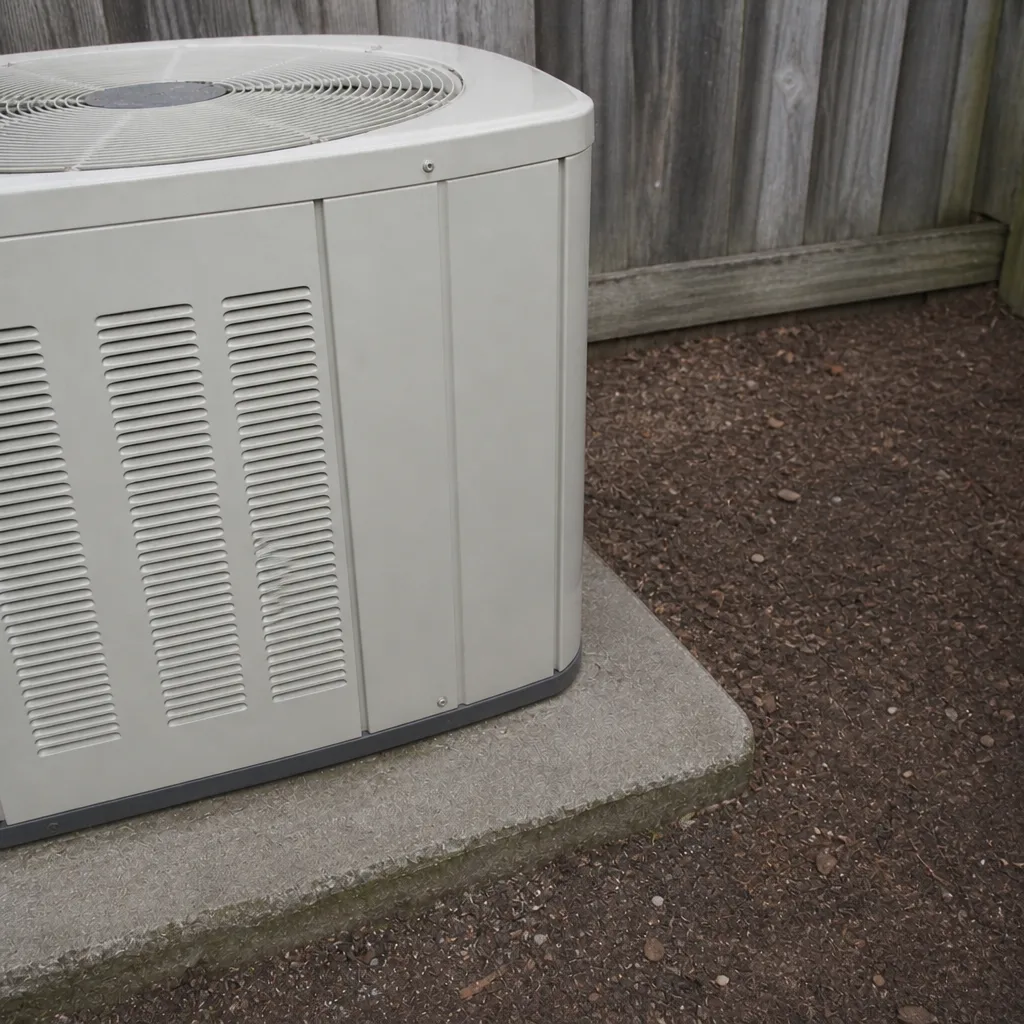
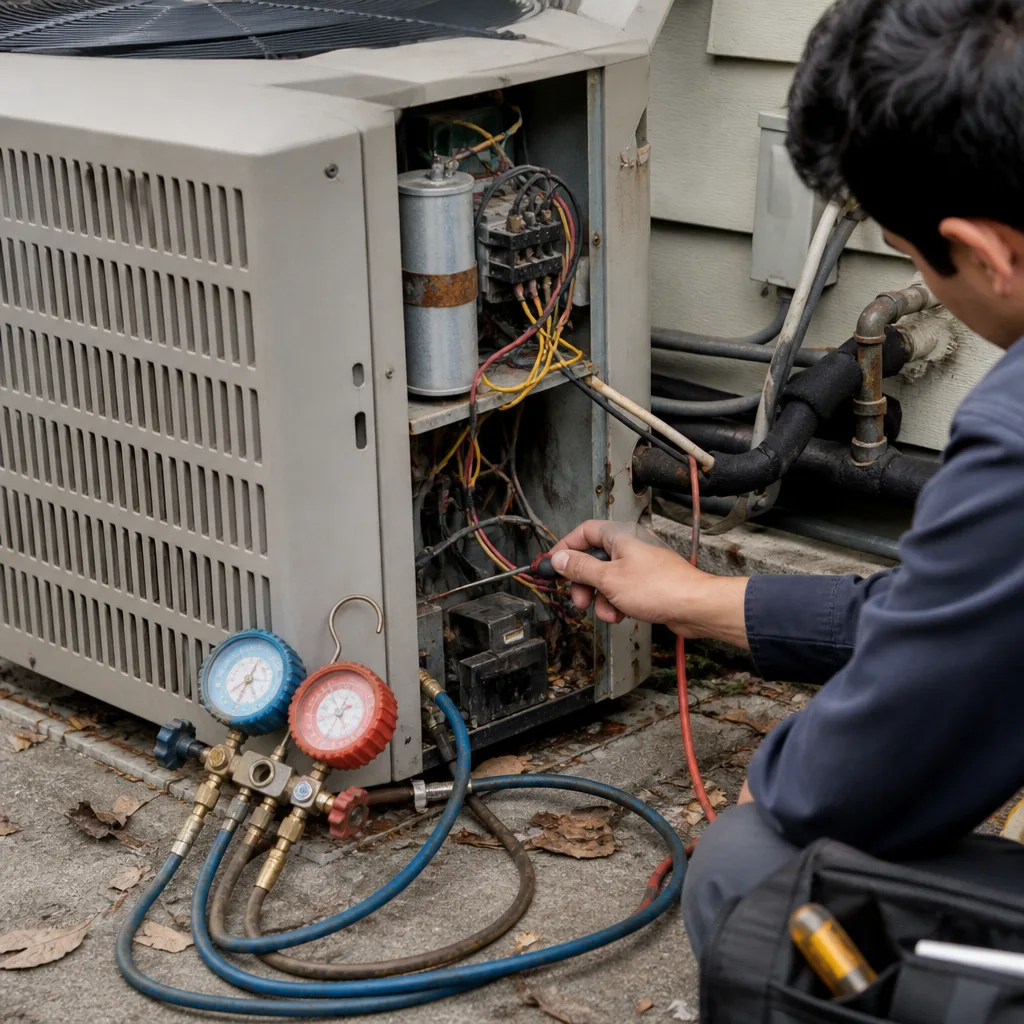
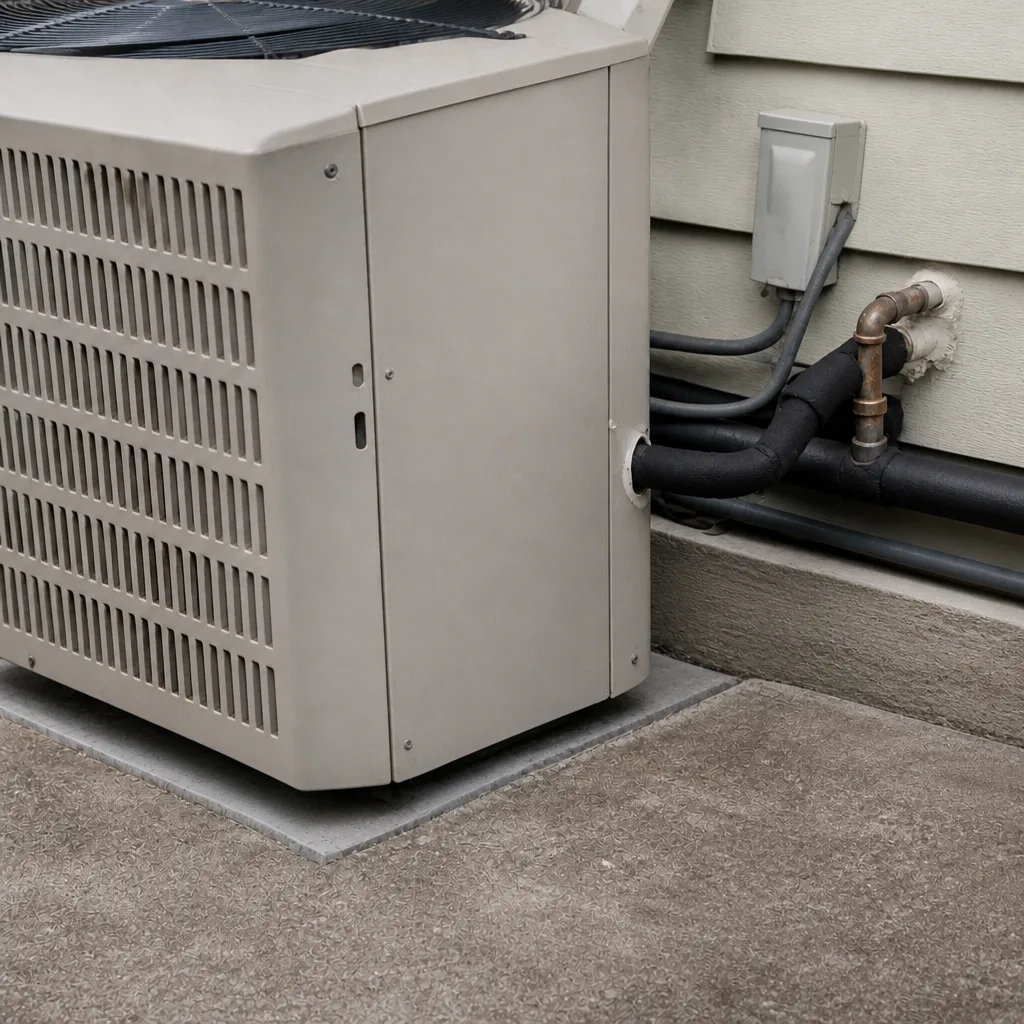
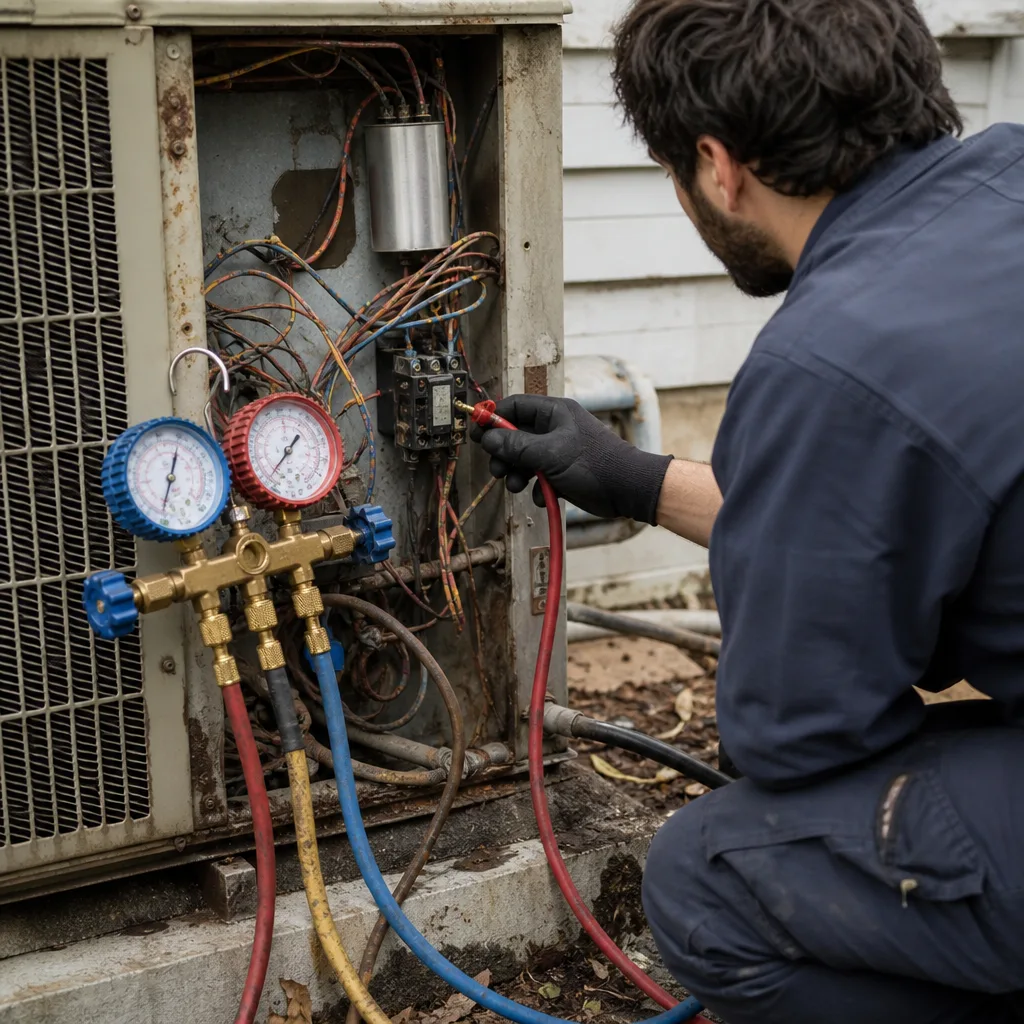
See the difference
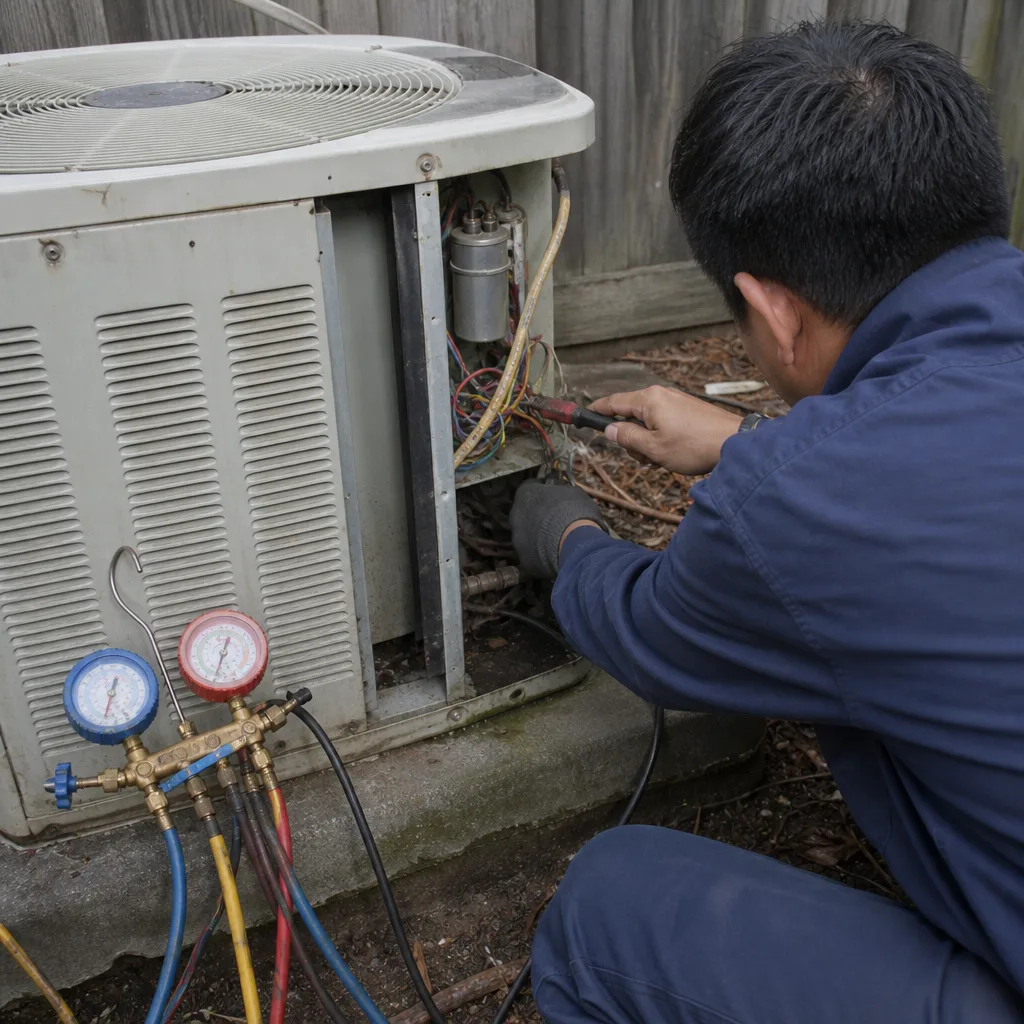 Before
 After
 Before
 After
 Before
 After
When to Call a Professional
Some HVAC issues are worth a phone call the moment they appear. A system that’s blowing warm air when it shouldn’t, a furnace that’s cycling off and on repeatedly, or a refrigerant smell near the indoor unit all point to problems a trained technician needs to see. Electrical components, refrigerant handling, and gas-fired heating equipment carry real safety concerns, and this isn’t a DIY category. A system that’s running but seems to cost more each month is also worth a look, especially in Hayward where PG&E rates make inefficiency expensive.
If you’re in the middle of a quote and want a second opinion before you sign, that’s a good reason to call too. AC Repair Hayward offers free estimates in Hayward. Call (888) 870-1847. We answer 24/7, with fast dispatch from 7am to 7pm, Sunday through Friday. You can also read more about Hayward and what we see in local systems.
Frequently Asked Questions
A full HVAC system replacement in Hayward typically runs $9,000 to $14,000 in 2026, with standard single-system swaps near the low end and heat pump or high-efficiency installs at the top. A cooling-only replacement with existing ductwork falls in the $6,500 to $11,000 range. Labor, permits, and duct condition account for most of the variation between quotes. Call (888) 870-1847 for a free estimate that reflects your home.
National averages assume labor rates and permit fees that don’t match the Bay Area. Labor, equipment logistics, and permit costs here are meaningfully higher, and that difference shows up in every quote. A $6,000 national average is accurate for the country as a whole but not for Hayward, which is why the local ranges in this guide exist. If a quote here seems to match a national number exactly, ask what’s missing from the scope.
At ten years, repair usually still wins unless you’ve had two or more significant failures in the past three years. Once a system crosses twelve years and needs a compressor, coil, or blower, the math tends to tilt toward replacement. A break-even calculation comparing the current repair cost plus projected future repairs against the annualized cost of a new system gives you a clear answer. Call (888) 870-1847 and we’ll walk through the math with you on a free estimate.
Yes, PG&E residential rebates and California heat pump incentives are available in 2026, and some can offset a meaningful portion of a replacement cost. Eligibility depends on equipment efficiency, permitted installation, and passing inspection. Check the specific program terms before you sign an installation contract, and keep every document. Our team can walk you through what applies to your ZIP code during the estimate.
We’re trained on nine of the most widely installed residential brands: Carrier, Trane, Lennox, Goodman, Rheem, York, Daikin, Bryant, and American Standard. That’s the full premium and value range, so most Hayward homeowners find their equipment on the list. If you’re unsure, call with the model number and we’ll confirm before scheduling.
Whole-home duct replacement in Hayward typically adds $2,500 to $6,500 to an HVAC project, depending on run count, attic access, and duct material. Duct sealing at $800 to $2,000 is the lower-cost option if the existing duct structure is sound. A contractor should inspect the ducts on any replacement quote; if they haven’t, ask for a return visit before signing. It’s the most overlooked line item in the whole job.
The Bottom Line
HVAC pricing in Hayward reflects a real local market, not a national average. A full replacement at $9,000 to $14,000 is a fair number here, and knowing that protects you from both overpaying and walking away from a legitimate quote. Get itemized estimates, insist on the permit, check your ducts, understand the repair-versus-replace math, and know what rebates apply before you sign. The written estimate sets the final price, so get it in writing. Call (888) 870-1847 for your free estimate. We work on your brand, diagnose it right the first visit, and cover both cooling and heating with a single call.
Written by the team at AC Repair Hayward.