
Last updated November 15, 2026
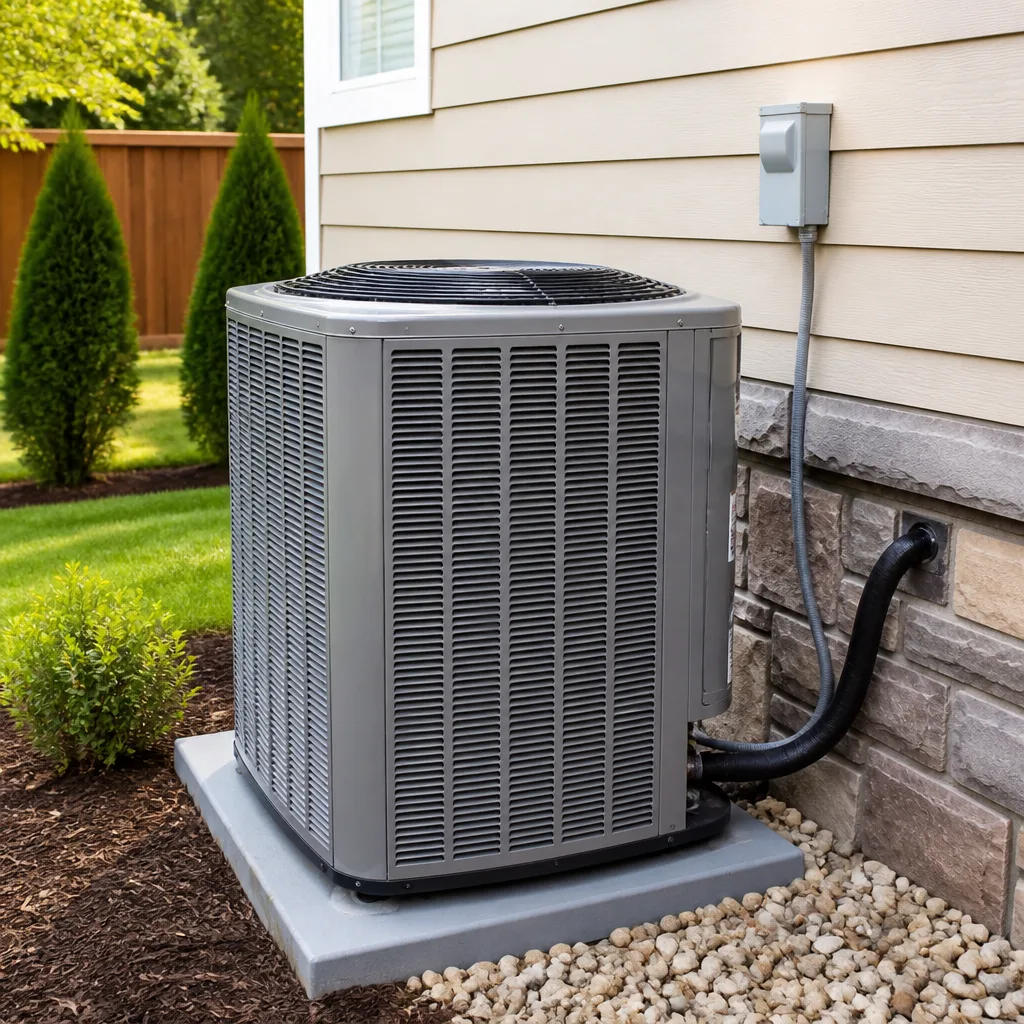 AC repair
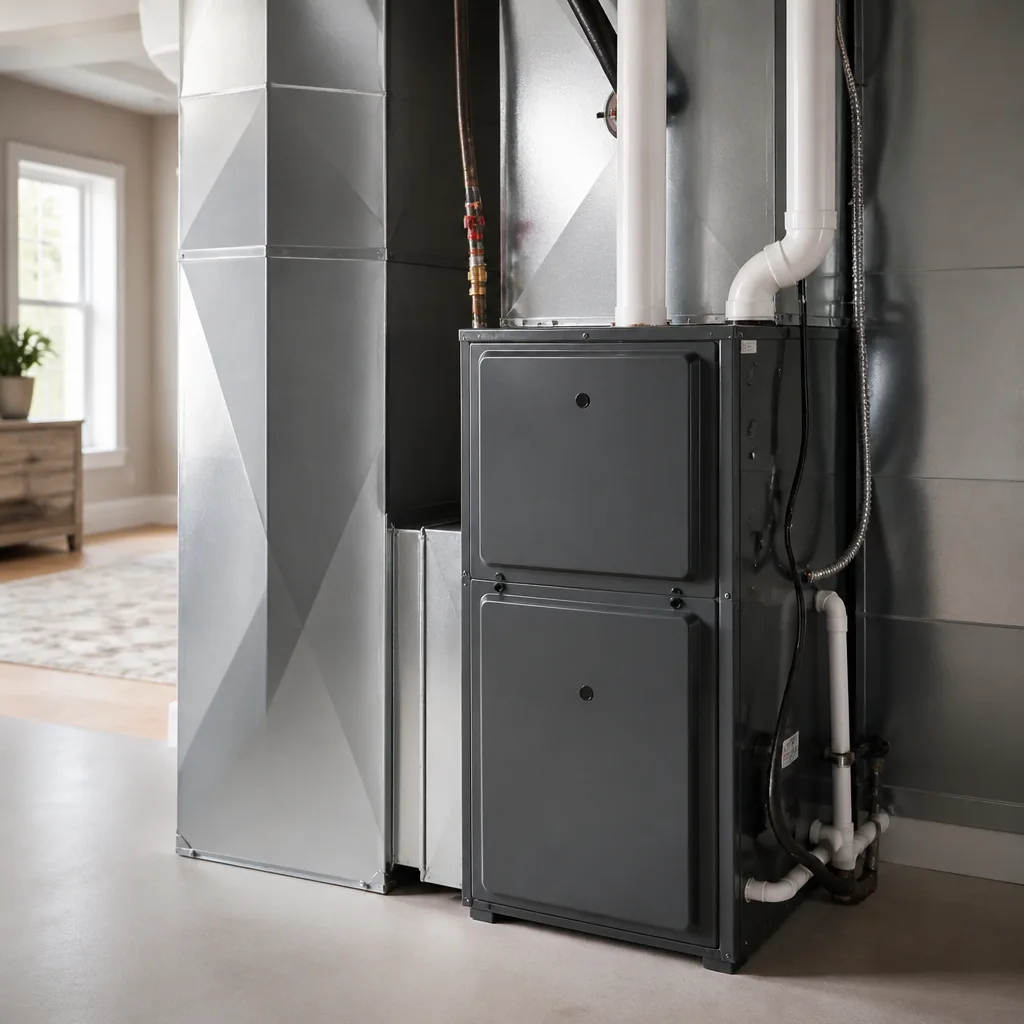 Furnace & heating
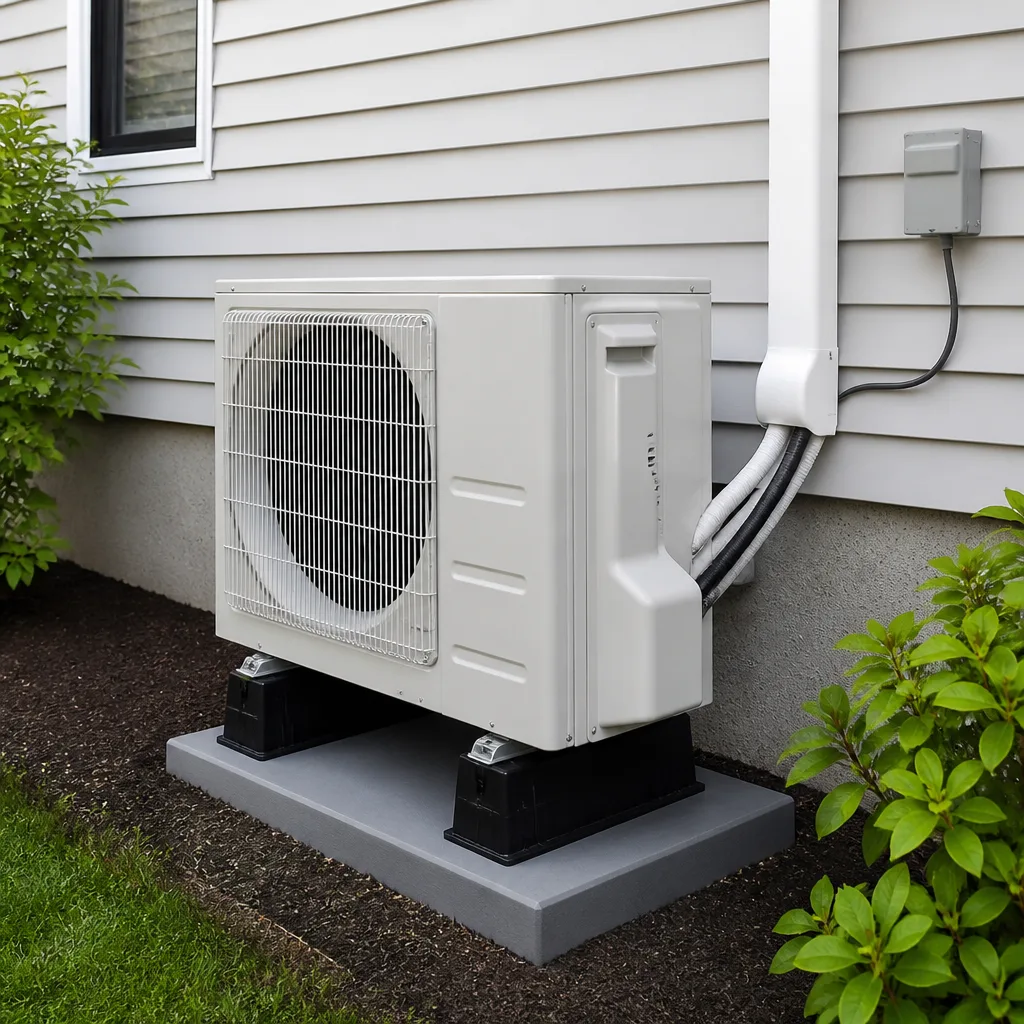 Heat pumps
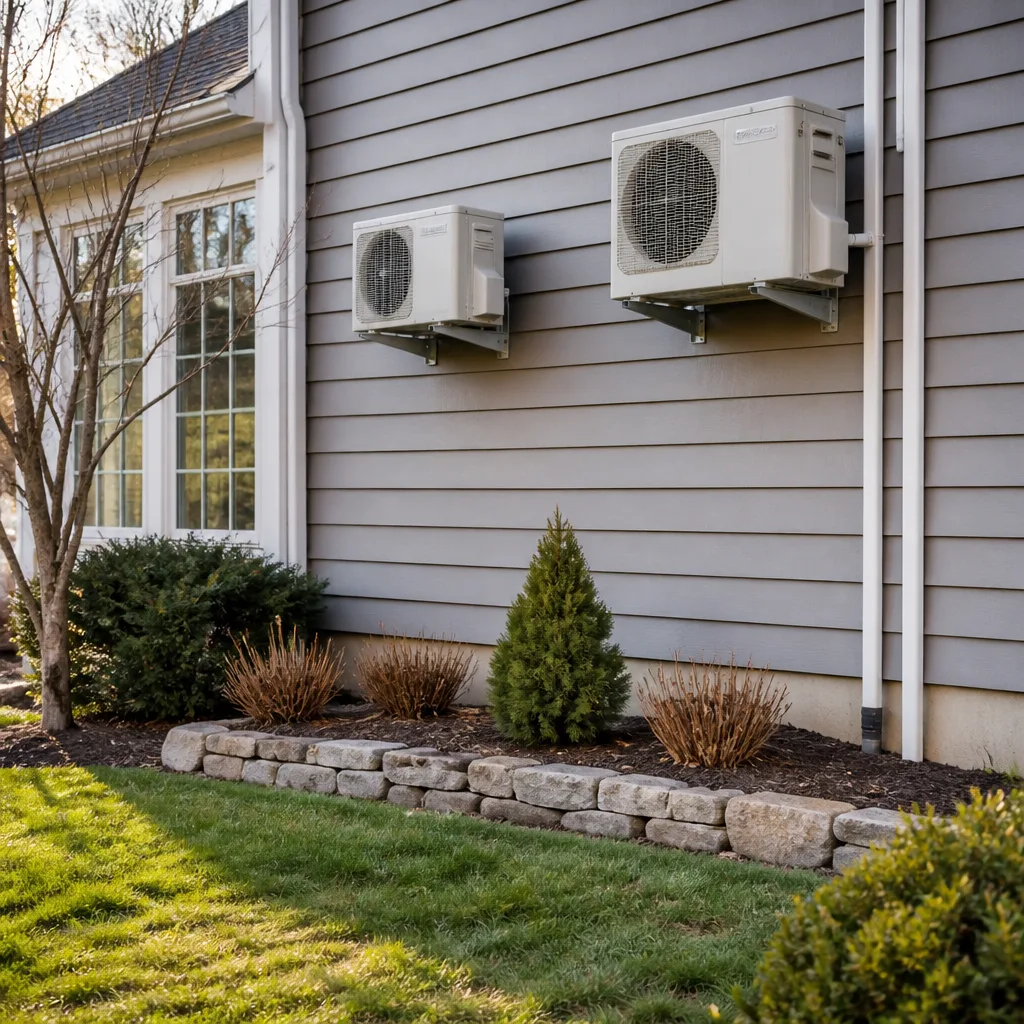 Ductless mini splits
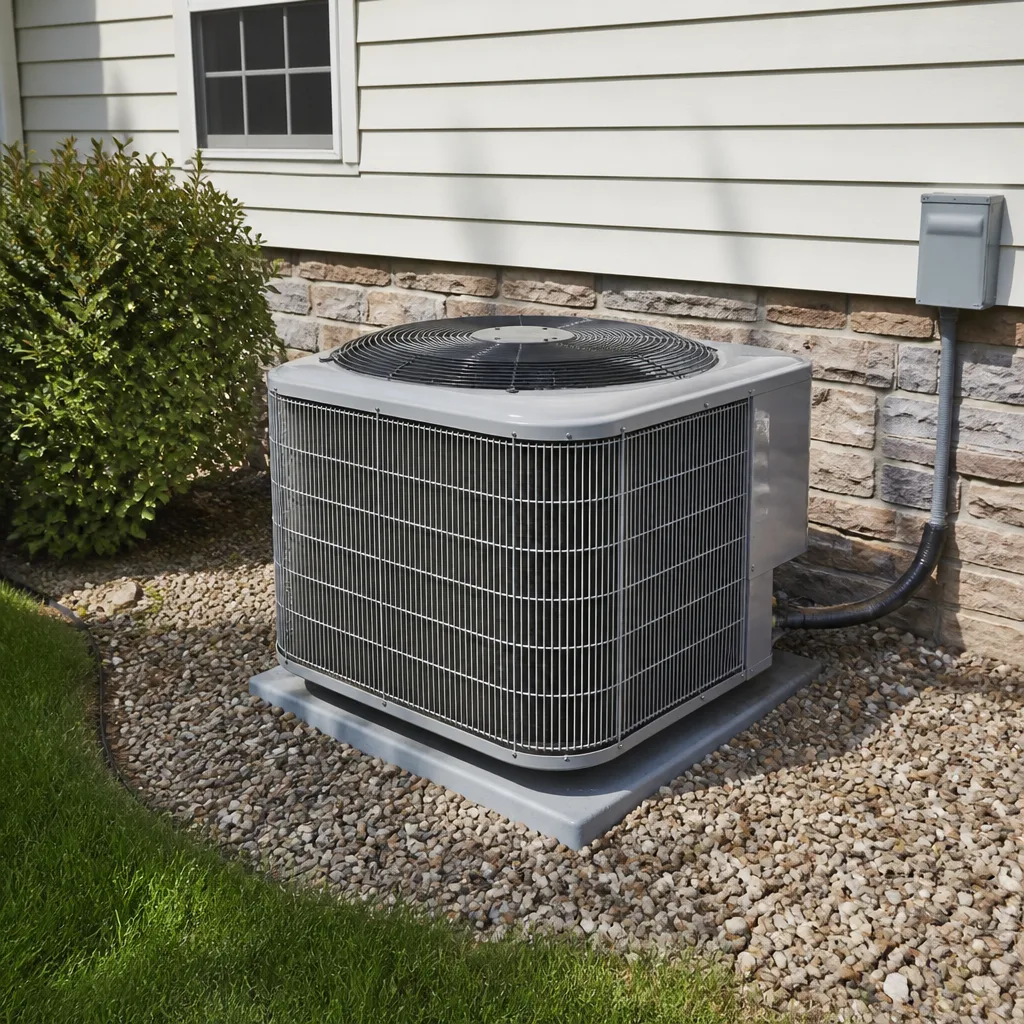 Carrier
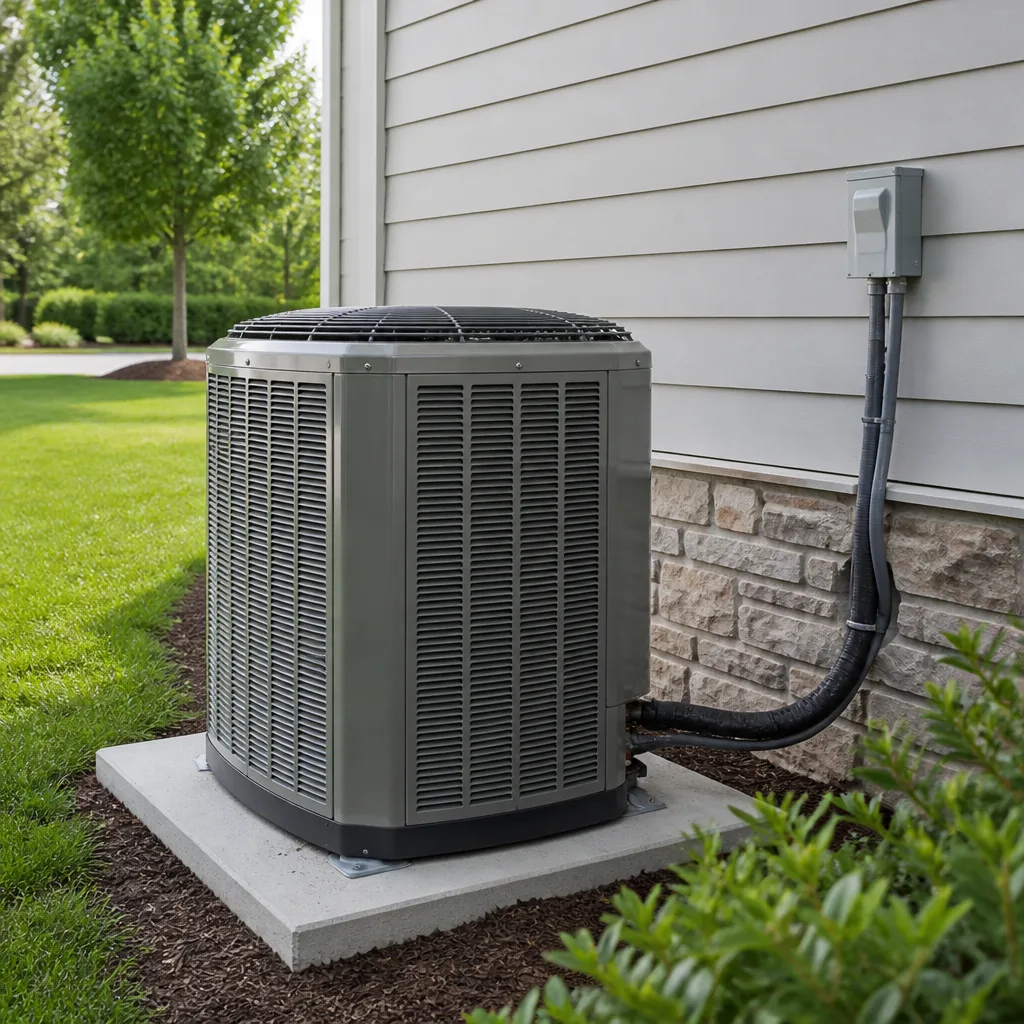 Trane
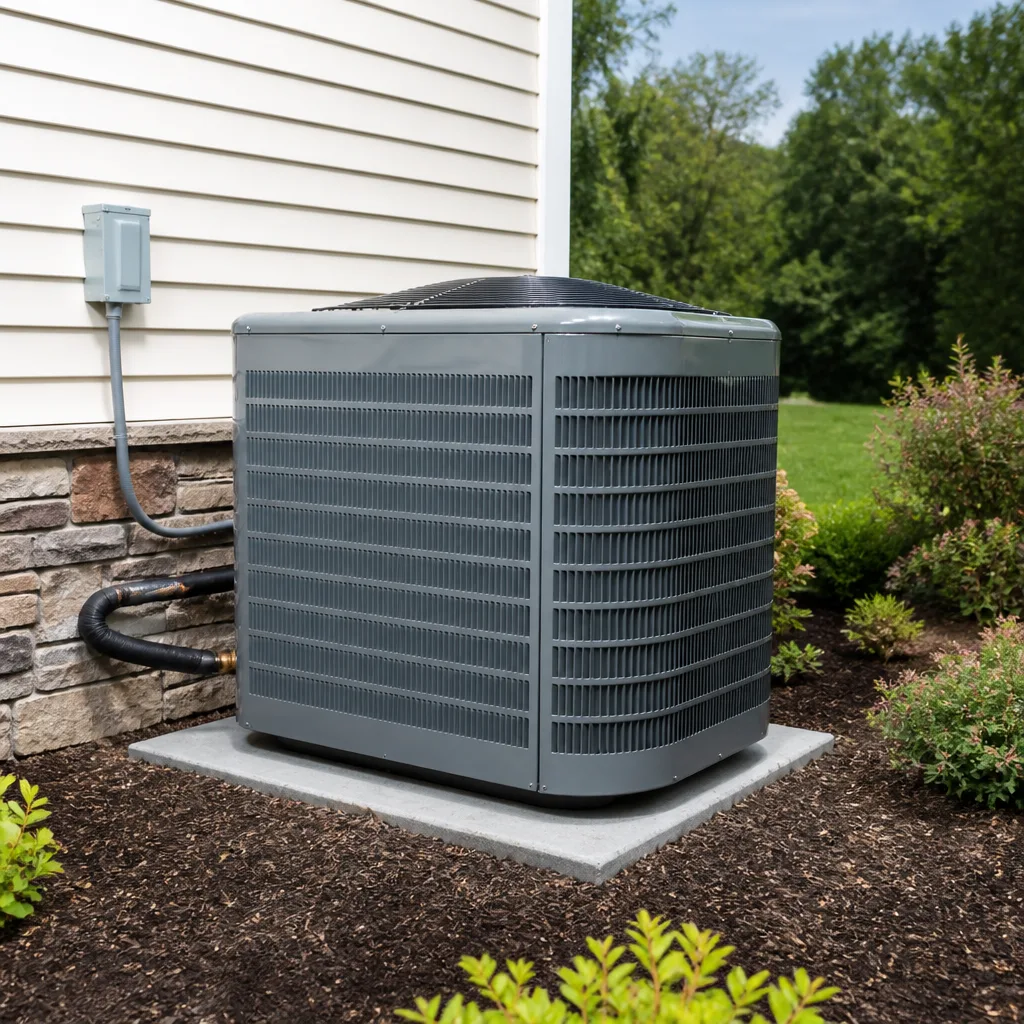 Goodman
Seasonal tune-up and full diagnostic on your Carrier, Trane, or Goodman system - readings shown to you before any repair is proposed
Diagnosis first, numbers second - you approve the repair price before a single part goes in.
Get your free estimateThe Complete AC Repair Guide for Hayward Homeowners
Most Hayward homeowners run their air conditioning fewer than 60 days a year. That sounds easy on the system. In practice, it’s the opposite. A unit that sits idle through months of fog, cool nights, and damp morning air is far more likely to fail from inactivity and corrosion than from overuse, and the repairs that show up here don’t look like the ones in drier parts of the East Bay. This guide walks through what actually breaks in Hayward, how a proper diagnosis should go, which repairs make sense on an older system, and how to keep a record so the next visit starts somewhere useful.
Quick Answer
AC repair in Hayward usually starts with the same handful of causes: dirty coils, a clogged condensate drain, a failed capacitor, or a refrigerant leak, and the humid marine air here makes coil and drain problems more common than in inland cities. A technician should confirm the actual fault with readings before quoting anything. Repairs on systems 10 years and older are often worth doing in this climate, because mild summers mean the equipment sees far less wear than its age suggests, but the decision should follow a real diagnosis rather than a guess.
Styles & brands we work with
- AC repair
- Furnace & heating
- Heat pumps
- Ductless mini splits
- Carrier
- Trane
- Goodman
Table of Contents
- Why Hayward’s Climate Changes How AC Systems Fail
- Why Low-Use Systems Break More Often Than Busy Ones
- The Diagnostic Sequence Every Technician Should Follow
- Repair or Replace: Doing the Math on an Older System
- Brand-Specific Repairs and What They Tell You
- How to Document a Repair Visit
- Common Mistakes to Avoid
- When to Call a Professional
Why Hayward’s Climate Changes How AC Systems Fail
Hayward sits where the marine layer pushes through the hills and cools the city while communities a few miles east are still hot. That fog and damp air does two things to a residential cooling system, and both of them push repairs in directions a generic guide won’t predict.
The first is coil corrosion. Indoor and outdoor coils spend months coated in moist air, and moisture plus airborne dust is exactly the environment where fin surfaces and braze joints start to degrade. Systems in drier East Bay cities dry out between cycles. Systems in Hayward often don’t. We’ve seen outdoor units here develop surface corrosion on the coil and cabinet well before the same model would in a hotter, drier town.
The second is the condensate drain. A central system pulls moisture out of the air, and in a humid climate it does that even on mild days when the compressor runs briefly. That water has to leave through the drain line and condensate pump. When the line sits wet and warm between cycles, biological growth builds up inside it. A blocked drain is one of the most common reasons a Hayward AC stops cooling or starts dripping near the furnace closet.
What that means for your system
- Coils need inspection, not just a rinse. Corrosion on the fins or at the joints is a repair question, not a cleaning question.
- Drain lines need clearing, not just checking. A drain that runs clear today can clog within a season in this humidity.
- Foggy mornings hide symptoms. A struggling system can feel fine on a cool morning and fail on the first warm afternoon, so problems surface late.
- Short cycles are normal here. Mild weather means the system runs in short bursts, which is harder on compressors and capacitors than long steady runs.
None of this means Hayward systems are fragile. It means the failure pattern is different. If you’ve been told your AC problem is unusual, the more likely explanation is that it’s unusual for a drier city and fairly typical for Hayward.
Why Low-Use Systems Break More Often Than Busy Ones
A system that runs every day stays lubricated, keeps its seals flexed, and burns off the moisture that collects in the cabinet. A system that sits from October to June does not. This is the single biggest misconception we run into: homeowners assume a lightly used AC should need fewer repairs. In this climate, the opposite shows up more often.
The components that fail first after long dormancy
- Start and run capacitors. Electrolytic capacitors degrade while sitting, not just while running. A capacitor that tested fine at the end of one summer can be weak by the first hot week of the next.
- Contactors. The contactor is the switch that starts the outdoor unit. Sitting idle lets corrosion and even small insects settle on the contact points, and the unit won’t start.
- Blower motor bearings. Bearings that sit still lose their oil film. The motor may run but sound rough or draw high current.
- Refrigerant seals and Schrader valves. Seals dry out during long idle periods, which can produce a slow leak over the off-season with no obvious symptom until the system is asked to cool.
- Condensate drain and pump. Standing water and growth in the line is a dormancy problem more than a runtime problem.
In our experience, the first warm stretch of the year is when most of these surface at once, and it’s the busiest time for AC repair calls in Hayward. That’s not a coincidence. It’s a year of sitting still meeting the first real demand of the season.
The practical lesson: run the system for a short stretch before the hot weather arrives. A ten-minute test run in late spring tells you whether the contactor engages, whether the blower turns freely, and whether the unit is cooling at all, while there’s still time to schedule a repair without a rush.
The Diagnostic Sequence Every Technician Should Follow
Before anyone quotes a repair, they should be able to tell you what they measured and what it showed. A technician who jumps from “it’s not cooling” straight to a price is guessing, and a guess costs you twice. Here’s the sequence a competent diagnosis follows.
- Confirm the complaint and the conditions. When does it fail, how long does it run, and what’s the thermostat set to. A system that cools fine in the morning and struggles in the afternoon points one direction; a system that never starts points another.
- Check airflow first. A clogged filter, a restricted return, or a blower running slow can mimic a refrigerant problem. Airflow gets ruled out before anything else.
- Measure the temperature split. Supply air against return air tells you whether the system is moving heat at all. A split that’s too small is a cooling problem; one that’s too large is often an airflow problem.
- Inspect the indoor coil and drain pan. In Hayward, this step matters more than most. Corrosion and standing water here are common findings.
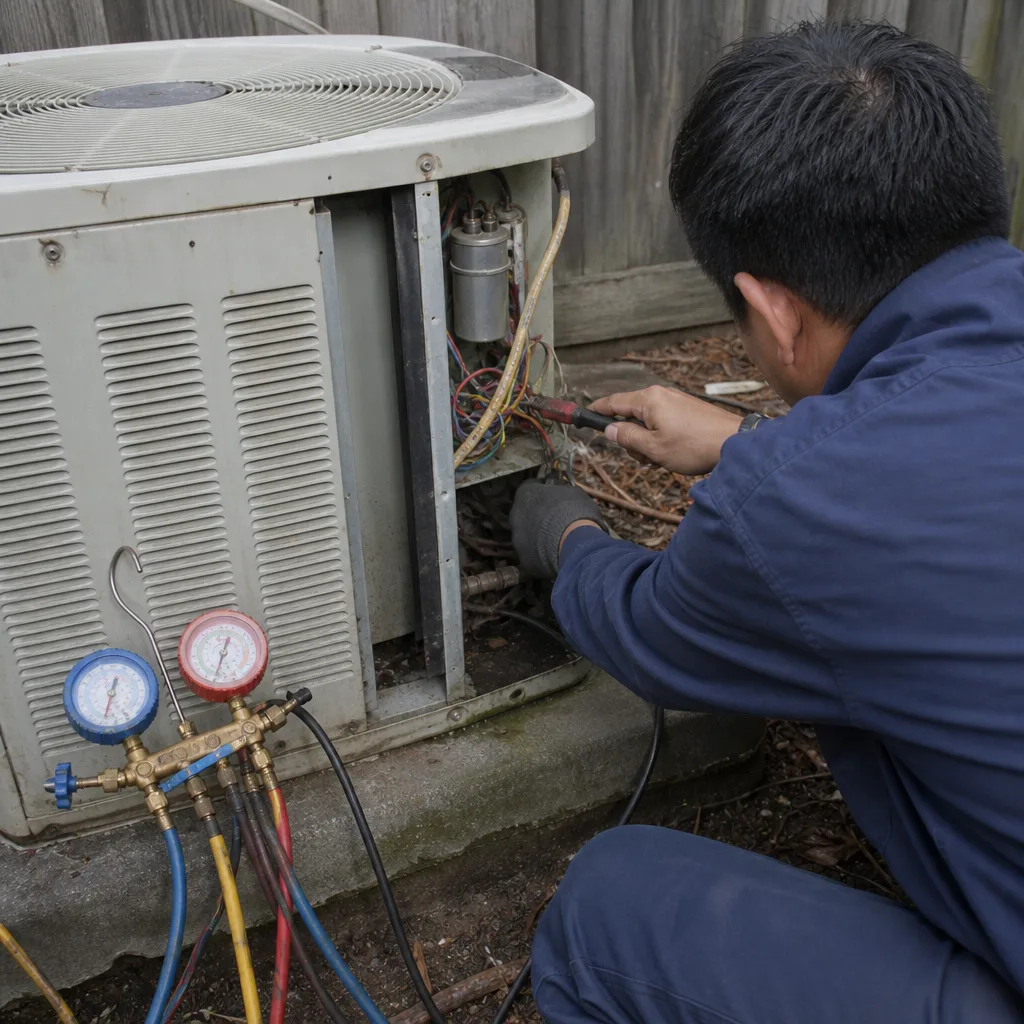
- Check electrical components with a meter. Capacitor values, contactor condition, and motor current draw, measured, not eyeballed.
- Check refrigerant pressures and superheat or subcooling. This is where a slow leak or an overcharge shows up. Pressures alone aren’t a diagnosis; the readings have to be interpreted against the outdoor temperature and the metering device.
- Report findings before recommending. You should hear what was measured, what it should have been, and what the gap means, before you hear a price.
What to question if a technician skips steps
If someone quotes a compressor or a coil without checking airflow and electrical readings first, ask what those readings were. If the answer is vague, the diagnosis isn’t finished. A proper diagnosis the first visit is cheaper than a second visit that corrects the first. It’s also the reason we walk customers through the readings before any work is recommended.
Repair or Replace: Doing the Math on an Older System
Age alone doesn’t decide this in Hayward. A 12-year-old system here has run far fewer hours than a 12-year-old system in the Central Valley, so the equipment often has more life left than its age suggests. The decision should follow the repair’s cost against the system’s remaining value, plus how the repair affects the rest of the equipment.
Repairs usually worth doing
- Capacitors, contactors, and fan motors. These are routine components with predictable life, and replacing one doesn’t stress the rest of the system.
- A clogged condensate drain or a failed drain pump. Straightforward and unrelated to the sealed refrigeration circuit.
- Cleaning a coil that’s fouled but not corroded. Maintenence that restores performance without parts.
- A single accessible refrigerant leak on an otherwise sound system, once the leak is located and the repair is verified with a pressure test.
Repairs that start pointing toward replacement
- A failed compressor on a system that’s already had other major repairs. The compressor is the most expensive single component, and a failure often follows other stress.
- A leaking evaporator or condenser coil where the corrosion is widespread rather than at one point. In this humidity, a coil that’s failing in one place is often failing in several.
- Repeated refrigerant loss. A system that keeps losing charge has more than one leak, or a leak that can’t be reliably repaired.
- Any repair where the cost approaches a large share of a new system’s installed cost, on equipment near the end of its expected service life.
R-410A refrigerant is the common charge in systems from the last two decades, and reclaimed supply has gotten tighter and more expensive as the industry moves on. That matters to the math: a repair that needs refrigerant costs more today than the same repair did a few years ago, and that shifts the repair-versus-replace line. When we look at replacement, we size the new system to the house rather than matching the old unit’s tonnage, because a mild-climate house is often served by a slightly smaller, better-matched system. If replacement is the answer, we handle the paperwork through AC installation and set a firm install date rather than promising same-day work, since this is load-calculated and scheduled.
Brand-Specific Repairs and What They Tell You
Equipment from different manufacturers fails in different ways, and knowing the brand shortens the diagnosis. A Bryant system and a Daikin system may show the same symptom with entirely different causes. That’s why we’re factory-familiar with nine of the most widely installed residential brands: Carrier, Trane, Lennox, Goodman, Rheem, York, Daikin, Bryant, and American Standard.
The value isn’t brand loyalty. It’s that a technician who has worked on a specific line knows which components that line tends to eat, which error codes mean what, and which parts are common enough to source quickly. A York condensing unit and a Trane unit have different control layouts and different failure points under the same humid conditions.
Why this matters more in a mild, damp climate
We’ve noticed corrosion shows up differently by brand and by cabinet design. Some outdoor units shed moisture better than others. Some indoor coil designs trap debris more readily. Knowing which is which lets a technician check the likely spot first instead of working through a generic checklist. It also means the recommendation fits your actual equipment rather than whatever a single-brand shop happens to stock. Our technicians have up to 10 years of experience across these lines, and we work on your brand rather than steering you toward one.
How to Document a Repair Visit
Most homeowners start from zero every time something goes wrong, which means paying for the same diagnosis twice. A simple record fixes that. Keep a folder, paper or digital, and add to it after every visit.
- Note the date and the symptom. “Not cooling in the afternoon, ran continuously” is more useful than “AC broken.”
- Record what was measured. Temperature split, capacitor readings, refrigerant pressures, and the outdoor temperature at the time. These numbers are what a future technician compares against.
- List the parts replaced. Part name and number if it’s on the invoice. Capacitors and contactors fail more than once over a system’s life.
- Note any refrigerant added and why. If charge was added without a leak being found, that’s a flag worth remembering.
- Keep the model and serial number. They’re on the outdoor unit’s rating plate and on the indoor air handler. Photograph both.
- Write down what was recommended but not done. A coil cleaning deferred this year may be the cause of next year’s problem.
This is also the record that makes a repair-versus-replace decision honest. When you can see three capacitor replacements and a fan motor over several years, the pattern tells you something a single invoice can’t. And if you ever sell the house, a documented service history is worth having.
Common Mistakes to Avoid
- Assuming low use means low maintenance. In Hayward’s climate, a system that sits idle most of the year needs more attention at the start of the season, not less. Run it briefly before the hot weather arrives.
- Adding refrigerant without finding the leak. Topping off a system that’s lost charge treats the symptom. The leak is still there, and the next top-off comes sooner and costs more.
- Replacing a capacitor without checking the rest. A blown capacitor can be the first sign that the motor it serves is drawing high current. Swap the capacitor alone and it may fail again quickly.
- Ignoring a slow drain. A condensate line that drips slowly in the fog can wet the cabinet, the platform, and eventually the ceiling below. Clear it when you notice the symptom, not after the damage.
- Matching the old tonnage on a replacement. A mild-climate Hayward house may not need the same size as the original unit. A load calculation sizes it correctly instead of copying a number that may have been wrong to begin with.
- Skipping the temperature split. Feeling the air at a vent isn’t a measurement. The split between return and supply air is what tells a technician whether the system is actually moving heat.
- Quoting before diagnosing. The most expensive mistake is accepting a price before anyone has shown you readings. Ask what was measured.
When to Call a Professional
Some things are worth checking yourself: a tripped breaker, a filter that’s clogged solid, a thermostat in the wrong mode, a drain pan that’s full. Once those are ruled out, the rest belongs to a trained technician. Call a professional if the outdoor unit hums but won’t start, if the system runs but the air isn’t cold, if you hear hissing or see oily residue near the refrigerant lines, if the breaker trips repeatedly, or if water is pooling around the indoor unit. Refrigerant handling requires recovery equipment and a license, and the sealed circuit is not a place for a homeowner to work. Electrical components inside the cabinet carry live voltage even after the disconnect in some designs.
AC Repair Hayward offers free estimates in Hayward. Our technicians are experienced across nine major brands and can diagnose your system the first visit. Call (888) 870-1847. We answer 24/7. Fast dispatch from 7am to 7pm, Sunday through Friday.
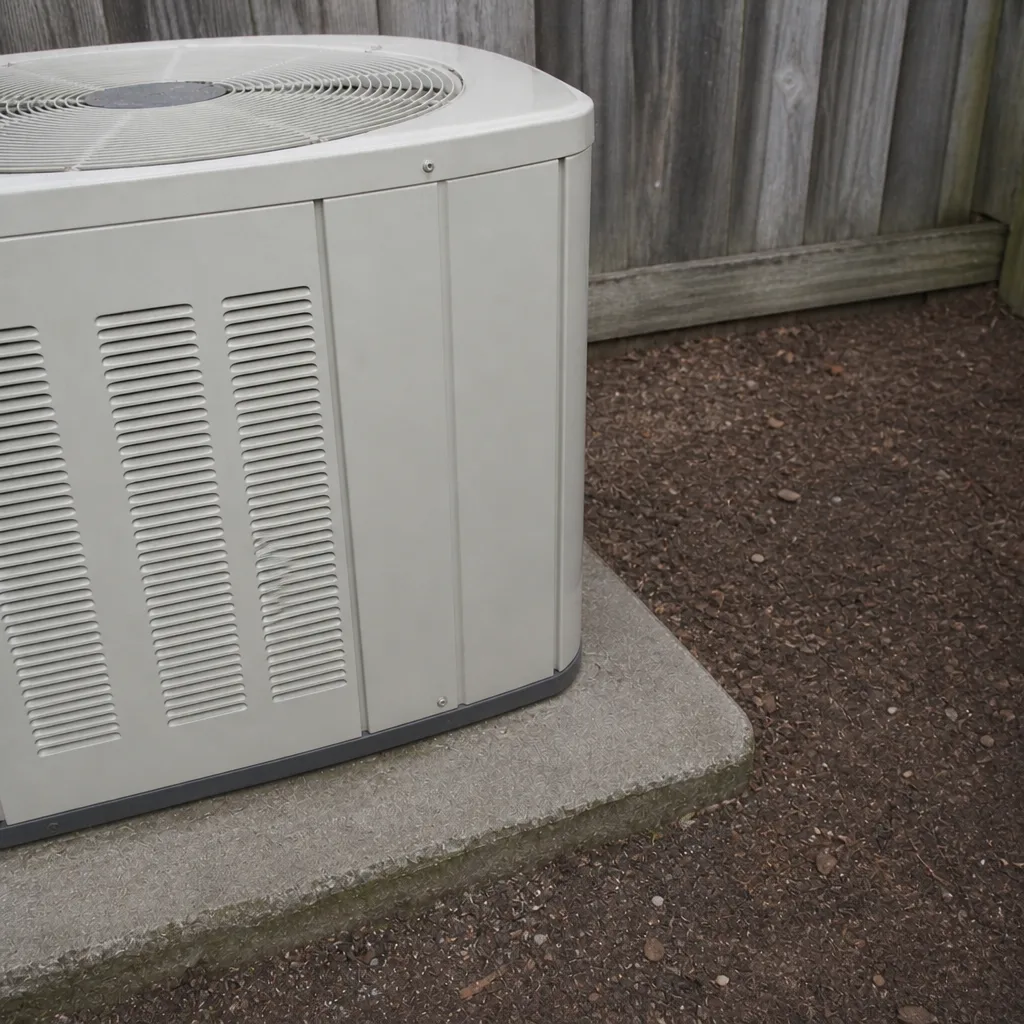
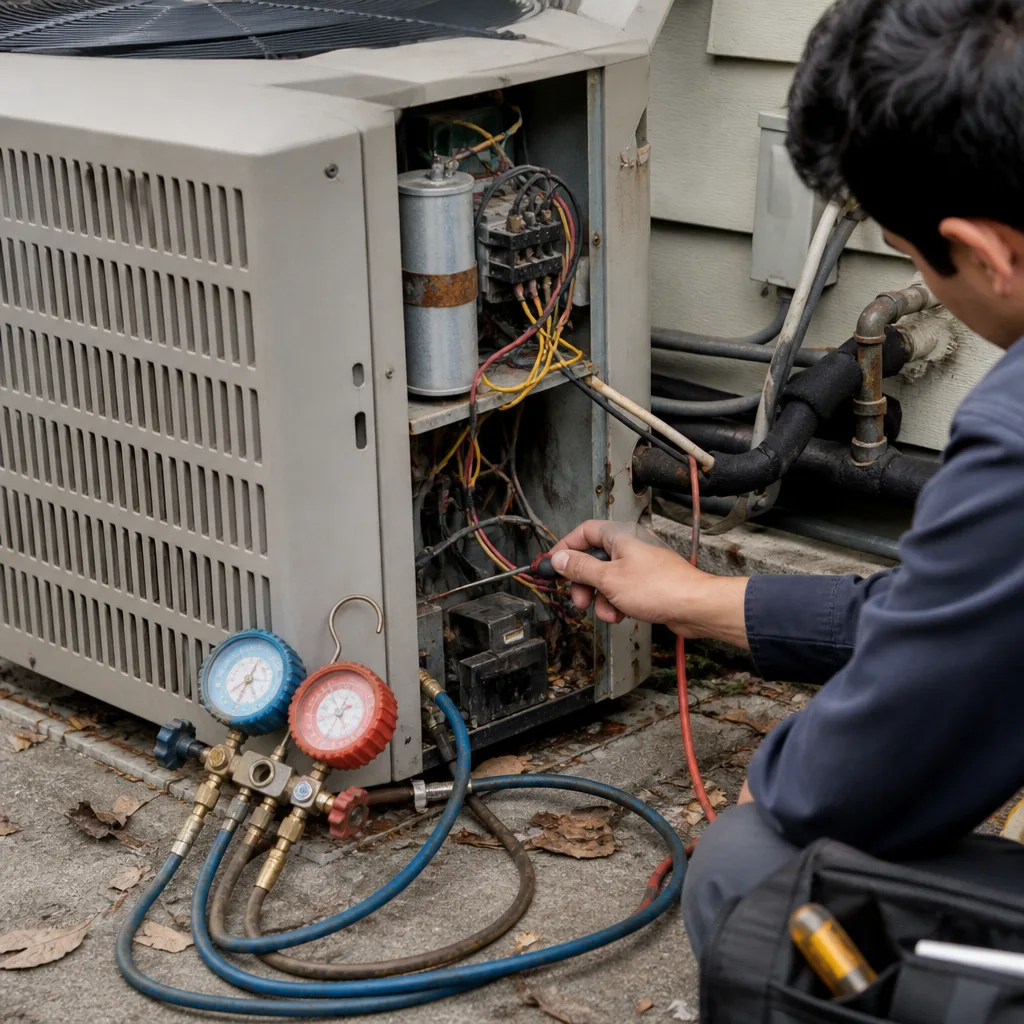
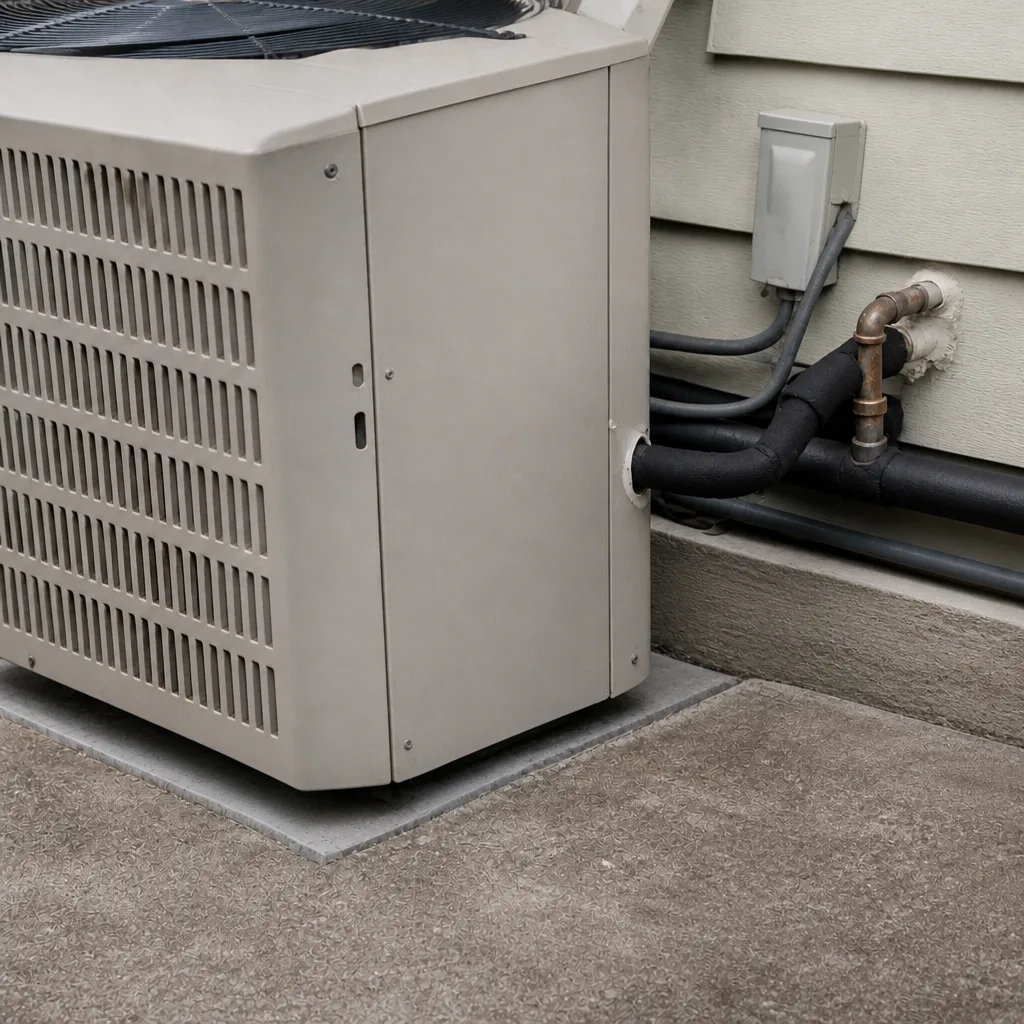
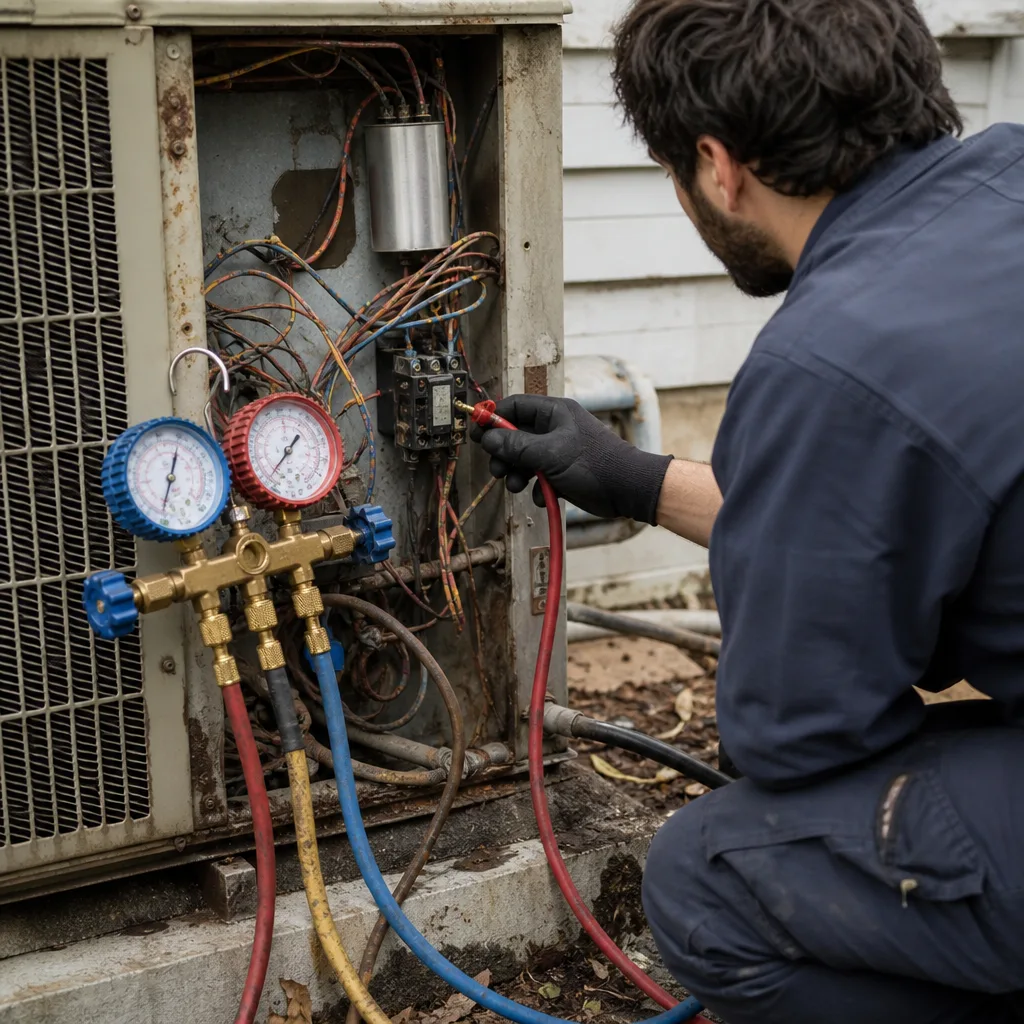
See the difference
 Before
 After
 Before
 After
 Before
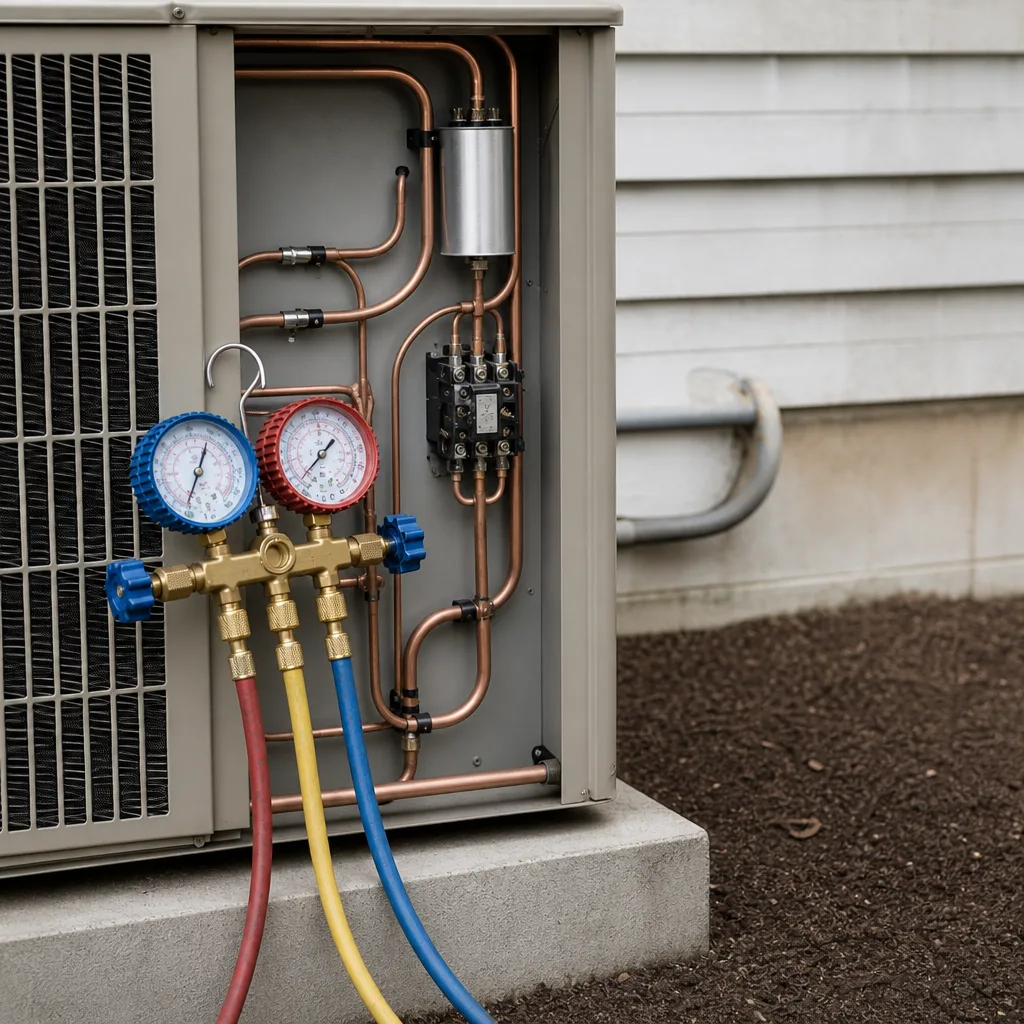 After
Frequently Asked Questions
It depends on the fault and the part, and the exact price is set per job by a written estimate after diagnosis. We don’t quote a number before measuring, because that’s how guesses get made. Call (888) 870-1847 for an exact quote. Estimates are free.
Same-day repair is often possible when you call early, and fast dispatch runs from 7am to 7pm. We answer 24/7, and a call outside dispatch hours is booked into the next opening, Sunday through Friday, 7am to 7pm. Call (888) 870-1847 to check availability.
We service Carrier, Trane, Lennox, Goodman, Rheem, York, Daikin, Bryant, and American Standard. If your system is one of those, we’ve seen it before. Call (888) 870-1847 and tell us the model.
In Hayward, a short cool period followed by warm air is often a frozen indoor coil or a clogged drain causing a safety shutdown. Airflow restrictions and low refrigerant both cause it. It needs a real diagnosis. Call (888) 870-1847 for a free estimate.
A blocked condensate drain is the most common cause, and this humid climate makes it more likely than in drier cities. The drain line or the pump needs clearing. Call (888) 870-1847 to schedule a diagnostic.
In Hayward’s mild climate, a 10-year-old system has often run relatively few hours and can be worth repairing, especially for a capacitor, contactor, or drain fix. Replacement math favors the new system when a compressor or widespread coil corrosion is involved. A documented service history helps decide. Call (888) 870-1847 for a free estimate on either path.
The Bottom Line
Hayward’s cool, damp air makes its AC systems fail differently than inland equipment. Low use doesn’t mean low maintenance here. Capacitors, contactors, coils, and drains all suffer from long dormancy, and the first warm week of the year is when they show up. A proper diagnostic sequence, readings before prices, and a service record that follows the system all protect your money. On older systems, decide repair versus replacement on cost and history, not on age alone. Cooling and heating are covered under one roof, so your furnace is handled in the same call. Call (888) 870-1847. We answer 24/7. Fast dispatch from 7am to 7pm, Sunday through Friday.
Written by the team at AC Repair Hayward.